

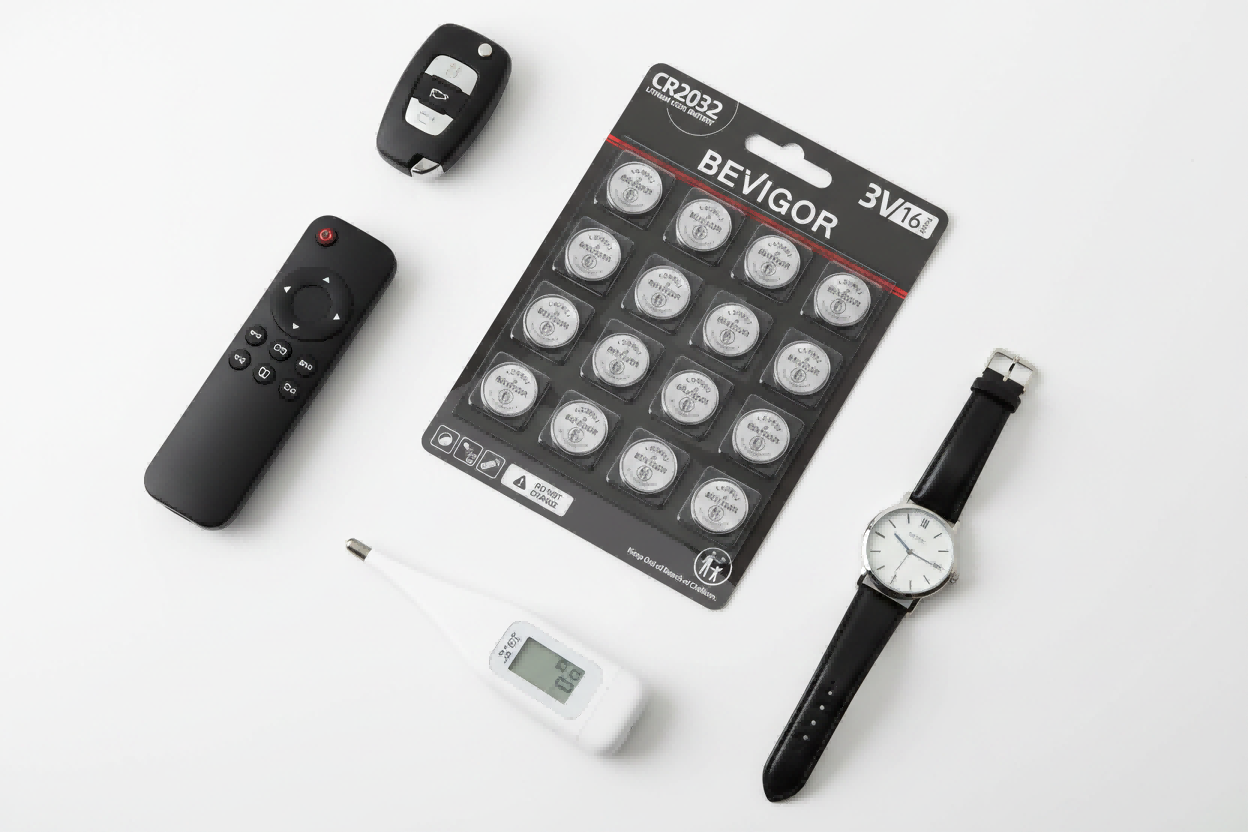
If you've ever tried to replace a coin cell in a key fob or swap a tiny hearing aid battery while also keeping an eye on a toddler, you've probably had this thought:
"Why is this package so hard to open?"
That frustration is real—and it's not accidental.
In the U.S., safety regulations (most notably Reese's Law) pushed battery makers and retailers toward packaging and product designs that are much harder for young children to access. For families, that's a big win. Swallowed button and coin batteries are not "just" a choking risk: they can cause severe internal burns in a short time.
At the same time, the people opening these packages every day aren't only parents. Many households include older adults, people with arthritis, and hearing aid users—groups who can be hit hardest by packaging that requires high grip strength, precise finger control, or multiple steps.
This guide explains what Reese's Law changed, why packaging feels tougher now, and how caregivers can open and manage small battery packages safely without creating new hazards in a home with kids.
Important note (safety): This article is educational and not medical advice. If you suspect a child may have swallowed a battery, treat it as an emergency and contact Poison Control / emergency services right away.

The Real-World Conflict: Toddler-Proof Safety vs Everyday Usability
What Makes Button and Coin Batteries Uniquely Dangerous
A "button" or "coin" battery is a small, round, single-cell battery. Many are lithium coin cells (like CR2032) used in remotes, key fobs, thermometers, and small medical devices.
The danger isn't limited to choking. When a battery becomes lodged—especially in the esophagus—it can trigger a reaction that rapidly injures tissue. That's why safety agencies treat suspected ingestion as urgent.
For a clear, caregiver-friendly overview of the hazard and why speed matters, read the CPSC's Button Cell and Coin Battery Information Center.
Why Families Are Noticing Harder Packaging "All at Once"
Many people didn't notice the transition until it showed up in their daily routine: battery packs that used to peel open now feel like you need a plan (and sometimes scissors).
That's partly because regulatory changes tend to roll out fast once enforcement dates and retail requirements catch up. Stores also sell through older inventory, so you may see different package styles for the same battery type across different retailers—and even within the same aisle.
When the Person at Risk Is Your Child and Your Parent
Many families are multi-generational. Even if you don't use hearing aids, a grandparent might—and hearing aid batteries often live in purses, nightstands, travel kits, and bathroom drawers.
So the risk can be two-directional:
- Children are at risk if they access loose batteries.
- Older adults are at risk if packaging becomes so frustrating that they transfer batteries into unsafe containers or leave partially opened packs within reach.
The Safety Goal Is Delay, Not Impossibility
It helps to reframe "child-resistant" packaging as "child-delaying." It's designed to be significantly difficult for young children, buying time for an adult to intervene.
But "difficult for a 4-year-old" can also be "difficult for a 74-year-old with arthritis." That's the design tension caregivers and seniors are living with. For a deeper look at industry trends and packaging solutions, read our breakdown on balancing toddler-proof safety and senior accessibility in the modern battery market.
Reese's Law Requirements: What Changed and What You'll See at Retail
The Basics: Two Big Areas of Change
Reese's Law was enacted to reduce serious injuries and deaths from children swallowing button and coin batteries. It drove federal safety requirements in two broad categories:
- Products that contain or use button/coin batteries (battery compartments must be secured), and
- Standalone batteries sold at retail (packaging and warnings must reduce ingestion risk).
For an overview of compliance and standards, see our guide on understanding Reese's Law and new safety standards for retail and household battery products. For a plain-English, authoritative overview of what companies must do (and what that means for households), another great reference is the CPSC's Button Cell and Coin Battery Business Guidance.
Packaging Rules vs Product Rules: Why Both Matter to Your Family
It's easy to think, "This is just about plastic packaging." But the safety system has two layers:
- Packaging layer: prevents children from getting loose batteries in the first place.
- Product layer: prevents children from opening device battery compartments around the home.
If either layer fails, a child can end up with a loose battery in hand. That's why caregivers should pay attention to both the battery packs they buy and the battery doors on remotes, toys, flameless candles, key fobs, and similar devices.
What "Child-Resistant Packaging" Means in Practice
When batteries are sold separately, the packaging must be child-resistant—meaning a young child shouldn't be able to access the batteries quickly or easily.
Here's how Bevigor designs its battery packages: we ensure that 80% of children cannot open them in an initial 5-minute test. Even after a demonstration, at least 80% must fail.
In real life, that often looks like:
- thicker plastic blister materials,
- multi-step open mechanisms,
- peel-and-push combinations,
- packaging that requires a deliberate action rather than a simple tear.
If you're thinking, "This is basically senior-proof," you're not imagining things. Many designs are engineered around delay and difficulty for small hands—and that can translate into real friction for adult hands too.
What You Can Check on Devices You Already Own
Reese's Law doesn't just change packaging. It also impacts the devices that those batteries go into.
The general expectation is that a child shouldn't be able to open a battery compartment with casual finger pressure. CPSC guidance describes approaches like compartments that require a tool (e.g., a screwdriver) or two independent, simultaneous hand movements to open.
For caregivers, the home check is simple:
- If a toddler can open the battery compartment with their fingers, treat that product as a hazard (and store it as you would a medication).
A practical rule of thumb: if the compartment isn't secure, the whole object needs to be secured. Don't leave the remote on the couch, don't store spare batteries nearby, and don't assume "the battery door is probably fine."
Where "Medical Cells" and Hearing Aid Batteries Complicate the Picture
Some of the smallest batteries are daily necessities. Hearing aid batteries are a common example—small enough to be dangerous around toddlers, yet essential day in and day out for the person who wears the hearing aid.
That creates a unique stress point: the safest routine is to keep spare batteries secured and out of reach, but it also has to be realistic for someone with reduced dexterity.
If your family supports an older adult who relies on hearing aids, the goal isn't to make them feel policed. It's about building a routine that protects kids without taking away their independence.
The Design Battle: Protecting Toddlers Without Punishing Arthritic Hands
"Senior-Friendly" Testing Doesn't Always Represent Real Limitations
Many people assume regulations guarantee that packaging is easy for seniors. In reality, the standards for "adult-opening" performance don't always reflect the people who struggle most.
The federal standard text that defines poison prevention packaging performance is commonly referenced as 16 CFR 1700.15. It describes thresholds for child resistance and adult use effectiveness.
But there's a gap between a test panel and real life: arthritis, neuropathy, and reduced grip strength can make "passes the protocol" feel like "impossible at home."
Why This Gap Matters in a Home With Children
Here's the paradox caregivers run into: packaging that's hard to open can create more loose batteries.
If a person struggles for 10 minutes, the odds go up that they:
- tear the pack and leave it half-open,
- dump batteries into an easier container,
- or ask for help and then forget to re-secure everything.
Those are normal human behaviors—and they're exactly the behaviors a curious toddler exploits.
The Tradeoff Isn't Strength vs Safety. It's Friction vs Risk
A useful way to think about the design battle is this:
- Safety wants friction (a child should hit a barrier).
- Accessibility wants predictable steps (an adult shouldn't need brute force or tiny fingernails).
When packaging relies on brute force, it blocks children and many adults. When it relies on a sequence (peel → fold → push → slide), it can block children while still being workable for more adults. Learn more about managing this delicate balance in our guide on protecting toddlers from coin batteries without punishing arthritic hands.
What Better Design Would Do, and What You Can Mimic at Home
You can't redesign the packaging in your kitchen, but you can mimic what good design tries to achieve:
- Make the action deliberate (you open batteries only in one place, one at a time).
- Make errors less harmful (a tray catches the battery; a lid contains used cells).
- Reduce dexterity demands (stable surface, good lighting, larger-handled scissors).
This is also where caregiver support matters. If an older adult has to choose between "ask for help every time" and "store loose batteries," they may choose loose batteries. Your job is to make the safe option the easy option.
Safe Ways for Seniors to Unbox Stubborn Hearing Aid Blister Packs
Why Hearing Aid Blister Packs Are Uniquely Frustrating
Many hearing aid batteries are packaged in small, rigid blisters. For older adults, the challenge isn't only strength—it's precision.
Common friction points:
- tiny peel tabs that require a fingernail,
- "press-through" designs that demand a strong pinch,
- slick plastic that slides on the table,
- batteries that can pop out and roll.
If you're a caregiver, the goal is to support independence while reducing risk: the wearer should be able to manage their batteries without leaving loose cells where a child can find them.
A Safer "One at a Time" Approach That Respects Dexterity Limits
If a grandparent changes batteries daily (or close to it), avoid pre-opening multiple cells.
Instead, build a routine:
- Open one battery,
- Immediately close or fold the packaging back,
- Put the packaging away before moving on.
That routine reduces the chance a child finds a loose battery later.
Tools That Help Without Turning It Into a Dangerous Cutting Task
A few low-tech helpers can reduce strain without increasing risk:
- Scissors with larger, comfortable grips,
- A rubber jar-opener pad under the pack to prevent slipping,
- A bright light and a stable chair at a table.
If cutting is required, keep the pack flat on a table and cut slowly. The safest "hack" is almost always: stability + control, not force. For additional opening strategies, explore safe ways to unbox stubborn, child-resistant hearing aid battery packaging.
⚠️ Warning: Avoid using teeth, knives in midair, or cutting while holding the package in your palm. Those methods increase injury risk and can also launch a battery onto the floor.
What to Do If the Pack Is Truly Not Manageable
Sometimes the honest answer is: the packaging is not realistically usable for someone's hands.
In that case, the caregiver's job becomes designing a safer workaround that doesn't create loose-battery exposure:
- Open the pack only in a controlled area,
- Transfer batteries into a dedicated, child-resistant case (not a basic pill organizer),
- Store the case in the same locked/high location you'd use for medications.
The best workaround is the one that prevents "battery scatter."
Tips for Managing and Opening Small Button Cell Packages Safely
Set Up a "Battery Opening Zone" Before You Touch the Package
If there are kids in the home, treat opening the battery as a controlled activity.
A simple setup:
- A cleared table (not a couch, not a bed),
- Bright lighting,
- A shallow tray, rimmed plate, or bowl to catch batteries,
- No fans blowing (coin cells can skitter).
This takes 30 seconds and can prevent the most common failure: the battery drops, rolls, and disappears right when a toddler is in the room. For more detailed opening protocols, check out our guide on how to safely manage child-resistant button cell battery packaging.
Control the "Pop" Moment: Prevent Batteries From Launching
The most dangerous moment is when the battery breaks free.
To reduce the chance it launches:
- Angle the blister into a tray,
- Cover the opening area lightly with your palm (not sealing it, just blocking flight),
- Cut slowly, and stop once you can peel back enough plastic to grip the battery.
Don't Pre-Open a Week's Worth "for Convenience"
It's tempting to open multiple batteries at once—especially if you're helping someone with reduced dexterity.
But pre-opening creates two problems:
- Loose batteries become easier for kids to access, and
- Batteries can get mixed (new vs. used), increasing the risk of disposal errors.
If you want convenience, aim for a safer compromise: open only what you need today, and store the rest in the original package.
Storage and Labeling: Reduce Mistakes When You're Tired
Caregivers are human. Mistakes happen when you're rushed.
A few practical guardrails:
- Keep spare batteries in their original packaging until use,
- Store packaging in a consistent, out-of-reach place,
- Use a dedicated lidded container for used batteries.
For hearing-aid-specific handling and storage reminders, see hearing aid battery safety and storage tips.
How Child-Resistant Retail Changes Affect the Elderly Hearing Community
Why This Packaging Shift Hits Hearing Aid Users So Hard
A hearing aid battery isn't an occasional purchase. It's part of daily functioning.
When a daily-need product becomes harder to open:
- Independence can suffer,
- Caregivers get pulled into a task the user used to do alone,
- And risky workarounds become more likely.
Those ripple effects matter because they can increase the chance of loose batteries in the home. Read more about how these changes impact daily life in our resource on how child-resistant retail changes affect the elderly hearing community.
The Hidden Risk: People Stop Using Original Packaging
If a package is too hard, people naturally look for an easier-to-open container.
The safety problem is that most convenient containers are not child-resistant.
A key insight from research on usability and ethics in senior-friendly packaging is that test protocols may not capture the lived experience of people with disabilities and reduced dexterity (see research on the limits of "senior-friendly" packaging tests).
If you're choosing a workaround, weigh two questions:
- Can the older adult open it consistently without pain?
- Can a visiting toddler open it in under a minute?
If the answer to the second question is "maybe," it's not a safe container.
What Caregivers Can Do When Kids Visit: Travel Kits, Purses, and Nightstands
Most ingestion scares don't happen in a "battery drawer." They happen in the places kids explore:
- a purse left on the floor,
- a nightstand with a half-open pack,
- a coat pocket dumped on a chair.
A few practical caregiver moves:
- Put a single dedicated battery case next to the hearing aid cleaning tools—and keep it out of reach like medication.
- Use a lidded ‘used battery' container that lives in the same spot (so used batteries don't end up on a tissue or in a cup).
- When children are visiting, do a 30‑second sweep of surfaces: nightstands, coffee tables, couch cushions, and bathroom counters.
This isn't about policing. It's about preventing the exact moment when a curious child finds something shiny and coin-shaped.
Hearing Aid Size Mix-Ups Create Avoidable Stress
When people store loose batteries, they also increase the chance of mixing sizes.
If your household uses multiple hearing aid battery sizes (or you're helping multiple people), a quick refresher like a hearing aid battery size guide (312 vs 13) can reduce confusion and prevent unnecessary "battery drawer chaos."
What to Do If a Child Might Have Swallowed a Battery
Treat It as an Emergency, Even Without Symptoms
If you suspect a child may have swallowed a button or coin battery, act immediately.
A strong starting point is Poison Control's button-battery emergency instructions, which include key hotline numbers and an urgent framing. For a detailed action plan, see our comprehensive guide on what to do if a child might have swallowed a button battery.
Follow Poison Control's Triage Guidance: Including Honey Rules
Poison Control provides detailed, step-by-step triage guidance for button battery ingestion, including who may be eligible for honey while traveling to emergency care and who should not receive anything by mouth.
For the most detailed and up-to-date instructions, use Poison Control's button-battery triage guideline.
Pro Tip: If there's a realistic chance a battery went into a mouth, don't "wait for symptoms." Many of the most dangerous injuries start internally.
Don't Improvise First Aid That Makes Things Worse
Caregivers understandably want to do something. But some actions can increase risk.
Avoid inducing vomiting or trying home "fixes." Follow expert triage and get medical care.
If a Battery Is in the Nose or Ear, It's Also Urgent
Batteries placed in the nose or ear can also cause injury. If you suspect this, treat it seriously and get urgent medical guidance.
Poison Control's resources cover ingestion and also batteries in the nose/ear as urgent scenarios.
The Safest Long-Term System: Habits That Beat Packaging
Use a Two-Layer Storage Rule in Homes With Kids
A practical caregiver rule:
- Layer 1: original packaging or a dedicated battery case
- Layer 2: stored in a high cabinet or locked drawer
That way, even if someone forgets to close a drawer, there's still a barrier. Discover more practical habits in our article on safe storage systems for household coin batteries: habits that beat packaging.
Treat Used Batteries as Hazardous Until They're Gone
Used doesn't mean safe. A "dead" coin cell can still cause injury if swallowed.
A simple habit:
- Put used button/coin batteries in a small container with a lid,
- Remove them from the home promptly (follow your local disposal guidance).
Watch for "Battery Scatter" in Everyday Objects
Caregivers often focus on battery packs but miss the bigger risk: products with easily accessible compartments.
Do a quick scan of:
- remotes,
- flameless candles,
- bathroom scales,
- singing greeting cards,
- key fobs,
- small LED toys.
If the battery door isn't secure, treat the whole object as a hazard, not just the spare batteries.
Learn the Sizes You're Dealing With so You Buy and Store Intentionally
When you know what you have, you reduce the chance of loose, mismatched batteries accumulating "just in case."
If coin cells are common in your home (thermometers, key fobs, glucometers, etc.), a plain-English explainer like how coin battery size codes work can make your battery storage far less chaotic.
Closing thought
Reese's Law exists because the injury risk is real—and the goal of child-resistant packaging is one that most caregivers support.
But safety isn't only about making packaging harder to open. It's about making it harder for kids to access and safer for adults to manage in daily life.
If you build a small routine—open batteries only in a controlled spot, store them in two layers, and promptly contain used cells—you'll reduce risk more than any single package design ever could.






Aktie:
Safe Storage Systems for Household Coin Batteries: Habits That Beat Packaging
Standardized Battery Dimensions: Why Some AA Batteries Don't Fit