

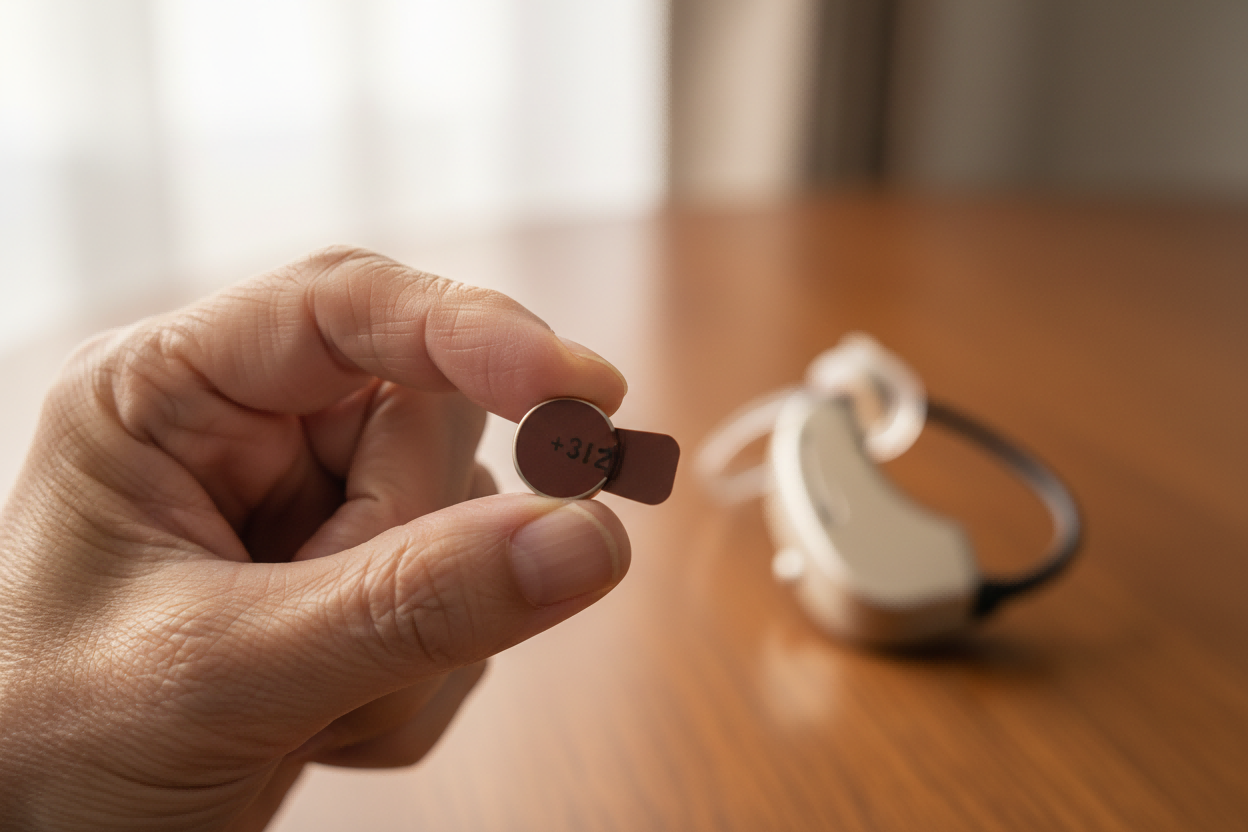
In the modern smart home, small devices require equally compact and reliable power sources. As an industry leader in household power solutions, Bevigor understands that the evolution of battery technology goes hand in hand with safety and everyday usability.
Recently, a major shift has swept through the retail landscape: the full implementation of Reese's Law (Pub. L. 117-171). Passed to protect infants and young children from the severe hazards of accidental battery ingestion, this federal regulation mandates strict child-resistant packaging requirements under 16 CFR Part 1263.
However, while this legislation is an undeniable victory for childhood safety, it has introduced an unexpected, real-world conflict for multi-generational families. The very barriers designed to keep small fingers out are making everyday access a painful struggle for seniors and individuals living with physical limitations like arthritis.

Understanding this design tension is essential for safely managing a modern household. By exploring how these regulations alter our daily routines, why the physical properties of these power cells demand such rigorous safeguards, and how to safely bridge the accessibility gap, consumers can maintain both a secure home environment and a functional, self-sufficient lifestyle.
Why Reese's Law Packaging Shifts Hit Every Hearing Aid Battery User Hard
The Daily Dependence on a Fresh Hearing Aid Battery
Enacted to prevent catastrophic internal injuries and fatalities resulting from child ingestions, Reese's Law establishes mandatory federal safety benchmarks across consumer retail. For a plain-English, authoritative overview of what companies must do (and what that means for households), the best single reference is the CPSC's Button Cell and Coin Battery Business Guidance.
Unlike an occasional purchase, a zinc-air battery or a miniature coin cell used in hearing electronics is a critical component of daily functioning. When a daily-need healthcare product suddenly becomes significantly harder to unbox, several negative ripple effects emerge throughout the household:
Individual independence can suffer as aging adults struggle with daily device maintenance.
Caregivers get regularly pulled into a basic maintenance task that the user used to execute easily on their own.
Unintended, risky workarounds become far more likely as individuals seek immediate relief from physical frustration.
These broader ripple effects matter immensely because they directly increase the likelihood that loose power cells will be exposed throughout living spaces.
Clinical Hazards of Accidental Ingestion and Mechanical Obstructions
The clinical necessity for these stringent retail adjustments stems from the unique physical and chemical characteristics of small power cells. Unlike traditional cylindrical batteries, a small disc-like cell can easily be swallowed unnoticed by an infant or toddler.
When trapped inside the narrow human esophagus, the cell does not merely present an immediate mechanical choking hazard. Instead, it initiates an active electrochemical reaction by drawing upon local bodily fluids to complete an electrical circuit.
This reaction rapidly generates highly corrosive hydroxide ions, causing deep tissue destruction and severe esophageal burns in as little as two hours. Because early clinical signs frequently mimic benign childhood ailments like a mild sore throat, federal intervention was deemed paramount to establish proactive, preventative physical barriers long before a child can ever come into contact with a loose cell.
The Hidden Safety Risks When Seniors Unbox a Hearing Aid Battery
Bypassing Protocol Limitations and Lived Experience for Hearing Aid Batteries
When retail packaging becomes too difficult to open, people naturally seek out an easier-to-open container to store their daily power supply. The central safety problem is that virtually all convenient household containers—such as pill organizers, small glass jars, or plastic film canisters—are completely devoid of child-resistant mechanisms.
A key insight from academic research on usability and ethics in senior-friendly packaging reveals that official test protocols frequently fail to capture the lived experience of people with disabilities and reduced dexterity (see research on the limits of “senior-friendly” packaging tests).
The federal standard text defining poison-prevention packaging performance is codified at 16 CFR 1700.15. Under these Poison Prevention Packaging Act (PPPA) testing parameters, a packaging design must prevent at least 80% of a child test panel from opening the package during a 5-minute trial, while allowing a senior panel (aged 50 to 70) a success rate of at least 90%.
Weighing Safety Metrics Before Storing a Hearing Aid Battery
My friend John recently shared how frustrating these new regulatory changes have been for his family. He noted that after the mandates kicked in, his elderly mother struggled so intensely with the rigid packaging for her size 312 zinc air battery supply that she nearly tore off her fingernails before resorting to leaving open cells scattered across her nightstand.
If a caregiver or family member is helping an older adult evaluate a storage workaround, they must carefully weigh two fundamental questions:
Can the older adult open the alternative container consistently without experiencing joint pain?
Can a visiting toddler open the alternative container in under one minute?
If the honest answer to the second question is "yes" or "maybe," the alternative container is not a safe household option.
Caregiver Protocols for Protecting Children from Loose Hearing Aid Batteries
Identifying High-Risk Areas Beyond the Central Hearing Aid Battery Drawer
Most dangerous ingestion incidents do not originate in a structured, central workshop or a designated storage drawer. Instead, they occur in the everyday household places that curious young children naturally explore when adults aren't looking:
A personal purse or tote bag left resting on the floor near an entryway.
A bedroom nightstand holding a half-cut, unsealed blister pack.
A coat pocket or jacket was dumped casually across a living room chair.
Proactive Household Moves to Maintain a Secure Hearing Aid Battery Supply
To prevent accidental exposures without policing family members, caregivers can implement several practical, systematic routines throughout the home:
Position a single dedicated, child-resistant battery case directly next to hearing aid cleaning tools, and keep it elevated out of reach like prescription medication.
Utilize a lidded, dedicated 'used battery' container in the same location so depleted cells do not end up sitting on a paper tissue, desk, or drinking cup.
Whenever young children are scheduled to visit, execute a rapid 30-second sweep of all flat surfaces, including nightstands, coffee tables, couch cushions, and bathroom counters.
This approach is not about policing the home. It is about proactively eliminating the exact moment when a curious child discovers a shiny, coin-shaped object.
Preventing Stress and Chaos Across Every Hearing Aid Battery Size
Managing Multi-Size Inventory Across a Shared Hearing Aid Battery Supply
When individuals store loose cells in unorganized drawers or jars, they significantly increase the risk of mixing cells of different sizes. Accidental size mix-ups create avoidable physical frustration, damage sensitive hearing device contact pins, and generate unnecessary domestic stress.
If your household uses multiple cell sizes or you are assisting multiple individuals with their devices, reviewing an authoritative reference such as a hearing aid battery size guide (312 vs. 13) can quickly clarify the physical differences and eliminate battery drawer chaos.
The following table provides a comparison of standard button and coin cell sizes used in healthcare and electronics, outlining their primary specifications and typical applications:
|
Battery Size Standard |
Physical Color Coding |
Typical Physical Dimensions |
Common Device Applications |
|
Size 10 Zinc Air Battery |
Yellow Tab |
5.8 mm diameter x 3.6 mm height |
Ultra-compact, in-the-canal (ITC) hearing aids. |
|
Size 312 Zinc Air Battery |
Brown Tab |
7.9 mm diameter x 3.6 mm height |
Standard receiver-in-canal (RIC) hearing devices. |
|
Size 13 Zinc Air Battery |
Orange Tab |
7.9 mm diameter x 5.4 mm height |
High-power behind-the-ear (BTE) hearing instruments. |
|
CR2032 Lithium Cell |
None (Engraved Text) |
20.0 mm diameter x 3.2 mm height |
Key fobs, digital scales, and remote controls. |
Conclusion
The implementation of Reese's Law represents a vital step forward in reducing severe childhood injuries caused by accidental battery ingestion, yet it highlights a complex design friction in everyday usability. As a dedicated provider of household power solutions, Bevigor supports packaging advancements that safeguard our most vulnerable family members.
At the same time, we recognize that true home safety must remain inclusive of seniors and individuals facing physical dexterity challenges. By understanding the chemical risks associated with a swallowed coin cell or zinc-air battery, recognizing that child-resistant packaging is meant to buy time for intervention, and adopting rigorous household storage protocols, families can successfully protect their children without compromising the autonomy and comfort of their elders. Maintaining a secure, organized home allows everyone to enjoy the benefits of modern consumer electronics safely and reliably.






Share:
How to Safely Manage Child-Resistant Button Cell Battery Packaging
What to Do If a Child Might Have Swallowed a Button Battery