

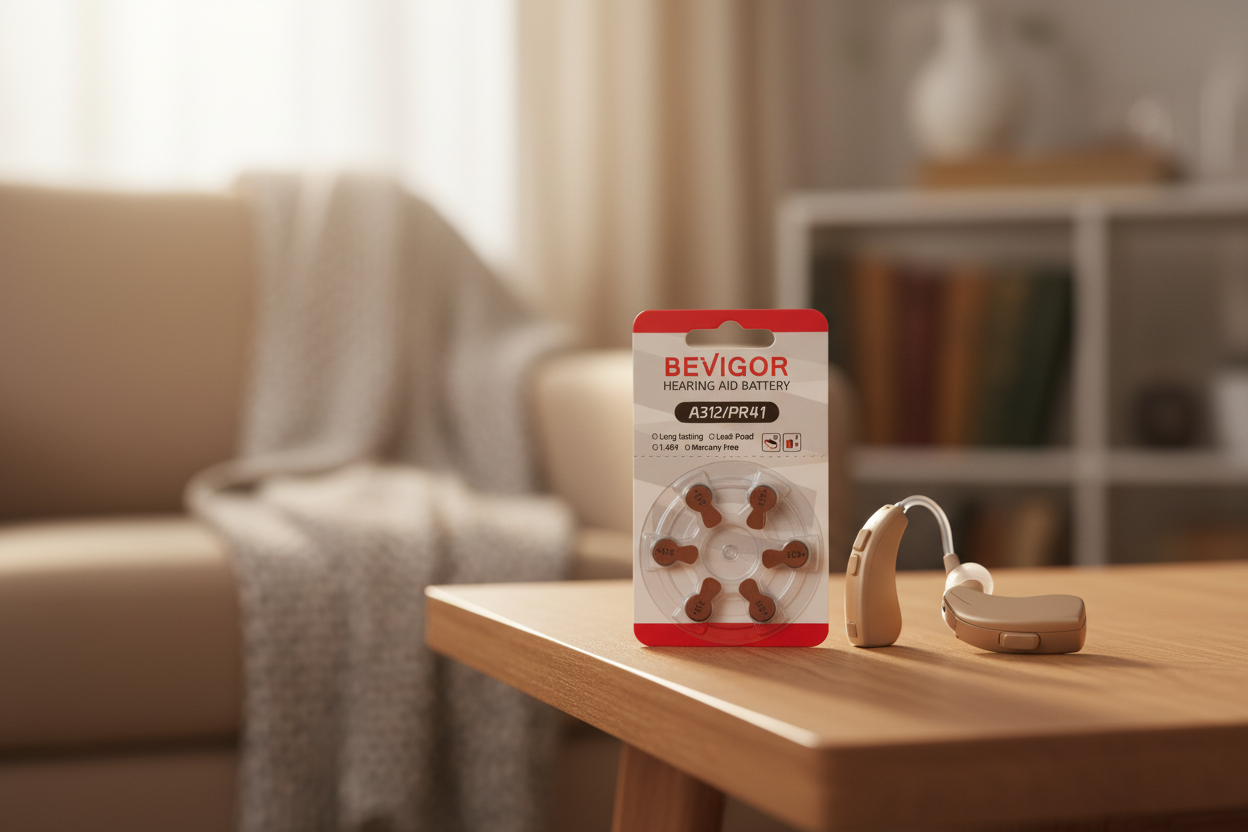
In the modern smart home, small devices require equally compact and reliable power sources. As an industry leader in household power solutions, Bevigor understands that the evolution of battery technology goes hand in hand with safety and everyday usability. Recently, a major shift has swept through the retail landscape: the full implementation of Reese's Law. Passed to protect infants and young children from the severe hazards of accidental battery ingestion, this federal regulation mandates strict child-resistant packaging requirements.
However, while this legislation is an undeniable victory for childhood safety, it has introduced an unexpected, real-world conflict for multi-generational families. The very barriers designed to keep small fingers out are making everyday access a painful struggle for seniors and individuals living with physical limitations like arthritis.
Understanding this design tension is essential for safely managing a modern household. By exploring how these regulations alter our daily routines, why the physical properties of these power cells demand such rigorous safeguards, and how to safely bridge the accessibility gap, consumers can maintain both a secure home environment and a functional, self-sufficient lifestyle.

Why Technical Testing of Packaging for Coin Batteries Misses Real Limitations
The Regulatory Realities of 16 CFR 1700.15 for Coin Batteries
Many consumers naturally assume that federal regulations guarantee a balance, ensuring that commercial packaging remains easy for older generations. In reality, the standardized metrics used in official “adult-opening” performance evaluations do not always reflect the individuals who struggle most with joint issues.
The primary federal standard text that defines poison prevention packaging performance is officially codified under 16 CFR 1700.15. This statute establishes specific mathematical thresholds for child resistance and adult use effectiveness.
While these protocols ensure a product is highly secure against children, the real-world utility testing parameters often overlook severe physiological conditions.
The Clear Gap Between Test Panels and Real Households Using Coin Batteries
There is a massive operational gap between a controlled, standardized testing panel and the realities of daily life inside a typical home. Chronic health conditions like severe rheumatoid arthritis, advanced peripheral neuropathy, and age-related loss of grip strength can transform a package that officially “passes the protocol” into something that feels utterly impossible to open at home.
When a testing panel relies on healthy adult subjects within a specific age bracket, it fails to simulate the lived experience of an elderly individual trying to change a power cell on a bad morning. This leaves seniors facing an adversarial physical barrier just to power their essential everyday equipment.
The Dangerous Safety Paradox of Frustrating Packaging for Coin Batteries
How Onerous Obstacles Can Increase the Abundance of Loose Coin Batteries
The structural difficulty built into child-resistant mechanisms can inadvertently trigger a dangerous domestic paradox for caregivers. When retail packaging is intentionally engineered to be incredibly hard to open, it can actually create more loose cells around the living space.
If an older adult or a caregiver has to struggle with an unyielding plastic backing for ten minutes, normal human behavioral patterns begin to take over. This frustration drives individuals to look for immediate physical workarounds to avoid facing the same structural struggle the next time a device stops working.
Evaluating Human Workarounds and Toddler Exploitation of Coin Batteries
When faced with an unyielding barrier, a frustrated consumer will frequently engage in highly predictable, short-term management behaviors. The most common household shortcuts include:
l Tearing open an entire plastic blister sheet with heavy tools and leaving the pack permanently half-open.
l Dumping multiple opened, loose cells together into an easier, unsealed plastic container or desk drawer.
l Asking a visiting relative to open the entire inventory at once, and then forgetting to re-secure the collection afterward.
These are completely normal human responses to bad design, but they create a severe domestic vulnerability. A curious toddler will easily find and exploit these loose cells, transforming a well-intentioned safety rule into a major household hazard.
Reframing the Manufacturing Compromise: Friction vs Risk for Coin Batteries
Shifting Focus Away from Raw Force to Prevent Risks from Coin Batteries
To design a truly effective solution for the modern home, product developers must recognize that the ultimate engineering tradeoff isn't simply a battle of physical strength versus child safety. Instead, the design challenge should be framed as a delicate balance between friction and risk.
Safety metrics naturally demand the inclusion of physical friction, ensuring that an unsupervised child under five will hit an insurmountable barrier. However, accessibility goals demand highly predictable, repeatable mechanical steps, ensuring that an adult doesn't need to apply brute force or tiny fingernails to get results.
Embracing Sequence-Based Design Solutions for Modern Coin Batteries
When a retail package relies purely on thick, high-tensile plastic polymers and heavy brute force, it creates a universal barrier that blocks curious children and many vulnerable adults. A superior engineering approach focuses on cognitive and physical sequences.
By designing a multi-step path—such as a specific peel, fold, push, and slide combination—the packaging can successfully deter young children while remaining entirely workable for seniors. My friend Monica recently discussed these packaging challenges, noting that the unyielding, ultra-thick plastic backing found on retail cards feels like absolute torture to open when your hands are stiff and aching.
Transitioning toward smart, sequential designs allows manufacturers to uphold the strict safety standards mandated by Reese's Law without compromising the independence of older generations.
Practical In-Home Adaptations for Managing Household Coin Batteries
Mimicking Smart Industrial Design Rules for Coin Batteries at Home
While a typical consumer cannot re-engineer the commercial plastic packaging sitting on their kitchen counter, they can easily adopt structural strategies that mimic the aims of excellent industrial design. The goal is to establish an automated, structured methodology for handling new inventory safely.
The following table outlines the key design objectives and translates them into actionable, simple steps that any multi-generational family can implement immediately:
|
Core Industrial Design Objective |
Actionable Step for Home Implementation |
Expected Safety and Accessibility Outcome |
|
Make the Action Deliberate |
Designate a single, well-lit table for opening packs; extract only one cell at a time. |
Prevents scattered inventory and keeps loose cells out of common areas. |
|
Make Human Errors Less Harmful |
Open packages over a shallow tray; keep a dedicated, sealed container nearby for used cells. |
Captures dropped items instantly and prevents loose items from rolling away. |
|
Reduce Manual Dexterity Demands |
Use a stable, flat surface and rely on large, ergonomic, soft-grip workshop scissors. |
Minimizes physical pain for seniors and prevents slip injuries from knives. |
The Critical Role of Caregiver Support in Managing Coin Batteries
Active caregiver intervention is a vital component of balancing safety and independence in a multi-generational home. If an elderly family member is left to handle difficult retail packaging completely on their own, they are placed in an unfair position.
Forced to choose between asking for help every time a battery dies and keeping loose cells in an easy-to-reach spot, many seniors will choose the latter to maintain their autonomy. The caregiver's role is to structure the environment so that the safe option is always the easiest to choose.
Conclusion
The structural protections introduced by Reese's Law represent a vital milestone in safeguarding young children from the devastating internal chemical injuries caused by accidental battery ingestions. At the same time, this law underscores a real design challenge: ensuring that vital consumer products remain accessible to populations with limited manual dexterity.
As a dedicated provider of hearing air batteries and other household power solutions, Bevigor fully supports strict child-delaying frameworks while actively championing universal design innovations that protect seniors' dignity. By recognizing the gap in standard testing, avoiding dangerous storage workarounds, and implementing structured routines at home, families can successfully navigate these changes.
Bridging the gap between child safety and senior accessibility ensures that our modern, device-filled households remain secure, supportive, and functional for family members of every generation.






Aktie:
Understanding Reese's Law: New Safety Standards for Retail and Household Battery Products
Safe Ways to Unbox Stubborn, Child-Resistant Hearing Aid Battery Packaging