

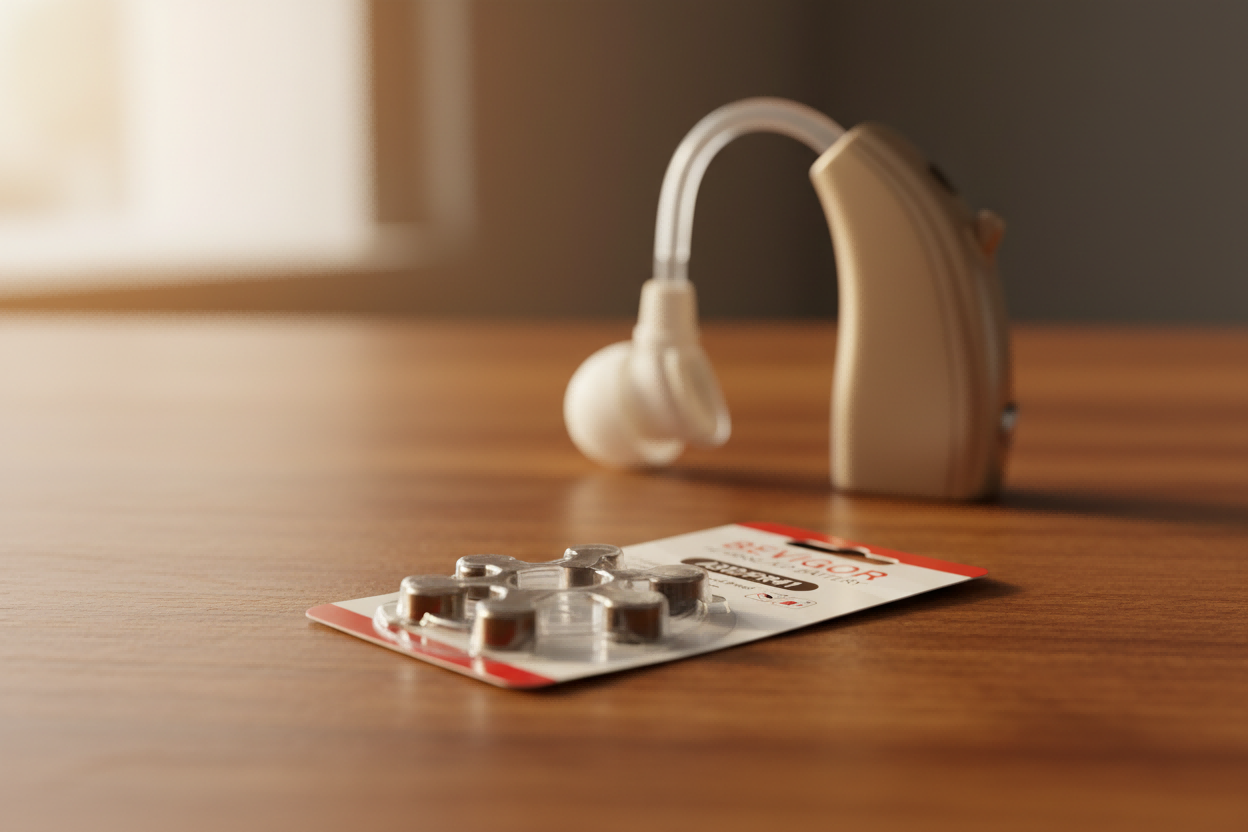
The modern consumer marketplace relies heavily on small, high-density power sources to run everything from miniature smart home components to lifesaving medical equipment. As a leading voice in household power solutions, Bevigor is committed to keeping families fully informed about both technological advancements and critical safety protocols.
Recently, a sweeping regulatory transformation has reshaped how small electronics and their power cells are manufactured, packaged, and distributed. This change is driven by the federal implementation of Reese's Law (Pub. L. 117-171), a vital safety statute enacted to drastically reduce accidental ingestions among infants and young children.

While this legislation marks a historic step forward for childhood protection, it introduces a practical, everyday challenge for multi-generational homes. The intense physical barriers engineered into new retail packages can create severe access barriers for seniors and individuals living with manual dexterity limitations like arthritis.
Striking an effective balance between establishing an impenetrable defense against curious children and maintaining reasonable utility for aging adults requires a clear understanding of the new regulatory landscape. By examining the precise mechanics of these federal changes, families can successfully navigate the retail shift while ensuring their homes remain safe, supportive, and highly functional.
Unpacking Reese's Law Requirements for Household Coin Batteries
The Dual Categories of Regulation Under Reese's Law for Coin Batteries
Enacted to prevent catastrophic internal injuries and fatalities resulting from child ingestions, Reese's Law establishes mandatory federal safety benchmarks under 16 CFR Part 1263. The Law approaches household hazards by splitting its regulatory focus into two primary commercial areas.
First, it addresses consumer products that contain or utilize miniature power cells, ensuring that the structural integrity of internal components prevents easy exposure. Second, it regulates standalone power cells distributed directly through retail networks, mandating robust packaging mechanisms and prominent warning labels designed to reduce ingestion hazards.
For a plain-English, authoritative overview of what companies must do (and what that means for households), the best single reference is the CPSC's Button Cell and Coin Battery Business Guidance.
Addressing the Severe Chemical Vulnerabilities of Coin Batteries
The clinical necessity for these stringent retail adjustments stems from the unique physical and chemical characteristics of small power cells. Unlike traditional cylindrical cells, a small disc-like cell can easily be swallowed unnoticed by an infant or toddler.
When trapped inside the narrow human esophagus, the cell does not merely present an immediate mechanical choking hazard. Instead, it initiates an active electrochemical reaction by drawing upon local bodily fluids to complete an electrical circuit.
This reaction rapidly generates highly corrosive hydroxide ions, causing deep tissue destruction, severe esophageal burns, and potential perforation of vital vessels in as little as two hours. Because early clinical signs frequently mimic benign childhood ailments like a mild sore throat, federal intervention was deemed paramount to establish proactive, preventative physical barriers long before a child can ever come into contact with a loose cell.
Packaging Layer vs Product Layer Safeguards for Coin Batteries
Why the Two-Layer Defense System Matters for Coin Batteries
A common consumer misconception is that recent safety laws apply solely to the clear plastic blister packages hanging in retail store aisles. In reality, the federal consumer protection framework relies on a dual-layered infrastructure to guarantee complete domestic security.
The initial packaging layer is responsible for preventing children from accessing loose, uninstalled inventory right out of the shipping box. The subsequent product layer focuses entirely on securing the doors and entry points of devices throughout the living environment.
If either layer suffers a structural failure, an unprotected child can quickly end up with a highly hazardous object in hand. Consequently, vigilant caregivers must pay equal attention to the durability of retail packs and the mechanical resilience of everyday electronic enclosures.
Identifying Everyday Household Items Utilizing Coin Batteries
To maintain an impenetrable home safety environment, families must first identify where these compact power units reside. Because of their excellent energy density and flat profiles, they are hidden inside dozens of common household devices.
The following table provides an analysis of standard household objects that utilize these cells, detailing where they are commonly found and why their accessibility must be strictly monitored:
|
Device Category |
Common Household Location |
Primary Risk Factor to Address |
|
Home Entertainment Remotes |
Living room couches, coffee tables, media consoles |
Frequently dropped, which can crack weak battery latches. |
|
Automotive Key Fobs |
Entryway key hooks, kitchen counters, purses |
Small, highly portable, and attractive to toddlers as toys. |
|
Kitchen & Medical Tools |
Medicine cabinets, kitchen drawers, countertops |
Used frequently; battery compartments may be left unlatched. |
|
Smart Home Automation |
Window frames, exterior doors, hallway walls |
Placed throughout the home, often out of immediate eyesight. |
|
Decorative Electronics |
Fireplace mantels, dining tables, festive displays |
Often cheaply manufactured without reinforced structural screws. |
Engineering Child-Resistant Standards for Commercial Coin Batteries
Defining Child-Resistant Engineering in Contemporary Coin Batteries
When standalone power cells are sold separately to consumers, federal mandates dictate that the retail packaging must achieve certified child-resistant status. In the context of consumer product engineering, this standard is governed by the Poison Prevention Packaging Act (PPPA) standards under 16 CFR § 1700.15.
This signifies that an average child under five years old should be completely unable to open or compromise the outer barrier within a reasonable timeframe. When designing compliant battery packaging, manufacturers must verify that at least 80% of children participating in standardized testing panels cannot open the package during an initial 5-minute trial.
Furthermore, even after the children are shown a clear physical demonstration of how to open the package, at least 80% of the panel must still fail to gain access. Conversely, to ensure adult utility, the packaging must allow a senior panel (aged 50 to 70 years) a success rate of at least 90% to establish a proper balance.
Managing the Practical Friction and Materials for Coin Batteries
Translating these rigorous test requirements into retail realities requires distinct manufacturing adjustments. Packages are built using significantly thicker plastic blister polymers, complex multi-step opening mechanisms, and specialized peel-and-push structural configurations.
These designs intentionally mandate a highly coordinated, high-force physical action rather than a simple, intuitive tear. For adults who lack full manual dexterity, these heavy physical demands can make opening a simple battery pack feel like an uphill climb.
The engineering reality is that designs optimized to defy the grip strength, teeth, and fingernails of a determined four-year-old inherently mirror the difficulties faced by older consumers struggling with joint inflammation or reduced muscular control.
Ensuring Device Safety for Households Relying on Coin Batteries
Simple In-Home Safety Protocols for Devices Powered by Coin Batteries
Reese's Law extends far beyond the point of sale, fundamentally altering the engineering requirements for the electronic devices that utilize miniature power cells. Under current CPSC guidelines, a young child must not be able to open an electronic device's battery compartment using casual, intuitive finger pressure alone.
Federal oversight agencies describe acceptable engineering solutions as those requiring a specialized external tool, such as a screwdriver or a coin, or the application of two independent, simultaneous manual movements to release the latch. For families managing a busy household, conducting a regular manual evaluation of all active electronics is an essential safety habit.
Implementing the Universal Security Rule for Coin Batteries
The guiding rule of thumb for home management is straightforward. If an electronic compartment cannot be verified as completely secure, the entire device must be treated as an active household hazard. My colleague Monica recently shared how frustrating these protective layers can be in daily life.
She noted that the impossible child-proof blister backings remind her exactly of her migraine medication packaging, where you have to struggle with a tiny, unyielding blister pack while dealing with a pounding headache and distorted vision. To bypass this, some adults resort to opening entire packs at once.
If an electronic device door is loose or cracked, caregivers must treat the product with the same high level of caution they would afford a prescription medication bottle. Unsecured remotes or sensors must never be left on low tables, and spare inventory must be locked away in elevated cabinets completely out of reach.
The Impact on Essential Medical Cells and Hearing Aid Coin Batteries
Navigating Dexterity Obstacles with Healthcare Coin Batteries
The intersection of strict child-resistant packaging and daily medical necessity represents one of the most significant stress points within the modern battery market. Hearing aid cells are a prime example of this ongoing dilemma.
These tiny power cells are small enough to represent a critical ingestion hazard for an infant. Yet, they are a non-negotiable, daily functional requirement for the elderly individual who relies on them to communicate and navigate the world safely.
This creates a difficult domestic paradox: the safest routine for child accident prevention demands that these items be stored behind complex, high-strength physical barriers, yet the daily user may possess the very hands least capable of overcoming those barriers without experiencing severe pain or frustration.

Fostering Collaborative Household Routines for Coin Batteries
Resolving this multi-generational friction requires a compassionate, systematic approach rather than heavy-handed restriction. When supporting an older relative who uses replaceable cells in medical devices, the objective should be to establish predictable, structured routines that preserve individual independence while maintaining household safety.
Rather than forcing a senior to wrestle with a thick retail blister pack during an urgent device change, a family member can establish a designated weekly routine. Using sharp workshop scissors, an adult can safely open the necessary retail packs in an elevated, child-free zone and immediately transfer the individual cells into an authorized, adult-accessible storage container located safely out of a toddler's line of sight. This proactive system preserves the dignity of seniors while keeping small children completely insulated from loose electrical components.
Conclusion
The comprehensive implementation of Reese's Law serves as a monumental achievement in national child safety, systematically closing dangerous loopholes that historically exposed infants to severe internal injuries. However, the Law simultaneously shines a critical spotlight on the ongoing design tension between security and universal accessibility.
As an organization dedicated to delivering premier household power options, Bevigor fully champions these rigorous child-safety standards while actively advocating for intuitive packaging innovations that support our aging population. By recognizing the chemical hazards of swallowed cells, appreciating the dual-layered defensive strategy of modern manufacturing, and adopting organized storage habits, households can confidently protect their youngest members.
Embracing these integrated safety measures ensures that our modern, device-filled homes remain safe, supportive, and accessible for family members of every generation.






Aktie:
Balancing Toddler-Proof Safety and Senior Accessibility in the Modern Battery Market
Protecting Toddlers from Coin Batteries Without Punishing Arthritic Hands