


Smart home devices are a wild mix. Some use regular AAs. Some use small coin cells. It can be super confusing to keep track of it all. But if you want your gear to work exactly right, you need to avoid guessing and just look at the label. If you want true peace of mind, you need the good stuff to power your home. Standard alkaline batteries just drop their power too fast. They simply cannot keep up with the smart chips and Wi-Fi signals in your house.
Why Are Lithium Batteries Crucial for Smart Homes?
Lithium batteries are crucial for smart homes because they give steady power to devices that keep your house safe. Smart home networks need to be on all the time to protect your family and your property. That is a big job. Standard batteries lose their power too quickly when they are asked to do too much. That is why so many people are switching over to better chemistry. They want to know their alarms will actually go off when needed.
What Do Lithium Batteries Provide for Security Systems?
Lithium batteries provide security systems with long-lasting energy that stops sudden shut-downs when you need them most. Think about your home setup. You probably have a central hub, some door sensors, and maybe a loud alarm. All these parts talk to each other all day long.

That constant chatter takes real energy. Standard batteries lose their juice slowly over time, making signals weak. But not these. They keep the power flowing at a flat, steady rate until they are almost totally empty.
How Do Lithium Batteries Handle Sudden Power Spikes?
Lithium batteries handle sudden power spikes by giving out a lot of energy fast without losing voltage. Imagine turning on a heavy machine. It needs a big kick of power right at the start to get moving. Smart locks and HD cameras act the exact same way. When they wake up, they pull a massive amount of power in a split second.
Normal water-based batteries choke when this happens. But the special chemistry in modern cells is different. It dumps energy quickly, keeping your device from crashing.
How Do Lithium Batteries Perform in Blink Cameras?
Lithium batteries perform amazingly well in Blink cameras by delivering the quick bursts of power needed to record video. Blink cameras are a perfect example of checking the label. Some of their popular models take AA batteries. If yours does, you really want to use the right kind. You see, these cameras are usually stuck outside. They have to deal with awful weather and changing temperatures. Regular batteries will leave you with a dead camera in just a few weeks.
Why Do Blink Cameras Need Lithium Batteries?
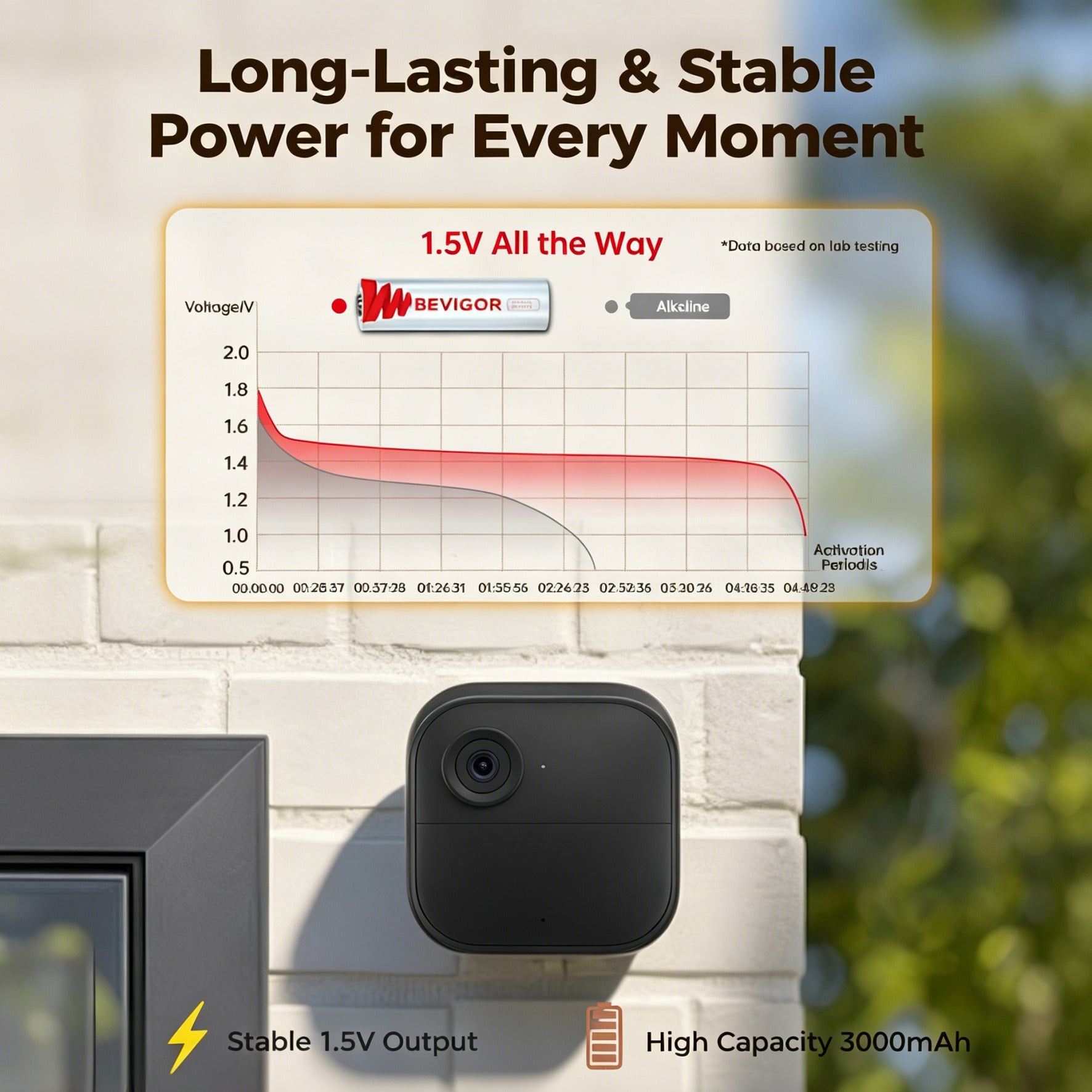
Blink cameras need lithium batteries because their computer chips are made to run perfectly on a flat 1.5-volt power curve. Most batteries get weaker as they drain. They start at 1.5 volts, then drop down to 1.4, then 1.3. Blink cameras hate that. If the voltage drops too much, the camera just shuts off, even if the battery is only half empty! It is incredibly frustrating. These special power cells solve that problem by holding that 1.5-volt line almost all the way to the very end.
What Drains Lithium Batteries in Outdoor Cameras?
Lots of motion, too many live views, and wild weather are the main things that drain lithium batteries in outdoor cameras. Every time a car drives by, your camera wakes up. It turns on the Wi-Fi. It records a video. It sends that video to your phone. All of that eats up power. Fast. If your camera dies too quickly, the cause is often your settings, not bad battery quality. Check your app first before you blame the power source.
How Can You Save Lithium Batteries in Cameras?
You can save lithium batteries in cameras by turning down the motion sensitivity and pointing the lens away from busy streets. A practical tactic is to monitor the camera for a week after you put in fresh power. Is it triggering constantly? Are trees moving in the wind, setting it off? If so, you need to make a change. Move the camera. Adjust the zones in the app so it only watches your driveway. Just a few small tweaks can easily double the life of your power supply.
Why Do Smart Locks Drain Lithium Batteries Quickly?
Smart locks drain lithium batteries quickly because turning a heavy metal deadbolt takes a huge amount of power all at once. Locks are very battery-sensitive. Think about what they actually do. They use a small motor to push a solid piece of metal into a door frame. The motor draws spikes instantly during every lock and unlock cycle. It is a big job, and it demands a tough power source to handle the daily grind of people coming and going.
What Causes Smart Locks to Drain Lithium Batteries?
A sticky door or a lock that rubs against the frame will cause smart locks to drain lithium batteries super fast. If you are getting "low battery" alerts way too often, think beyond the battery itself. Open the door and try turning the lock by hand. Is it hard to turn? Does it stick? If the deadbolt rubs against the metal strike plate, the little motor inside works overtime. This extra effort will absolutely chew through your fresh power supply.
How Can Door Alignment Affect Lithium Batteries?
Bad door alignment affects lithium batteries by making the motor inside the lock strain against the extra pressure. A misaligned door is a quiet troublemaker. Even thick weather stripping can make the bolt harder to throw.
As seasons change, wooden doors swell and shrink. Suddenly, your smooth lock is grinding every time you use it. All that physical resistance translates straight into electrical strain. Fixing the door is the only real way to stop wasting money on fresh cells.
What Impact Do Temperatures Have on Lithium Batteries?
Extreme temperatures have almost zero impact on lithium batteries because of their special solid chemical makeup. Weather is tough on electronics. If home devices are demanding, outdoor gear is even tougher.
Cold winter mornings and boiling summer afternoons all punish the wrong choice of power. Standard alkaline batteries are full of a watery paste. When it gets cold, that paste freezes up. But modern power cells do not use that watery stuff, making them the undisputed champions of outdoor smart homes.
How Do Lithium Batteries Survive Freezing Weather?
Lithium batteries survive freezing weather because their insides do not freeze and block power like normal batteries do. If you live in a cold area, you know exactly how electronics fail in winter. Your phone dies in your pocket. Your car is hard to start. The same thing happens to your smart lock on the front door. The freezing cold stops normal batteries from working.
But these advanced cells shrug off the cold. They keep the electricity flowing freely, even during a midnight blizzard.
Why Do Lithium Batteries Resist High Heat So Well?
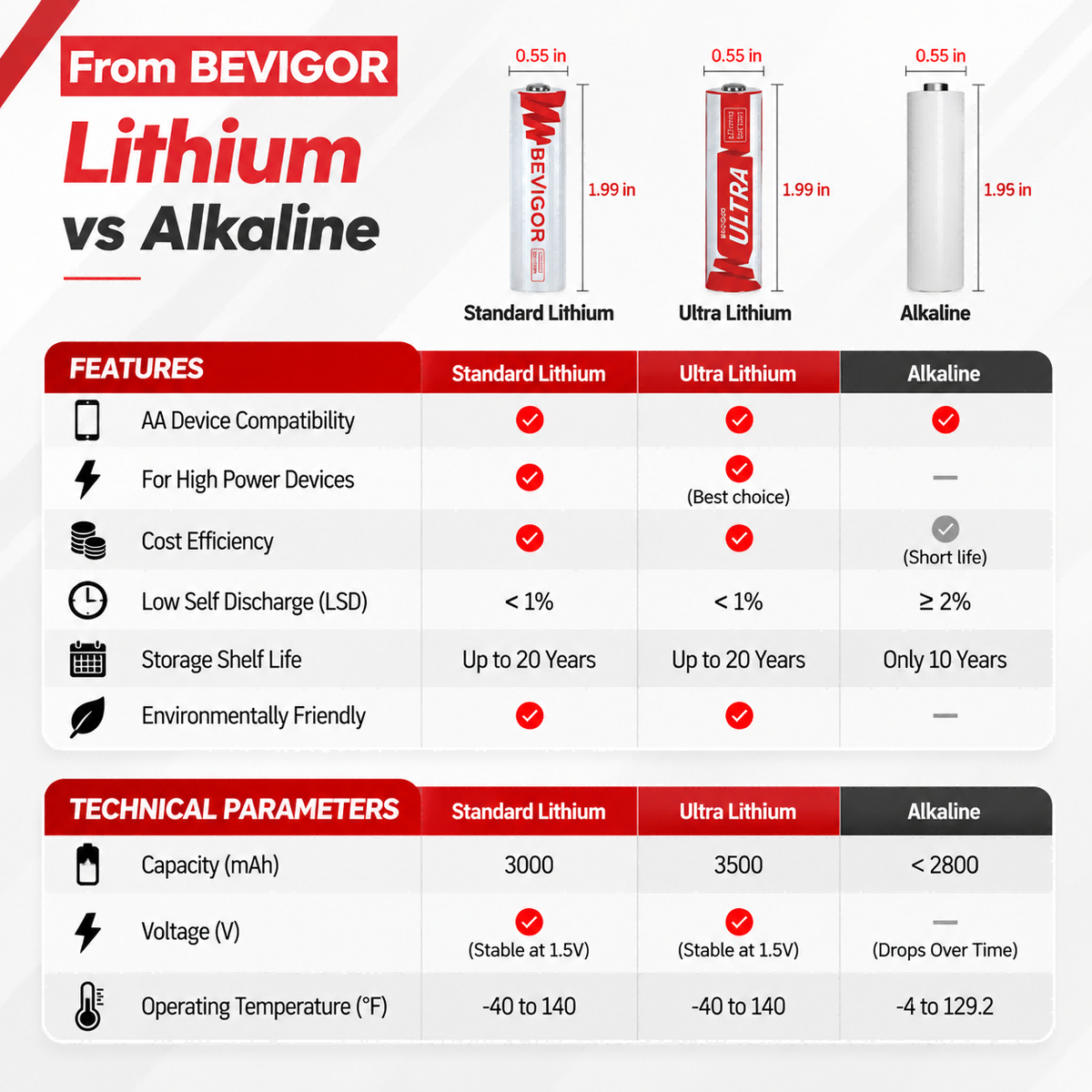
Lithium batteries resist high heat so well because they are built tough to stop leaks and handle baking in the hot sun. Summer heat is brutal on electronics. But according to Bevigor Lab tests, an AA battery for Blink cameras can resist extreme temperatures from -40°F to 140°F.
It means you can mount your security camera right in the blazing sun without worry. It will not leak acid into your expensive camera.
Why Do Smart Sensors Rely on Lithium Batteries?
Smart sensors rely on lithium batteries because they need a tiny, steady trickle of power for years at a time. Sensors are usually low drain. They are the quiet watchers of your smart home. They do not have big motors or glowing screens. But here is the catch. They are always on. They sit on your windows and doors, waiting for a trigger. They need a power source that can sit quietly for years without going dead on its own.
How Do Lithium Batteries Support Always-On Sensors?
Lithium batteries support always-on sensors by holding their charge for a really long time without going dead on their own. We call this the "self-discharge rate." Every battery slowly loses power while sitting on a shelf. Cheap batteries lose it fast. High-quality ones lose it very slowly. This means a good battery can sit in a door sensor for two full years and still have enough juice to send an alarm signal. You install it, forget about it, and trust that it works.
What Drains Lithium Batteries in Window Sensors?
Opening the window all the time, hot garages, and weak Wi-Fi are the main things that drain lithium batteries in window sensors. Battery life really depends on how often the sensor triggers. A sensor on a busy back door will die much faster than one on an attic window that never opens. If a sensor keeps dying early, take a closer look. Think about the placement. Make sure the sensor isn't being triggered by wind rattling a loose door frame all night long.
How Does Weak Signal Affect Lithium Batteries in Devices?
A weak signal affects lithium batteries in devices by making them constantly search for a connection, which eats up a ton of power. Smart locks and sensors share the exact same quiet killer. That killer is a weak Wi-Fi or Zigbee signal.
When a battery-powered device has a terrible connection to the home hub, it panics. It shouts out its signal over and over. That constant repeating can make a perfectly good, brand-new battery look like a total dud.
Why Does Poor Wi-Fi Drain Lithium Batteries?
Poor Wi-Fi drains lithium batteries because the device has to stay awake longer and shout louder to talk to your home hub. Normally, a sensor wakes up, sends a tiny quick message, and goes back to sleep. It takes one second. But if the signal is bad? The sensor stays awake.It sends the message and waits. No answer. It tries again. It keeps trying for minutes at a time. All that extra effort drains the energy super fast. The device is basically exhausting itself.
How Can Router Placement Save Lithium Batteries?
Moving your router closer to your devices can save lithium batteries by making it easier for them to connect quickly. If you have replaced the batteries and the device still drains fast, try moving the hub. Add a repeater to the hallway. Get that Wi-Fi signal as strong as possible. Fewer walls and fewer distances mean the device does not have to work as hard. A strong connection is the absolute best way to make your power supply last as long as it should.
What Devices Should Never Work Without Lithium Batteries?
High-stakes safety gear like loud outdoor alarms and glass-break sensors should never work without lithium batteries. Some alarm devices use AAs or specialty coin cells. If a device affects the safety of your family, you cannot cut corners. You just can't. Do not push cheap batteries to the limit. They will let you down when things get bad. If someone breaks a window, you want that alarm to scream instantly. You do not want a faint little chirp.
Why Are Home Alarms Dependent on Lithium Batteries?
Home alarms are dependent on lithium batteries because they must instantly blast a super loud siren after sitting quietly for a whole year. This is the ultimate test for a power cell. It has to go from doing nothing to giving maximum power in zero seconds. Cheap batteries build up a wall inside themselves when they sit unused. When the alarm finally goes off, that wall stops the power from getting out. Advanced chemistry does not have this problem at all.
How Do Sirens Use Lithium Batteries in Emergencies?
Sirens use lithium batteries in emergencies to keep the loud noise going strong without the sound slowly fading away. You want the police to hear it. You want your neighbors to hear it. A strong power source keeps that siren screaming at top volume for hours if needed. Always replace these early so you are not troubleshooting when you need the system most. Change them out on a strict schedule so you are always fully prepared for the worst.
How Can You Get the Most Life out of Lithium Batteries?
You can get the most life out of lithium batteries by fixing your device settings, checking your Wi-Fi, and fixing sticky doors. Taking care of your smart home is a mix of digital and physical chores. Yes, buying the best power source is step one.
But step two is making sure your home is not wasting that power. A few simple tweaks can save you real money over the course of a year. It takes a little bit of effort, but the results are totally worth it.
What Camera Settings Save Lithium Batteries?
Turning down video quality and shutting off extra lights are the best camera settings to save lithium batteries. Take out your phone. Open your smart camera app. Do you really need to record in 4K resolution? Do you need a 60-second clip every time the wind blows? Probably not. Shorten the recording time to 15 seconds. Turn down the motion sensitivity. Every little feature you turn off gives your power supply a much longer life out in the yard.
How Does Door Maintenance Protect Lithium Batteries?
Door maintenance protects lithium batteries by stopping your smart lock from fighting a tight deadbolt every single day. Go look at your front door right now. Does it close smoothly? If you have to push or pull the handle hard to get the lock to click, you have a big problem. Get a screwdriver. Adjust the metal plate on the door frame. Spray a little bit of dry lubricant inside the lock hole. Your smart lock will work more easily, and your power cells will thank you.
Don't let a cheap power source ruin the smart home security you worked so hard to build. Your family's safety needs dependable energy that handles harsh weather and high-drain spikes without ever breaking a sweat. Head over to Bevigor today to see our full lineup of premium power solutions, and equip your cameras and locks with the lasting energy they truly deserve.






Aktie:
How Do Lithium Batteries Power Wearables And Personal Health Devices?
6 Devices and Applications Where AA Lithium Batteries Outperform Alkaline