

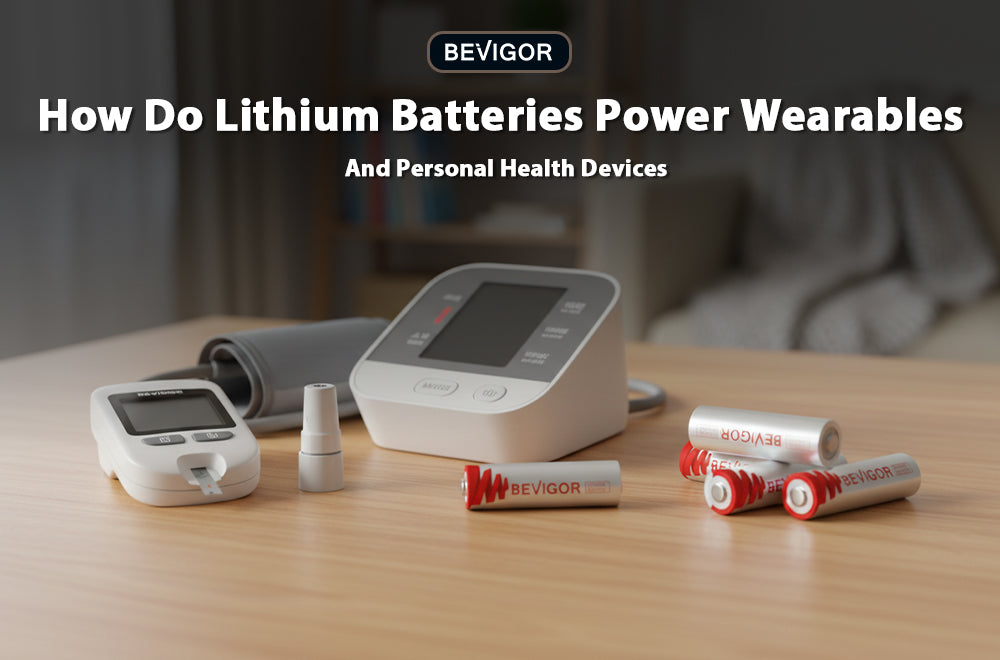
Most devices in this category care about stable voltage and reliable contact. They're small, so coin cells are common. That said, "wearables" covers a wide range of hardware, from simple step counters to advanced digital diagnostics. Some devices are rechargeable. Some are coin-cell powered. Your goal is to know which you have and how to maintain the power source to ensure your equipment never fails when you need it most.
Why Are Lithium Batteries Crucial for Personal Health Devices?
Lithium batteries are crucial for personal health devices because they provide the necessary combination of a highly compact physical size and a rigorously stable electrical output. When you are monitoring vital health statistics, the consistency of your hardware's power supply directly impacts the accuracy of the data collected.

What Makes Lithium Batteries Ideal for Wearables?
What makes lithium batteries ideal for wearables is their exceptionally high volumetric energy density, allowing them to power complex micro-electronics without adding significant, uncomfortable weight to the user's body. By utilizing advanced chemical formulations, engineers can pack immense amounts of active electrical fuel into a metal casing no larger than a standard shirt button. This ensures your wrist or chest strap remains lightweight and entirely unobtrusive during intense physical activity.
How Do Lithium Batteries Maintain Stable Voltage?
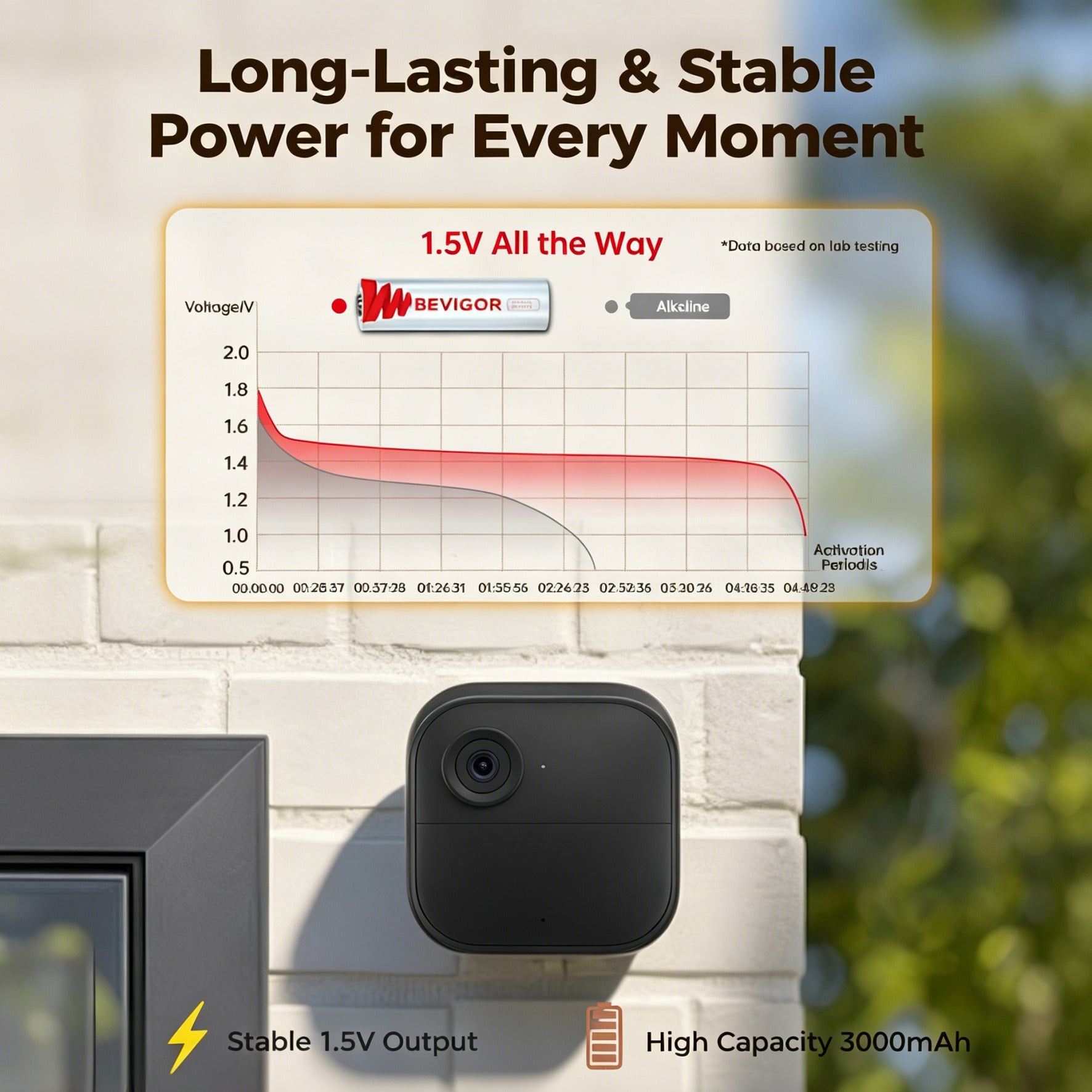
Lithium batteries maintain stable voltage by utilizing highly reactive internal chemistries that deliver a flat discharge curve over almost their entire operational lifespan. Unlike traditional alkaline batteries that experience a steady, sloping decline in voltage as they drain, primary lithium coin cells sustain their full three-volt output until they are nearly completely exhausted. This flat delivery prevents digital sensors from recalibrating incorrectly or producing skewed health data due to sudden power dips.
How Do Rechargeable and Primary Lithium Batteries Compare in Wearables?
Rechargeable and primary lithium batteries compare in wearables by serving two entirely different usage patterns: frequent high-drain daily activity versus long-term, low-maintenance monitoring. Manufacturers select the battery type based entirely on the electrical demands of the device's internal processors and visual displays.
Why Do Some Devices Use Built-In Lithium Batteries?
Some devices use built-in lithium batteries because they incorporate power-hungry features like active GPS tracking, continuous Bluetooth streaming, and full-color OLED displays that would completely exhaust a disposable coin cell in a matter of days. These internal lithium-ion pouch cells operate at a higher voltage and are designed to be chemically replenished hundreds of times via a wall charger, perfectly suiting devices that require massive daily energy draws.
When Are Coin-Cell Lithium Batteries More Practical?
Coin-cell lithium batteries are more practical when the wearable device functions as a low-energy sensor, such as a basic pedometer or a sleep tracker, where a single battery can provide six to twelve months of continuous, uninterrupted runtime. For these streamlined devices, the inconvenience of nightly charging outweighs the benefits of a rechargeable cell, making a disposable, long-lasting primary lithium battery the most logical engineering choice.
Why Do Smartwatches Often Exclude Replaceable Lithium Batteries?
Smartwatches often exclude replaceable lithium batteries because manufacturers prioritize sleek, highly water-resistant enclosures that rely on sealed, internal hardware designs instead of mechanical battery doors. The structural requirements of a modern smartwatch simply leave no room for user-accessible battery compartments.
How Do Internal Lithium Batteries Benefit Smartwatch Design?
Internal lithium batteries benefit smartwatch design by eliminating bulky plastic hinges and removable rubber seals, which allows engineers to achieve vastly superior water-resistance ratings for swimming and rigorous outdoor activities. Many smartwatches are rechargeable and don't use replaceable coin cells. If your watch charges on a magnetic puck or a USB cable, you're not shopping for CR batteries; you are relying on a permanently sealed lithium-ion core.
What Should You Do If Replaceable Lithium Batteries Show Low Power?
If replaceable lithium batteries show low power immediately after installation, you should meticulously check the battery orientation, the cleanliness of the contacts, and the closure of the compartment before assuming the battery itself is defective. If you're dealing with a wearable that uses a replaceable coin cell (often simpler fitness devices or accessories), the rule is the same: match the code. The battery may be upside down. The compartment may not be fully closed. The battery may be the wrong thickness and isn't making firm contact. Or the contacts may be dirty.
How Do Lithium Batteries Function in Traditional Watches?
Lithium batteries function in traditional watches by delivering a slow, continuous micro-current that drives the internal quartz movement or powers the digital display for years at a time without requiring any user intervention. These power sources are the invisible heartbeats of traditional timepieces.
Why Do Watch Lithium Batteries Vary So Widely in Size?
Watch lithium batteries vary widely in size because different timepiece designs contain vastly different internal physical volumes and varying electrical demands, ranging from ultra-thin dress watches to chunky, feature-heavy digital chronographs. Many watches use coin cells, but the specific size varies widely depending on how much physical space the watchmaker allocated inside the metal casing during the initial design phase.
How Can You Avoid Guessing Which Lithium Batteries to Buy?
You can avoid guessing which lithium batteries to buy by taking a clear, zoomed-in photograph of the old battery code before you remove it from the watch casing. The most useful habit is simple: take a photo of the old battery (showing the code) before removing it. That photo saves you from guessing later when you are standing in a store aisle. Also, don't assume your partner's watch uses the same battery as yours. Two watches can look similar and use entirely different sizes.
What Causes Lithium Batteries to Fail in Heart-Rate Monitors?
Lithium batteries fail in heart-rate monitors primarily due to environmental contamination or mechanical housing failures that physically sever the connection between the power cell and the device's conductive terminals. Many chest straps use coin cells because they have long standby life, but their placement directly against the body exposes them to extreme conditions. Two real-world issues pop up a lot.
How Does Moisture Damage Lithium Batteries in Chest Straps?
Moisture damages lithium batteries in chest straps when intense bodily sweat creeps past the rubber O-ring of the battery door, introducing corrosive salts directly onto the electrical contacts. The first is moisture. Sweat can creep into the battery door over time. This creates a galvanic reaction that coats the metal in a non-conductive layer. If the contacts look dull or corroded, clean gently with a dry cloth and make sure the rubber seal is intact before reassembling.
Why Does Contact Pressure Affect Lithium Batteries During Movement?
Contact pressure affects lithium batteries during movement because the heavy physical vibration of running or cycling can easily jostle a loose battery away from the terminal, breaking the electrical circuit entirely. The second is contact pressure. If the cap isn't tightened fully (for models with a twist cap), the battery can lose contact during movement. That can look like a battery problem when it's really a door problem.
How Should We Handle Lithium Batteries in Small Medical Devices?
We should handle lithium batteries in small medical devices with absolute precision, strictly adhering to the manufacturer's exact voltage and size specifications to guarantee flawless operation during critical health evaluations. These are not toys, and their power sources must be treated with appropriate caution.
What Types of Medical Tools Rely on Lithium Batteries?
Common medical tools that rely on lithium batteries include highly calibrated digital glucose meters, handheld infrared thermometers, and advanced at-home blood pressure monitoring systems. These devices require substantial bursts of energy to calculate complex algorithms or drive small mechanical pumps, making the high energy density of lithium cells an absolute necessity for accurate diagnostics.
Why Is Following Instructions Critical for Medical Lithium Batteries?
Following instructions is critical for medical lithium batteries because diagnostic microprocessors are highly sensitive to voltage drops, and poor contact can lead directly to dangerous miscalculations of your personal health data. Important note (not medical advice): always follow the device instructions. Medical devices can be sensitive to low voltage and poor contact. If the device behaves oddly after a battery change, contact the device manufacturer immediately.
Why Are Hearing Devices Sometimes Incompatible with Lithium Batteries?
Hearing devices are sometimes incompatible with lithium batteries because many miniature auditory amplifiers are engineered exclusively to operate on zinc-air chemistry, which requires atmospheric oxygen to function and operates at a lower 1.45-volt standard. Assuming all health devices utilize the same chemistry is a frequent and frustrating consumer mistake.
What Distinguishes Zinc-Air from Coin-Cell Lithium Batteries?
What distinguishes zinc-air from coin-cell lithium batteries is that zinc-air cells rely on peeling a sticker to allow external oxygen to enter through tiny holes to generate power, whereas lithium cells are completely sealed, self-contained three-volt chemical systems. Not all health-related devices use lithium coin cells. Some use hearing aid zinc-air batteries, and some are rechargeable.
How Do You Identify If Your Device Needs Lithium Batteries?
You can identify if your device needs lithium batteries by checking the manual or the battery compartment for standard "CR" engraved codes, rather than looking for the color-coded pull tabs unique to the zinc-air hearing aid industry. If you're shopping for a hearing aid battery, don't assume it's a CR coin cell; verify the exact chemistry requested by your audiologist to prevent permanent electrical damage to your sensitive earpieces.
Why Must You Never Force Incorrect Lithium Batteries into Health Tools?
You must never force incorrect lithium batteries into health tools because applying excess mechanical pressure will permanently bend the delicate internal contacts and compromise the structural integrity of the medical instrument. Pro Tip for Any Health Device: Don't "Make It Fit". If a device is related to health or safety, treat battery matching as non-negotiable.
What Happens When Wrong Lithium Batteries Lose Contact?
When wrong lithium batteries lose contact, the medical or safety device will experience sudden, unpredictable resets that erase vital historical health data and prevent real-time monitoring. A "close enough" battery that occasionally loses contact can cause unreliable readings or continuous device resets. For a toy, that's annoying. For a medical device, it's a problem that could severely impact your well-being.
Why Are Exact Fits for Lithium Batteries Non-Negotiable?
Exact fits for lithium batteries are non-negotiable because the rigid plastic compartments and internal circuit boards of personal health devices are molded to tolerances measured in fractions of a millimeter. Even a cell that is 0.5 millimeters too thick will physically crush the micro-soldered connections inside your glucose monitor, rendering the expensive diagnostic tool completely useless.
Next up are smart home and security devices, where battery choice affects not just runtime, but also reliability during temperature swings and spotty signal conditions. To ensure your health and security devices operate with flawless, uninterrupted precision, explore the expertly engineered, high-performance power solutions available at Bevigor today.







Aktie:
The Five Most Common Ways People Buy the Wrong Lithium Batteries
Lithium Batteries: Smart Home Power Guide