


Does your weather radio die exactly when a severe storm hits? Failing power supplies during critical situations leave your family disconnected and completely vulnerable.
We cover chemistry types, temperature resistance, and securing reliable Emergency and backup devices for critical situations.
The Role of Chemistry in Emergency and backup devices
Many homeowners build survival kits using cheap alkaline cells grabbed from a supermarket checkout lane. This common oversight creates a massive vulnerability in your household preparedness plan. Traditional alkaline chemistry relies heavily on a water based liquid electrolyte to generate internal electrical current. As these cells sit unused in a dark closet for several years, this internal liquid naturally breaks down, producing a gas that expands the metal casing until highly corrosive acid inevitably leaks out.
This chemical leakage destroys the delicate metal contacts inside your expensive flashlights and handheld communication radios. According to technical documentation on storage longevity from Battery University, primary lithium chemistry utilizes a completely solid internal structure. By removing the liquid electrolyte entirely, manufacturers eliminate the root cause of battery acid corrosion. Upgrading your critical hardware to solid state lithium chemistry ensures that your gear remains perfectly intact and ready to operate, even if you leave the cells installed for an entire decade.
Why Do Emergency and backup devices Drain While Turned Off?
You might check your survival kit after a year only to find that the power cells are completely dead, despite the switch remaining in the off position. This frustrating scenario is caused by a phenomenon known as parasitic drain. Modern electronics, such as digital weather radios or GPS locators, often utilize soft power switches rather than hard mechanical disconnects. These soft switches continuously pull a microscopic amount of electrical current to keep the internal memory alive and actively monitor for an "on" command from the user.
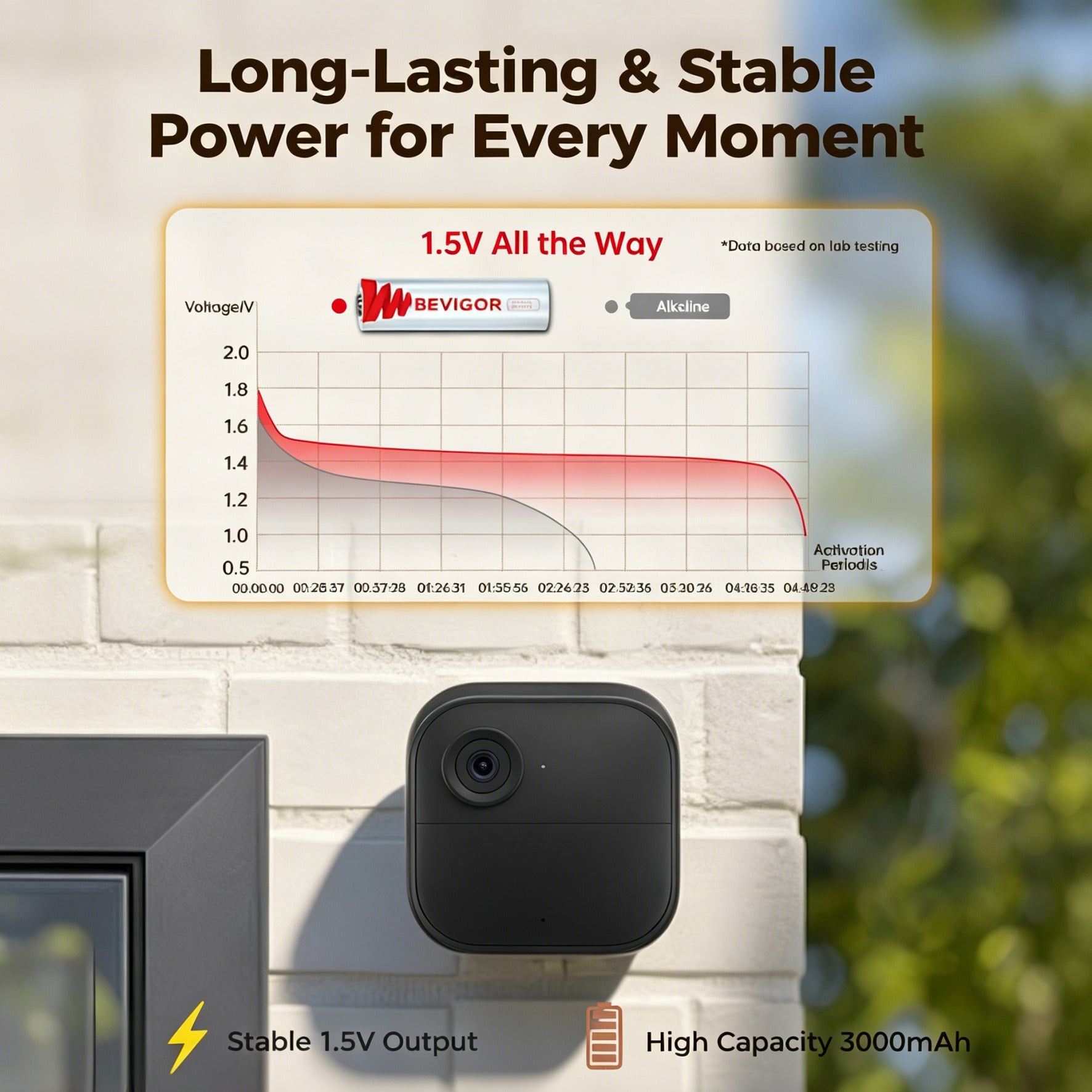
Here is the deal. While a parasitic drain seems tiny on a daily basis, it accumulates massively over several months of storage. Standard alkaline or older NiMH units lose their internal voltage simply by fighting this slow, continuous electrical bleed. If your gear utilizes active memory functions, pairing them with robust AA lithium options from the Bevigor catalog provides the massive capacity needed to counteract parasitic drain over long storage periods, ensuring your equipment powers up instantly during a real crisis.
Temperature Limits for Emergency and backup devices
Ambient weather conditions heavily dictate whether your portable power supplies will function when disaster strikes. During severe winter storms and prolonged power outages, the temperature inside a home or an unheated garage can plummet rapidly. When standard alkaline cells drop below freezing, their internal liquid components thicken, causing severe electrical resistance. This sudden physical resistance blocks ion flow, leaving your flashlight dim or completely unresponsive just when you need to navigate a dark stairwell.
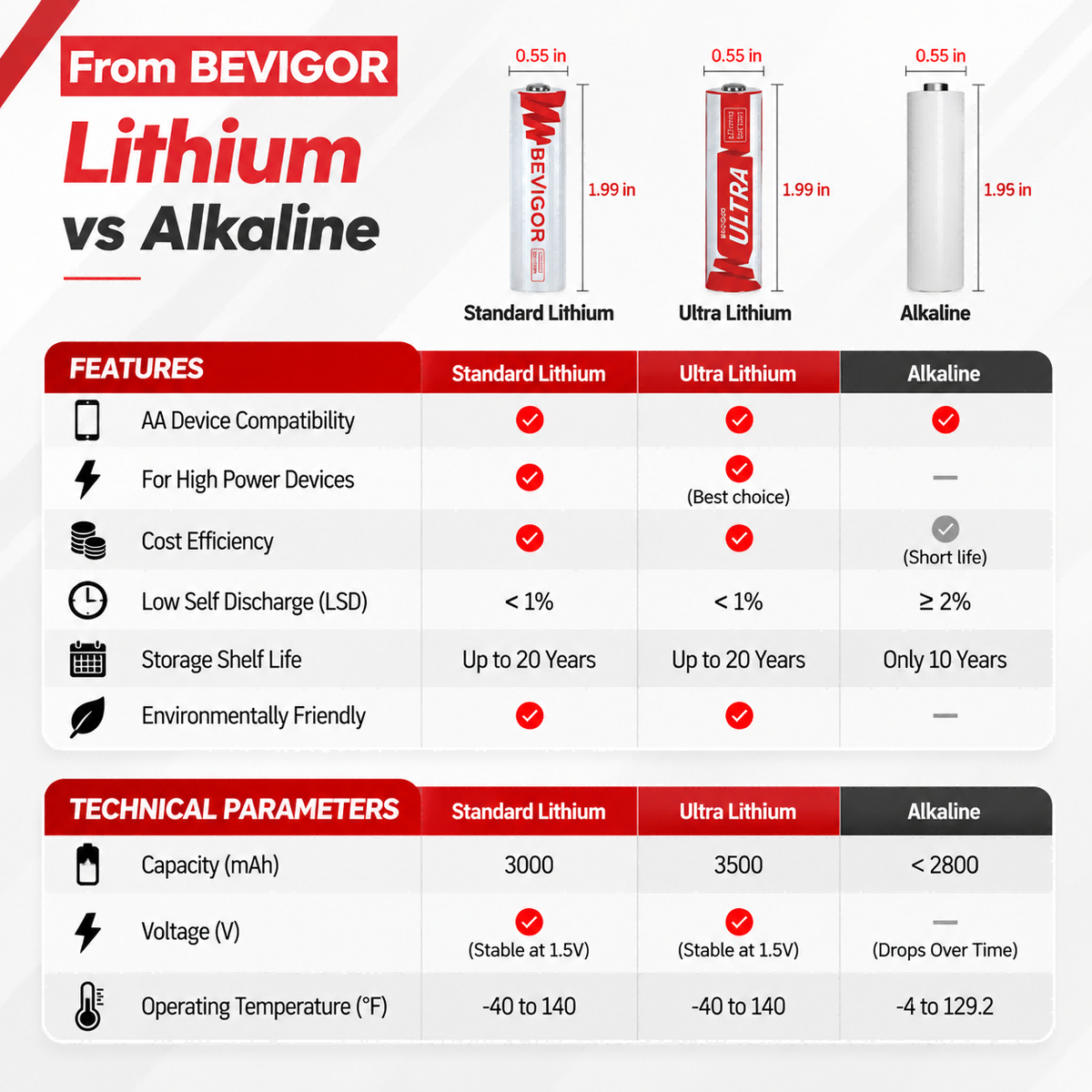
Because solid lithium chemistry lacks these vulnerable liquid materials, it operates smoothly in extreme environments dropping down to minus 40 degrees Fahrenheit. Engineering research published by NASA confirms that solid state primary lithium cells are essential for maintaining reliable electrical output in extreme subzero environments where standard aqueous electrolytes simply freeze and fail. Choosing temperature resistant energy sources guarantees that your cold weather survival equipment operates flawlessly during blizzards and deep freezes.
Comparing Power Options for Emergency and backup devices
Selecting the appropriate energy source depends entirely on your specific hardware and how long you intend to store the equipment before using it.
|
Chemistry Type |
Internal Structure |
Storage Lifespan |
Cold Weather Performance |
Primary Use Case |
|
Standard Alkaline |
Liquid electrolyte |
3 to 5 years |
Fails below freezing |
Short term indoor storage |
|
NiMH Rechargeable |
Solid reusable core |
Varies by cycle |
Moderate resistance |
Daily rotating household items |
|
Primary Lithium |
Solid metallic components |
Up to 20 years |
Operates perfectly in subzero |
Long term survival gear |
While NiMH cells provide excellent financial value for heavy rotation items like children toys, their natural self discharge rate makes them unreliable for emergency kits that might sit untouched for three years. To achieve the absolute highest level of preparedness, emergency management professionals heavily favor primary lithium cells for their unmatched shelf life and flat discharge stability.

Storage Strategies for Emergency and backup devices
How you physically organize and store your backup equipment directly impacts its long term reliability. Storing your gear in a hot attic or a humid basement accelerates the chemical degradation of any power cell, regardless of its premium build quality. Extreme ambient heat damages the internal seals of the casing, while excessive atmospheric moisture promotes rust and corrosion on the exterior metal contacts.
For optimal longevity, you must store your survival kits in a climate controlled environment, such as a main floor hallway closet. If you are packing a bug out bag that will not be opened for several years, you should physically remove the power cells from the electronic devices. Store the fresh cells inside their original blister packaging directly next to the flashlight or radio. This physical separation completely eliminates the risk of parasitic drain and guarantees that your equipment will have a 100% full fuel tank the moment you install them during an evacuation.
Frequently Asked Questions
How often should I test my survival gear?
You should conduct a brief operational test of your critical electronics every six months. Turn on your weather radio and emergency lanterns for roughly two minutes to confirm the internal circuitry still functions and the power sources provide a strong, stable output.
Can I use rechargeable units for a smoke detector?
Safety experts generally recommend against using rechargeable NiMH units in life saving safety equipment. Smoke alarms require a very specific sloping voltage drop to trigger the low battery warning chirp accurately. Because rechargeable units maintain a flat voltage until they die, they might not trigger the safety warning properly.
Why did my alkaline cells leak inside my flashlight?
When alkaline cells are completely depleted or left inside a device for too long, the internal chemistry produces a hydrogen gas that builds pressure. This pressure eventually breaches the physical casing, allowing potassium hydroxide to leak out and destroy the metal springs inside your flashlight.
Does storing them in the refrigerator extend their life?
No. Storing modern chemical cells in a refrigerator introduces a massive risk of moisture condensation. When you remove them from the cold environment, the sudden temperature shift causes water droplets to form on the metal contacts, which leads directly to corrosion and electrical short circuits.
Is it safe to mix old and new cells during an emergency?
You must strictly avoid mixing different ages or different brand names within the same device. The weaker unit will drain rapidly and potentially rupture while struggling to keep up with the electrical output of the fresh unit.
Safety Rules for Emergency and backup devices
To guarantee your hardware survives long term storage and operates safely during critical events, review these technical facts before packing your survival kits.
- Specification Origins: All expected shelf life estimates and extreme temperature ratings reflect official laboratory testing by Bevigor. Your actual device runtime will always fluctuate based heavily on the specific continuous power draw of your hardware.
- Component Mixing Taboos: Never force an alkaline cell next to a lithium cell inside the same housing. Combining different chemical types guarantees rapid internal overheating and potential hardware destruction.
- Storage Environment: Keep your portable power supplies away from direct sunlight, central heating vents, and heavy moisture. Prolonged exposure to extreme heat permanently degrades internal chemical capacity.
- Responsible Disposal: Primary lithium units contain active metallic elements. Please utilize federal environmental resources like the Call2Recycle safety guidelines to locate proper community drop off centers instead of discarding them in standard household trash bins.
- Replacement Logistics: For reliable surveillance and emergency performance, keep a spare set of high quality AA and AAA lithium cells handy. Visit the Bevigor support catalog to find the exact compatibility answers you need for your specific hardware.






Share:
Why Do 1.2V NiMH Rechargeable Batteries Power Devices as Well as 1.5V?
How to Maximize the Lifespan of Your AAA Batteries?