


Blink Outdoor cameras use two size AA 1.5-volt lithium non-rechargeable batteries. Blink lists this power requirement for the Outdoor 4 and Outdoor (3rd Gen), along with several older battery-powered models. Do not assume that alkaline, NiMH, or rechargeable lithium AA batteries are equivalent simply because they fit the compartment.
This Blink Outdoor camera battery guide explains the official requirement, the differences between Outdoor models, the settings that affect service life, and the checks to complete when new batteries do not solve the problem.
Which Battery Does a Blink Outdoor Camera Use?
Blink’s current camera power guidance says its battery-powered cameras are designed for size AA 1.5-volt lithium non-rechargeable batteries. The list includes the Outdoor 4 and Outdoor and Indoor (3rd Gen), as well as older XT, XT2, and Indoor (1st Gen) devices.
The words in that requirement matter:
- AA identifies the physical size.
- 1.5 volt identifies the required nominal voltage.
- Lithium describes the battery chemistry Blink specifies.
- Non-rechargeable means the cells are primary batteries and must never be charged.
Blink specifically recommends Energizer Lithium 1.5-volt non-rechargeable batteries and notes that performance can vary with other battery types. BEVIGOR is not affiliated with, endorsed by, or certified by Blink or Amazon.
Blink Outdoor Battery Requirements by Model
| Camera | Internal battery requirement | External-power note |
|---|---|---|
| Blink Outdoor 4 | Two AA 1.5V lithium non-rechargeable batteries | Blink identifies a weather-resistant power adapter as an approved outdoor option. |
| Blink Outdoor (3rd Gen) | Two AA 1.5V lithium non-rechargeable batteries | Blink lists its Weather Resistant Power Adapter and model-specific Solar Panel Mount options. |
| XT and XT2 | Two AA 1.5V lithium non-rechargeable batteries | Check the exact model documentation before connecting external power. |
Product families change, and accessories are not automatically interchangeable between generations. Confirm the model in the Blink app or on the device label before ordering batteries or an external power accessory.
What to Check Before Buying Replacement Batteries
Read the entire package label instead of relying on the word “lithium” alone. For the battery-powered Outdoor models covered here, look for the AA size, a nominal 1.5-volt rating, and clear non-rechargeable or primary-lithium wording. A rechargeable lithium-ion AA can have different internal electronics even when its label also displays 1.5 volts.
- Buy enough for a matched pair. Replacing only one cell can leave the camera running on batteries with different ages and remaining capacities.
- Check the package and cells. Do not use batteries with damaged wrappers, dents, leaks, swelling, corrosion, or an expired date.
- Keep spare cells stored properly. Leave them in their original packaging, away from heat, moisture, loose metal objects, children, and pets.
- Avoid runtime guarantees. Capacity claims do not predict camera life by themselves because settings, signal quality, event frequency, and weather all affect energy use.
A careful label check prevents the most common Blink Outdoor camera battery purchasing mistake: choosing cells by size while overlooking chemistry, voltage, or rechargeability.
Can You Use Alkaline or Rechargeable Batteries?
Blink’s current guidance does not treat alkaline, NiMH, rechargeable lithium-ion, and primary lithium AA batteries as interchangeable. Its battery guide recommends 1.5-volt non-rechargeable lithium batteries for optimal performance.
Alkaline AA batteries
Alkaline batteries may physically fit, but they are not the chemistry Blink specifies for these cameras. Their voltage behavior under load differs from primary lithium cells, and practical performance can be affected by temperature and camera activity. A battery that fits is not necessarily a supported substitute.
NiMH rechargeable AA batteries
NiMH cells commonly have a nominal voltage of 1.2 volts rather than 1.5 volts. That difference may lead to shorter operation or unreliable battery-level behavior in a device designed around another chemistry. Follow Blink’s stated requirement instead of relying on size alone.
Rechargeable 1.5V lithium AA batteries
Some rechargeable cells use internal electronics to produce a regulated 1.5-volt output, but they are still not the same product as primary lithium AA batteries. Blink’s power guidance warns that third-party power solutions are not supported because of potential performance and safety issues.
For a detailed explanation of this question, read our rechargeable battery compatibility guide for Blink cameras.
How Long Should Blink Outdoor Batteries Last?
There is no guaranteed service interval for every installation. Blink has advertised long battery life under defined or typical-use assumptions, but actual results depend on settings, activity, network conditions, temperature, and feature use. Treat any “up to” figure as a planning reference, not a replacement schedule.
Blink’s battery-life guidance notes that the app can display a High Usage alert when settings are likely to consume more power than normal.
Motion frequency
Each motion event can wake the camera and begin recording. A camera pointed toward a busy sidewalk, moving branches, reflective traffic, or another source of repeated detections may use energy much faster than one monitoring a quiet entrance.
Clip length and retrigger time
Longer clips keep the camera active for more time. Short retrigger intervals can also produce many recordings during a single period of activity. Choose settings that capture the event you need without recording unnecessary footage.
Live View and two-way audio
Live View and two-way communication require the camera to stay awake and transmit data. Frequent manual checks can therefore reduce battery life even when motion activity is low.
Wi-Fi strength
A weak or unstable connection may make communication less efficient. Confirm that the camera and Sync Module have reliable connections, and avoid diagnosing every offline event as a battery problem.
Temperature
Cold and heat can affect available battery performance. Keep the camera within the operating conditions stated for the exact model. Avoid turning a temperature specification into a runtime promise: weather, activity, and settings still interact.
How to Replace Blink Outdoor Camera Batteries
- Confirm the model. The back-cover design and approved external-power options can differ.
- Use a complete matched pair. Install two new batteries of the required type from the same package. Do not mix old and new cells or different chemistries.
- Remove the back cover correctly. Follow the instructions for the exact model instead of prying or forcing the housing.
- Check polarity. Match the positive and negative symbols in the compartment.
- Inspect the compartment. Stop if you see leakage, damaged contacts, swelling, or heat. Follow the battery and device manufacturers’ safety instructions.
- Close the housing fully. An outdoor camera depends on correct cover and seal placement for weather protection.
- Test the camera. Confirm motion detection, a recorded clip, Live View, and app connectivity before considering the job complete.
Blink provides model-specific back-cover and battery replacement instructions. Our broader Blink camera battery replacement guide covers the general replacement workflow and post-installation checks.
What If New Batteries Do Not Fix the Camera?
New batteries do not rule out installation, network, settings, or hardware problems. Work through these checks in order:
- Confirm both batteries are new, matched, and installed with correct polarity.
- Verify that the camera uses the battery type listed for its exact model.
- Make sure the cover is seated correctly and the device has no visible damage.
- Check Wi-Fi settings and the Sync Module status.
- Review recent motion volume, clip length, retrigger time, Live View use, and High Usage alerts.
- Power-cycle the camera according to Blink’s instructions.
- Use the Blink app and official support steps before assuming the battery pair is defective.
If the camera flashes red after a new installation, use our focused guide to troubleshoot a Blink camera flashing red with new batteries.
Where BEVIGOR AA Lithium Batteries Fit
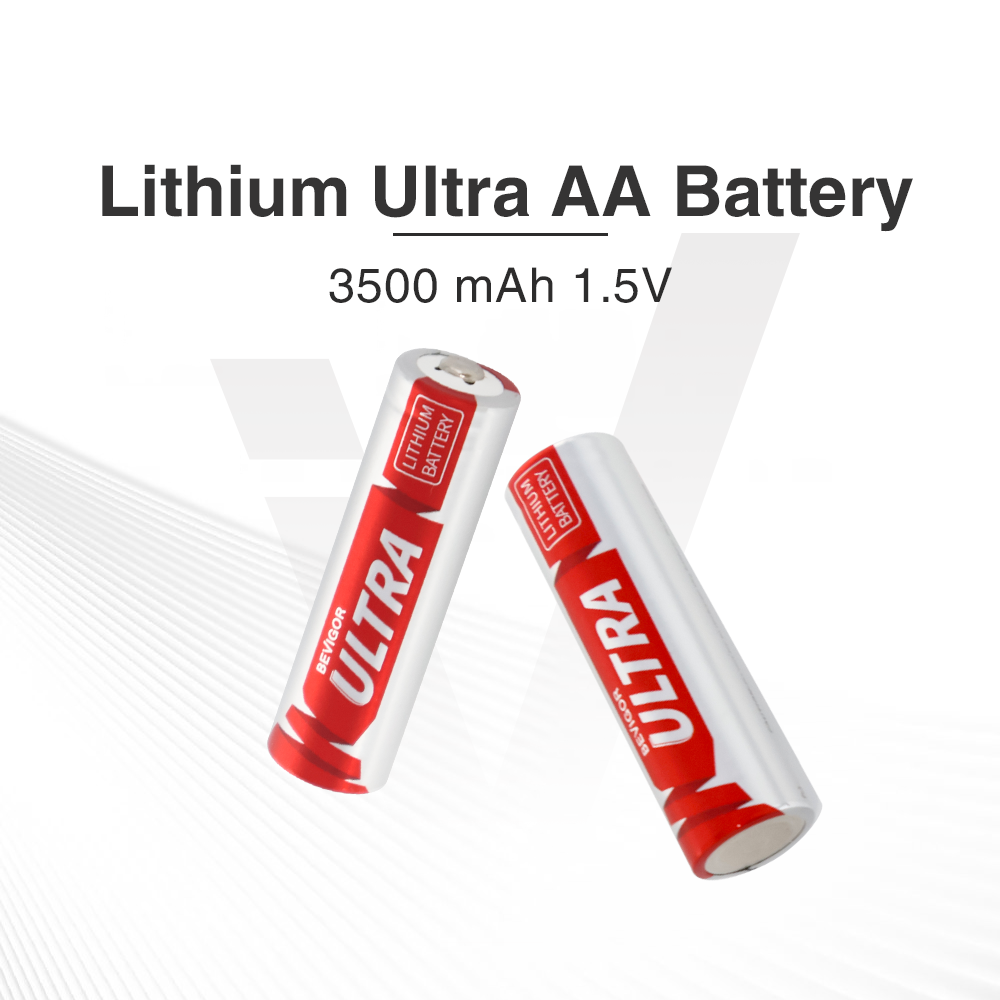
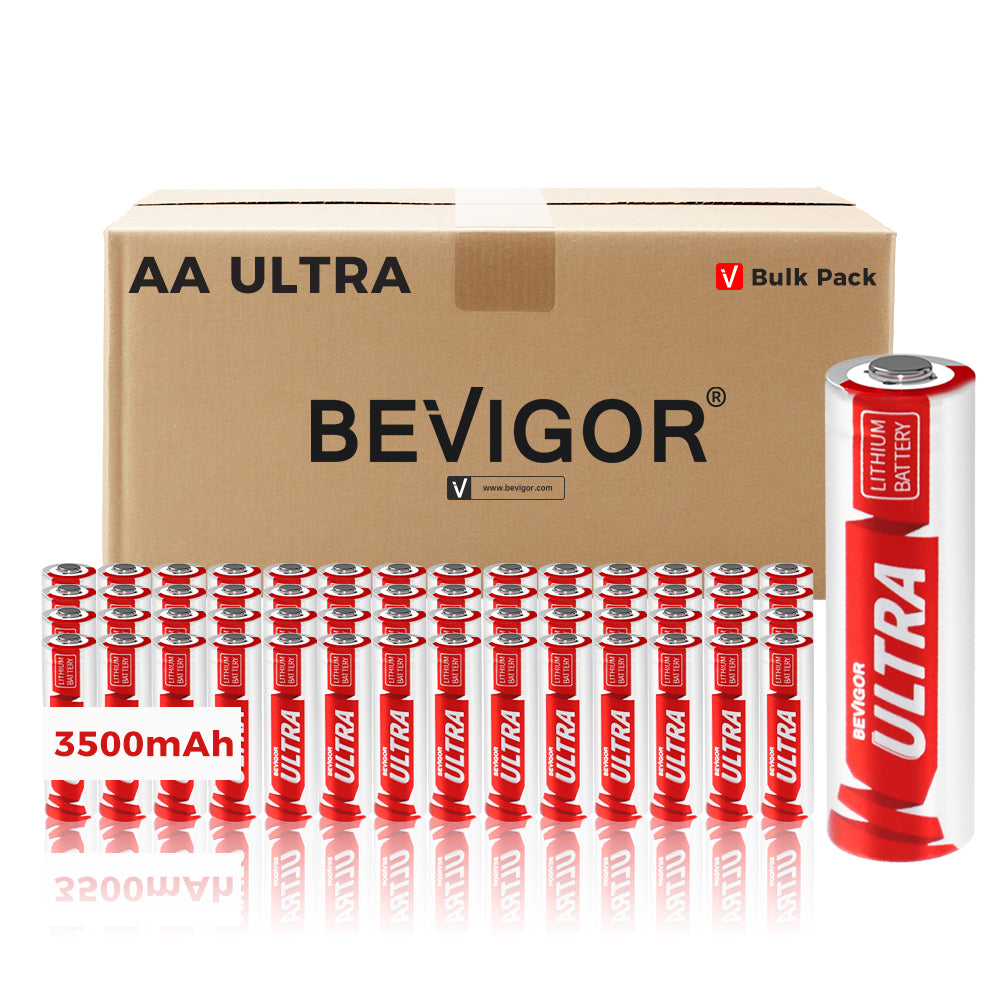
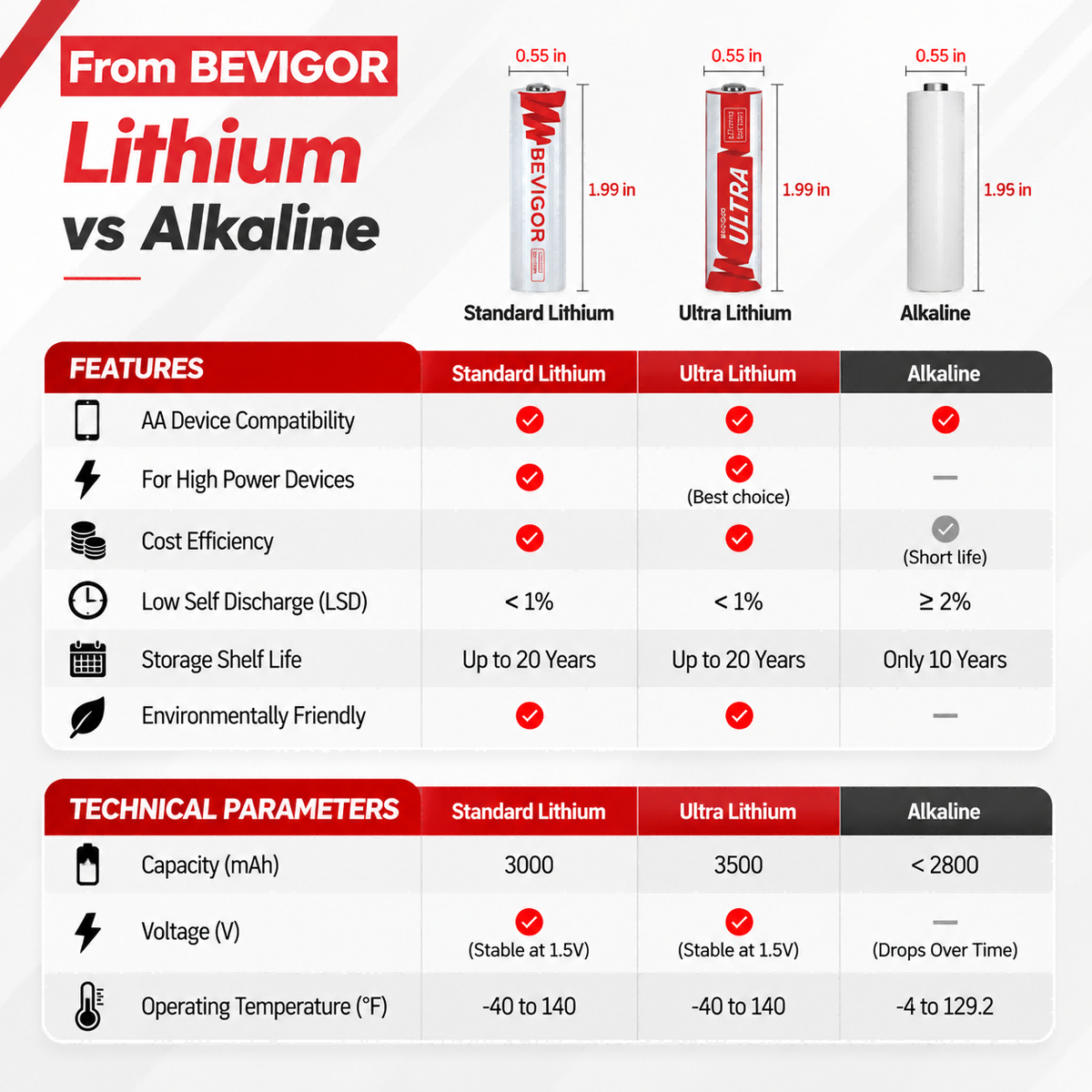
BEVIGOR offers 3000mAh 1.5V non-rechargeable lithium AA batteries. Those specifications align with the general size, nominal voltage, and primary-lithium format stated for battery-powered Blink cameras. However, Blink specifically recommends Energizer Lithium batteries and warns that performance may vary with other batteries.
Check the current Blink documentation, warranty terms, and exact camera requirements before choosing a third-party battery. This article does not claim official Blink compatibility, certification, or equivalent runtime.
Frequently Asked Questions
What batteries does a Blink Outdoor 4 use?
Blink states that the Outdoor 4 is designed for two size AA 1.5-volt lithium non-rechargeable batteries. Blink specifically recommends Energizer Lithium batteries for optimal performance.
How many batteries does a Blink Outdoor camera need?
The Outdoor 4 and Outdoor (3rd Gen) use two AA batteries. Confirm the exact model before replacing them because other Blink products can use USB power, hardwired power, or different arrangements.
Can I use alkaline batteries in a Blink Outdoor camera?
Alkaline batteries are not the chemistry Blink specifies for its battery-powered Outdoor cameras. Use the battery requirement in the current official documentation for your model.
Can I recharge the lithium AA batteries from a Blink camera?
No. A battery labeled lithium non-rechargeable or primary lithium must never be charged. Replace depleted cells with a new matched pair of the approved type.
Why did my Blink Outdoor batteries die quickly?
Possible causes include heavy motion activity, long or frequent clips, repeated Live View use, two-way audio, weak network conditions, temperature, or unsupported batteries. Review the Blink app’s usage alerts and troubleshoot connectivity before assigning one cause.
Can I power a Blink Outdoor camera through USB?
Some models support approved external-power accessories, but outdoor weather resistance and accessory compatibility are model-specific. Blink’s USB power guidance says that using a USB cable with the weather-resistant back cover removed means the camera is no longer weather resistant. Use only the power option and installation method listed by Blink for the exact camera.
Bottom Line
For a Blink Outdoor camera battery replacement, begin with the official requirement: two AA 1.5-volt lithium non-rechargeable batteries for the supported battery-powered Outdoor models. Then confirm the exact generation, install a matched pair correctly, and test the camera. If battery life is shorter than expected, review activity, clips, Live View, connection quality, temperature, and app alerts before changing battery chemistry or adding an unsupported power solution.



Share:
Which Trail Camera Battery Performs Best in 2026?
How to Dispose of Lithium Batteries Safely and Responsibly