

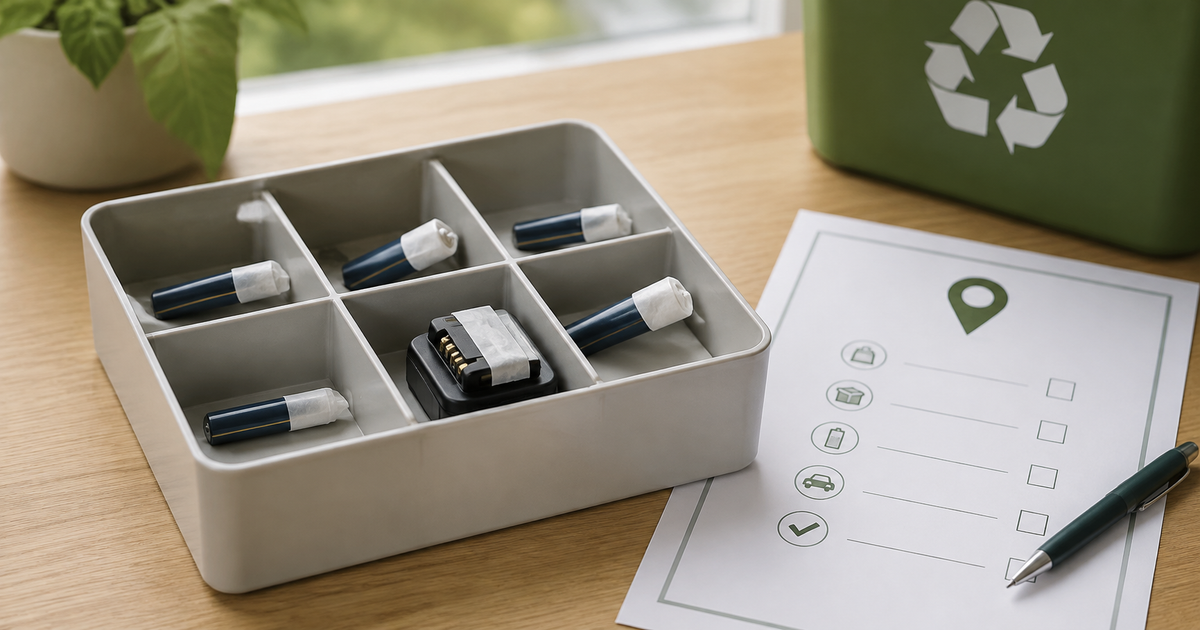
Do not place used lithium batteries in household trash or curbside recycling bins. For normal, undamaged household batteries, identify the chemistry, protect the terminals from contact, keep the batteries from being crushed or punctured, and take them to a program that accepts that exact battery type. If a battery is damaged, swollen, leaking, unusually hot, smoking, or involved in a recall, do not put it in a standard collection box; contact the manufacturer or your local household hazardous-waste authority for instructions.
This guide summarizes current US household guidance. State and local requirements—and the battery types accepted by individual collection sites—can be more specific, so verify the destination before leaving home.
First, Identify the Battery Type
“Lithium battery” can refer to different products. The label, device manual, or manufacturer information should tell you which category you have.
| Category | Common examples | Key distinction |
|---|---|---|
| Primary lithium | Single-use lithium AA, AAA, CR123A, and many lithium coin cells | Non-rechargeable; never attempt to charge |
| Lithium-ion | Phones, laptops, power tools, e-bikes, rechargeable battery packs, and some AA-style cells | Rechargeable; may be removable or built into a device |
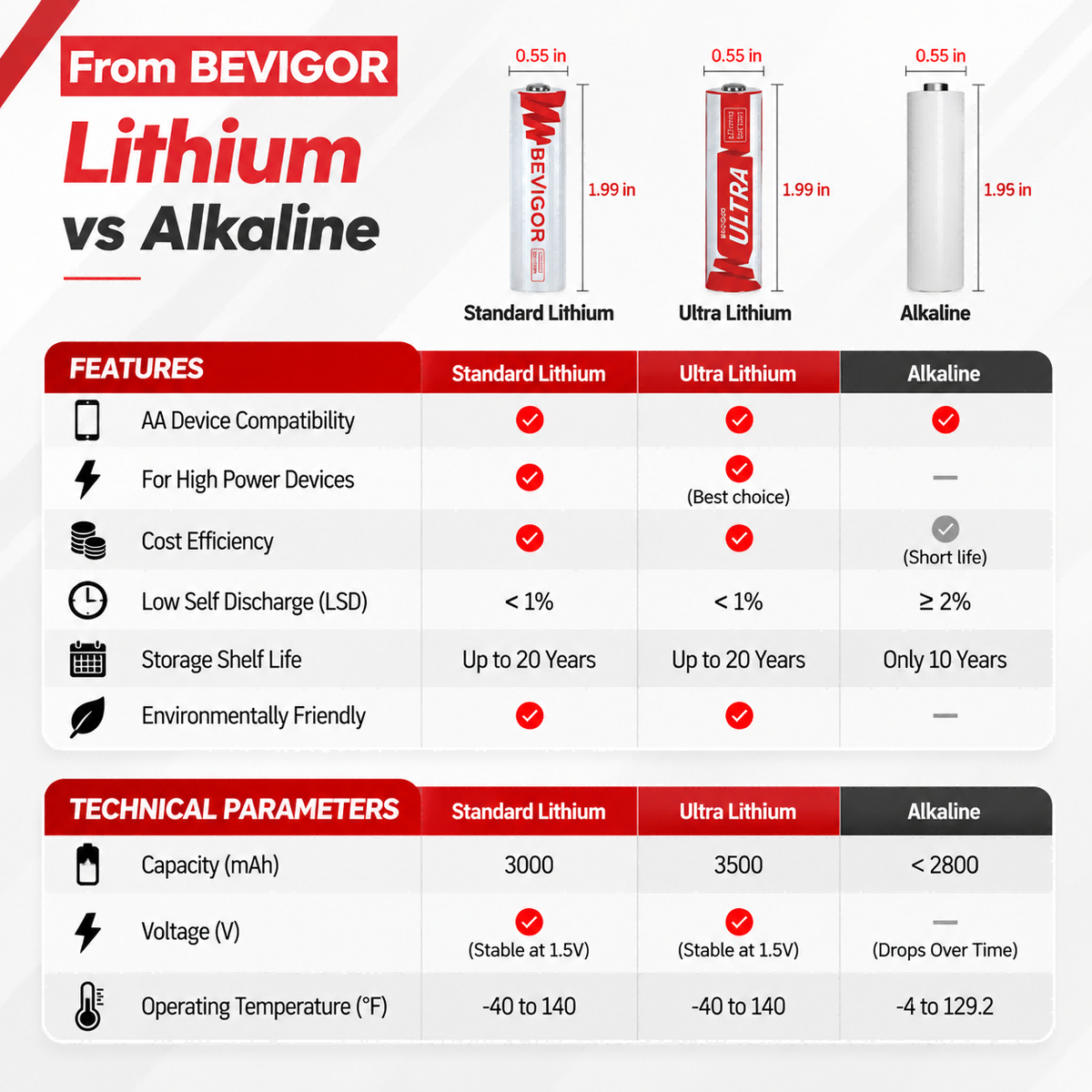
Check the complete label rather than deciding from shape alone. An AA-sized primary lithium battery is not the same as a rechargeable lithium-ion AA-style product or a 14500 cell. Our complete guide to AA battery types explains these label and voltage differences.
How to Dispose of an Undamaged Household Lithium Battery
- Remove it only as the device manufacturer directs. If the battery is built into a phone, laptop, tool, or other product and is not designed for consumer removal, take the complete device to an appropriate electronics recycler, retailer take-back program, or household hazardous-waste program.
- Read the label. Determine whether the battery is primary lithium or rechargeable lithium-ion and note its size or device type.
- Prevent terminal contact. Follow the collection program’s instructions. The US EPA advises placing each battery in a separate plastic bag or covering exposed terminals with non-conductive tape while keeping the label legible.
- Protect it from damage. Keep batteries separate from keys, coins, tools, and other conductive objects. Do not bend, crush, puncture, disassemble, or expose them to heat.
- Confirm the collection site. Contact the recycler, retailer, or household hazardous-waste program before the trip to verify accepted chemistry, size, quantity, and condition.
- Take the battery directly to the approved program. Do not leave batteries unattended outside a closed site or place them in a bin that does not identify the accepted battery types.
The EPA’s used household battery guidance provides current recommendations and links to recycling-location resources.
What to Do With a Damaged, Swollen, or Recalled Battery
A damaged battery needs different handling from an intact, depleted battery. Warning signs can include swelling, leakage, visible deformation, a damaged wrapper or case, unusual heat, smoke, or signs that the battery has been crushed or punctured.
- Stop using and charging the battery or device.
- Do not touch leaking material or attempt to open, flatten, repair, or discharge the battery.
- Do not place it in a regular retail battery-collection box unless that program explicitly says it accepts damaged batteries.
- Contact the battery or device manufacturer and your local household hazardous-waste authority for condition-specific instructions.
- Check whether the battery or device is subject to a recall and follow the recall remedy.
Do not improvise a container, immerse the battery, or move a hot, smoking, or burning battery based on general online advice. If there is smoke, fire, or an immediate threat to people or property, move away from the area and contact emergency services.
EPA specifically advises consumers to contact the manufacturer for handling information when a lithium-ion battery is damaged. Collection and emergency instructions can vary with the battery, device, condition, and location.
Why Lithium Batteries Do Not Belong in Household Trash
Used batteries can retain energy after they no longer power a device. If terminals contact metal or a battery is crushed during collection and processing, it can short-circuit and generate heat. Rechargeable lithium-ion batteries and devices containing them can pose a particular fire hazard when bent, broken, or crushed in the waste stream.
Putting a lithium battery in a curbside recycling cart is not a safer alternative. Municipal recycling systems are generally designed for materials such as paper, containers, and packaging—not loose batteries. EPA recommends keeping both household lithium primary and lithium-ion batteries out of household trash and municipal recycling bins and using appropriate collection channels.
How to Find an Appropriate Drop-Off Location
Possible destinations include specialized battery recyclers, participating retailer take-back programs, certified electronics recyclers for devices with built-in batteries, and local household hazardous-waste programs. Acceptance is not universal.
Before traveling, ask:
- Do you accept primary lithium, lithium-ion, or both?
- Do you accept loose cells, battery packs, and devices with built-in batteries?
- Are there size, weight, quantity, or residency limits?
- How should terminals be protected?
- Do you accept damaged, swollen, leaking, or recalled batteries?
Local and state waste authorities are the best source for requirements in your community. A store that accepts small, intact rechargeable batteries may not accept primary lithium cells, large packs, e-bike batteries, or damaged items.
Transporting Batteries to a Collection Site
For a household trip to a local collection program, follow that program’s preparation instructions and keep batteries protected from terminal contact, movement, and physical damage. Do not carry loose cells in a pocket, bag, or container with conductive objects.
Shipping batteries is different from personally taking household batteries to a nearby collection point. Lithium batteries offered for transportation may be subject to US Department of Transportation rules for classification, packaging, marks, labels, documentation, and damaged or recalled batteries. Do not mail or ship a battery based only on general disposal instructions. Follow the carrier’s requirements and current PHMSA lithium battery transportation guidance.
What About Alkaline and NiMH AA Batteries?
Disposal rules depend on chemistry. EPA says alkaline and zinc-carbon batteries can go in household trash in most US communities, although recycling is encouraged where programs are available and local rules may differ.
Rechargeable batteries—including NiMH—should not go in household trash or municipal recycling bins. Take them to an appropriate rechargeable-battery recycler, participating retailer, or household hazardous-waste program. Keep different chemistries identified and separated so a collection site can manage them correctly.
Managing Used Batteries From Multiple Devices
Households, property managers, and outdoor users can reduce mix-ups by creating a simple return routine:
- Keep the original label visible.
- Separate intact batteries from anything damaged or questionable.
- Separate used stock from fresh batteries.
- Record the chemistry when batteries are removed from equipment.
- Confirm a collection destination before a container accumulates for a long period.
For multi-camera deployments, our trail-camera battery checklist includes a matched-set log that helps keep fresh and used AA batteries separate in the field.
Frequently Asked Questions
Can lithium batteries go in household trash?
EPA recommends that households keep both single-use lithium and rechargeable lithium-ion batteries out of household trash and curbside recycling bins. Use a battery collection site or household hazardous-waste program that accepts the exact type.
Should I tape lithium battery terminals?
EPA advises isolating terminals by placing each battery in a separate plastic bag or using non-conductive tape over exposed terminals while keeping the label legible. Follow the receiving program’s instructions because preparation requirements can vary.
Can I put a swollen battery in a retail recycling bin?
Do not assume a standard collection bin accepts damaged batteries. Contact the manufacturer and local household hazardous-waste authority for instructions, then use only a program that confirms it can accept the battery in its current condition.
Can I remove a built-in lithium-ion battery myself?
Only remove it if the device manufacturer designed and instructs consumers to do so. Otherwise, take the complete device to an appropriate electronics recycler, take-back program, or household hazardous-waste facility.
Can I mail used lithium batteries to a recycler?
Do not mail or ship them without confirming that the program and carrier accept the battery and that all applicable transportation requirements are met. Damaged, defective, or recalled batteries can have additional restrictions.
Bottom Line
Identify the chemistry, keep terminals from contacting conductive objects, protect intact batteries from damage, and confirm an appropriate local collection program. Keep lithium batteries out of household trash and curbside recycling. For damaged, swollen, leaking, hot, smoking, or recalled batteries, stop and obtain instructions from the manufacturer or local hazardous-waste authority rather than improvising a handling method.






Share:
Blink Outdoor Camera Battery: Type, Life & Replacement
Best AA Lithium Batteries for Blink Camera: Your Complete 2026 Guide