


Summer hiking often sounds warm and sunny, but high-elevation trips can bring freezing mornings, strong winds, and days far from electrical outlets. In these conditions, your safety gear relies entirely on your power source, so choosing a primary lithium-metal battery over standard alkaline batteries is essential.

What Makes Summer Hiking Demanding For Lithium Batteries?
Summer hiking exposes gear to unpredictable, volatile conditions. Mountain trails demand the chemical stability that lithium batteries offer over standard alkaline options.
How Do High Elevations Affect A Lithium Metal Battery?
High elevations affect a battery by forcing it to operate in extremely thin air and rapidly shifting temperatures, proving its superiority over standard cells. According to wilderness experts at Black Sheep Adventures, June through August is the absolute prime time for high-elevation hiking. The heavy winter snow finally clears from the alpine passes.
However, these elevated routes expose your gear to intense, fluctuating elements that easily compromise weaker alkaline chemistries. A primary lithium-metal battery is specifically engineered to remain chemically stable despite these aggressive environmental conditions. In this way, it ensures your emergency GPS never loses connection when you are miles above the tree line.
Why Are Cold Mornings A Challenge That Lithium Batteries Solve?
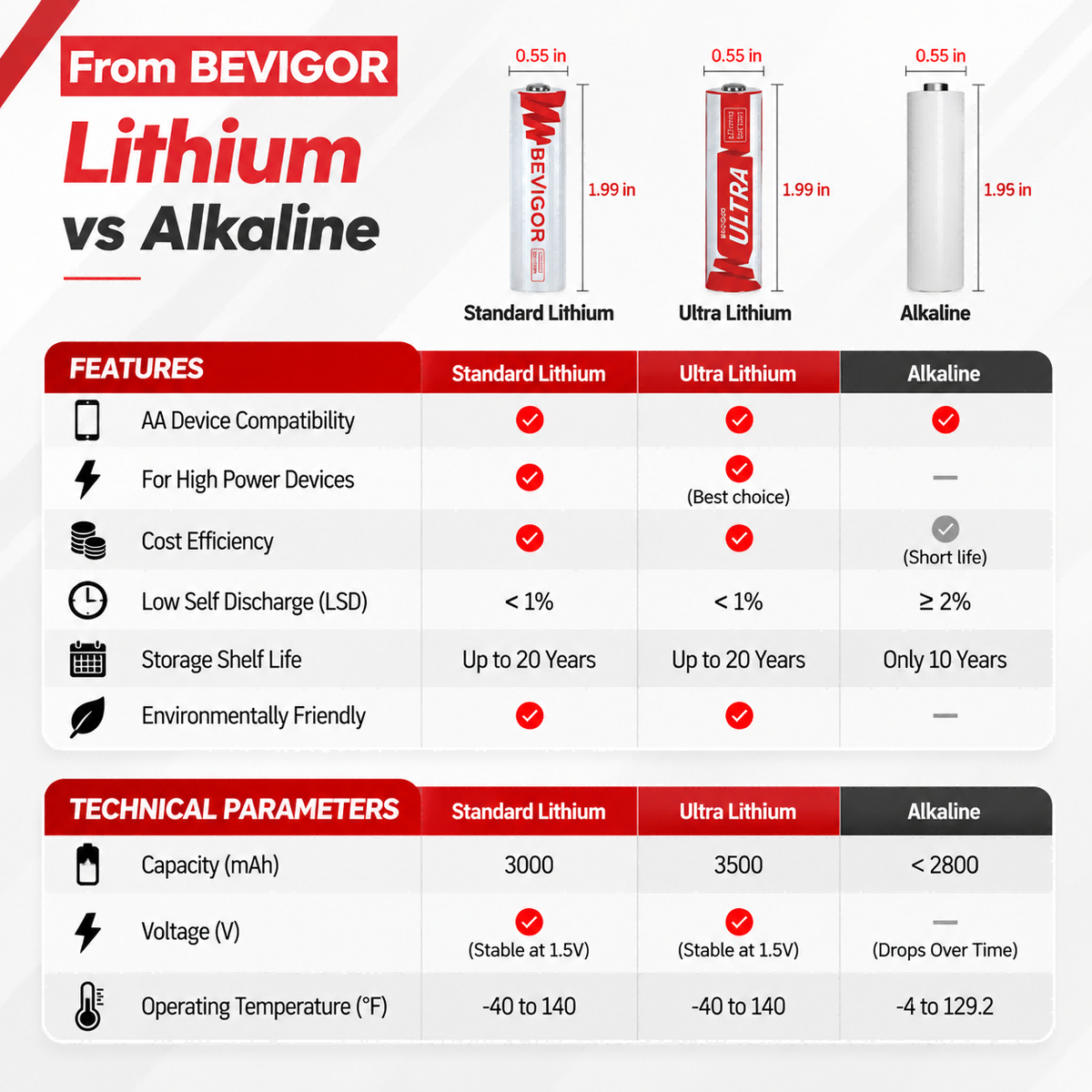
Cold mornings pose a significant challenge, but lithium batteries solve it. The low temperatures physically thicken the internal electrolyte of standard alkaline batteries, grinding their chemical reactions to a halt. While August sounds hot, cold mornings are a very real threat at high altitudes. The official REI gear guide specifically calls out the incredibly strong extreme-temperature performance of single-use lithium chemistries. That unique cold-weather resilience matters immensely when your headlamp is the only difference between feeling “fine” and nervously whispering, “we’re moving in the dark.”
How Do Afternoon Storms Impact A Lithium Metal Battery?
According to a report from ScienceDaily, lithium-metal batteries can lose charge and some of their energy storage capacity over time even when devices are not in use, which could make hikers more dependent on navigation and emergency lighting earlier in the day than planned if afternoon storms occur. Black Sheep Adventures highlights a critical safety constraint for summer hikers: massive afternoon thunderstorms commonly build in the early afternoon across alpine ranges. Because of this, it is exceptionally smart to start your trek early and be completely off exposed mountain ridges by noon. When the sky suddenly darkens at 1:00 PM, a lithium-metal battery ensures your flashlights cut through heavy rain without flickering or failing.
Why Is A Lithium Metal Battery Reliable Without Outlets?
No charging means your power sources need to be predictably reliable. This is exactly how a lithium metal battery operates. On a remote trail, you do not have the luxury of plugging into a wall, and relying on alternative charging methods is often a dangerous gamble.
Why Are Lithium Batteries Better When You Cannot Recharge?
Lithium batteries are better when you cannot recharge because they offer massive, dense energy reserves that do not require external top-offs or maintenance. On a rugged, multi-day trail, you may simply not have enough solar exposure to use a portable panel, enough time to sit and wait for a charge, or enough ambient warmth to make charging efficient. Rechargeable lithium-ion technology is absolutely great when you can recharge safely in a controlled environment. But if your trail plan explicitly states “no outlets, no town stops,” packing a primary lithium-metal battery removes significant uncertainty from your trip.
How Does A Lithium Metal Battery Handle Burst And Idle Power?
A lithium-metal battery handles burst and idle power by maintaining an exceptionally low internal resistance, allowing it to deliver massive amounts of energy instantly without collapsing. On the trail, your power use case is almost always a mix of burst and idle demands, rather than a slow, steady drain. For example, your trail headlamp might run on its lowest, dimmest setting for hours while you read in your tent, but then suddenly need to jump to maximum “turbo” mode for a tense route-finding moment in the woods. When your power use is highly unpredictable, a chemistry that maintains consistent voltage output in the cold matters far more than a cell's theoretical efficiency.
What Are Practical Ways To Pack Lithium Batteries For Hiking?
Knowing the science behind lithium batteries is only half the battle; knowing exactly how to deploy them in your backpack is what actually keeps you safe on the mountain. Here is a practical breakdown of what you should stock for your next remote expedition.
Why Should Your Headlamp Use A Lithium Metal Battery?
Your primary headlamp should use a lithium-metal battery because it is arguably your most vital piece of nocturnal safety gear, requiring uncompromised power. For headlamps that take standard AA or AAA sizes, you must bring lithium metal primaries to guarantee flawless cold-weather performance and storage reliability. When the temperature drops rapidly after sunset, an alkaline battery will dim significantly, but a lithium metal battery will keep the beam incredibly bright and focused, allowing you to spot trail markers safely from a distance.
How Do Lithium Batteries Protect Your Backup Flashlight?
Lithium batteries protect your backup flashlight by offering a shelf life of up to 10 years that completely eliminates the risk of internal leakage ruining your gear. If you have a backup flashlight that is kept buried at the bottom of a hiking pack year-round, using primary lithium cells greatly reduces the chance that you will discover dead, corroded batteries when you need emergency light. You can pack the flashlight in May, ignore it until August, and know with absolute certainty that it will turn on the exact second you press the switch.
Equipping your outdoor gear with the right chemistry is the ultimate way to ensure a safe, stress-free wilderness experience. To explore more about maximizing your equipment’s runtime off the grid, check out our internal guide on why lithium AA batteries are a great choice for camping, and discover reliable power solutions at Bevigor today.






Aktie:
What Are Next-Gen Lithium Metal Batteries And How Could They Change The Power Game?
Lithium Battery Guide for Everyday Devices (US)