

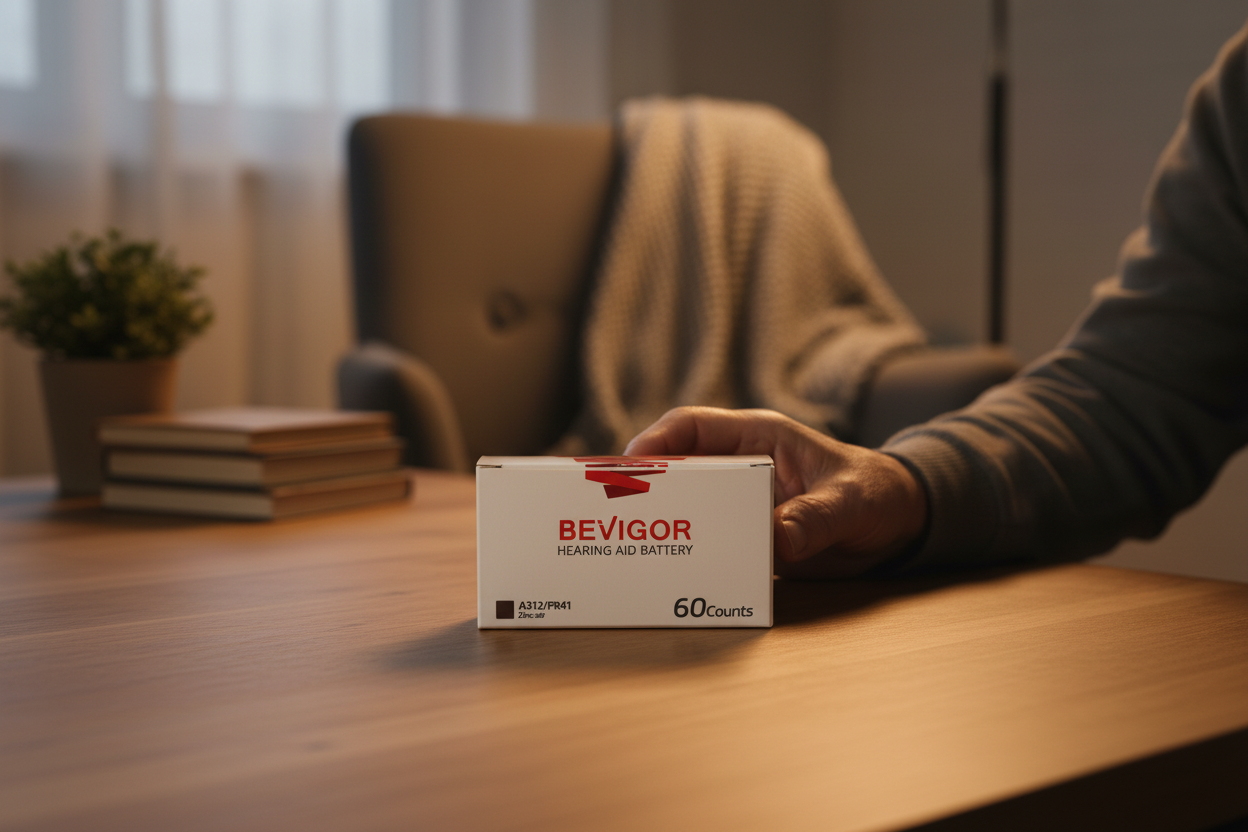
Confused with Size 312 and Size 13 batteries for hearing aids? The primary difference is that size 312 and size 13 batteries are built with distinct physical dimensions and energy capacities to accommodate entirely different hearing aid styles.
Now that you know how to confirm the correct battery size, the next practical question is usually: What do those numbers actually mean for day-to-day life?
The short answer is that different sizes are designed for different hearing aid styles, and that affects things like fit and how often you'll be changing batteries. Let's compare the two most common options caregivers run into: 312 (brown) and 13 (orange).
Both size 312 and size 13 are zinc-air batteries, but they're used in different hearing aid styles and tend to last different amounts of time.

Size 312 (Brown): Common, Compact, Often Used in Smaller Styles
Size 312 batteries are often used in:
- RIC/RITE styles (receiver-in-canal / receiver-in-the-ear)
- smaller behind-the-ear devices
- some in-the-ear styles
Because they're smaller than size 13, they typically hold less capacity—and may require more frequent changes depending on your use.
Size 13 (Orange): Larger, Often Used in BTE and Higher-Power Devices
Size 13 batteries are often used in:
- behind-the-ear (BTE) devices
- in-the-ear (ITE) and in-the-canal (ITC) devices that have room for a bigger battery
- some higher-power devices
Because they're larger, they often last longer in real life.
Here is a quick table for you to choose hearing aid batteries based on device types.
|
Hearing Aids Battery Size |
Often Used in |
|
Size 13 (Orange Hearing Aid Batteries) |
- behind-the-ear (BTE) devices - in-the-ear (ITE) and in-the-canal (ITC) devices - some higher-power devices |
|
Size 312 (Brown Hearing Aid Batteries) |
- RIC/RITE styles (receiver-in-canal / receiver-in-the-ear) - smaller behind-the-ear devices - some in-the-ear styles |
Quick Decision Rule for Caregivers
If the hearing aid takes a 312, don't "upgrade" to a 13 for longer life—the battery has to fit the door and contacts exactly.
Your job is simple: match the size the device requires, then use good habits so the battery life is predictable.
What Are The Main Differences Between Size 312 And Size 13 Heading Aid Batteries?
The main differences lie in their vertical thickness and their total electrical capacity, which directly influence what type of auditory equipment they can effectively run. While they might look superficially similar when viewed from above, their internal volume dictates their performance ceiling. Understanding these physical and chemical variances is crucial for anyone managing daily hearing care.
How Do Physical Dimensions Compare for These Heading Aid Batteries?
Size 312 and size 13 batteries share an identical diameter of 7.9 millimeters, but the size 13 is notably taller at 5.4 millimeters compared to the 3.6-millimeter height of the size 312. This difference in height is exactly why they are not interchangeable. Attempting to swap them will either result in a loose connection or a completely jammed battery door.
What Is The Typical Capacity of These Heading Aid Batteries?
A size 312 battery typically holds around 160 to 170 milliampere-hours (mAh) of energy, whereas a size 13 battery offers a significantly larger capacity, ranging from 290 to 300 mAh. According to standard industry specifications, this nearly doubled capacity means the larger cell can sustain a prolonged current draw much more effectively than its slimmer counterpart.
Why Do Device Styles Dictate The Choice of Heading Aid Batteries?
Device styles dictate the choice because the internal hardware compartment is molded by engineers to fit only one specific battery height to maximize space efficiency.
Smaller devices like Receiver-In-Canal (RIC) models prioritize discretion and naturally require the thinner size 312. Conversely, Behind-The-Ear (BTE) models prioritize powerful amplification, allowing enough physical space for the thicker size 13 cell.
Why Must Caregivers Understand Hearing Aid Batteries?
Caregivers must understand these batteries to ensure daily operational predictability and to prevent accidental physical damage to the user's essential medical devices. By knowing the exact specifications and limitations of the power source, caregivers can avoid common maintenance mistakes.
This knowledge transforms battery management from a guessing game into a reliable, stress-free routine.
How Can Incorrect Heading-Aid Batteries Damage The Device?
Forcing an improperly sized battery into a device can severely bend or break the delicate door hinges and the internal gold-plated contact pads.
Because the tolerances inside these micro-devices are measured in fractions of a millimeter, any unnatural pressure applied by a battery that is too thick will lead to mechanical failure. Repairs for this type of structural damage are often costly and time-consuming.
What Happens If You Put Wrong Heading Aid Batteries in A Slot?
If you put the wrong battery in a slot, the hearing instrument will either fail to power on due to loose contacts or the battery compartment will jam entirely. A size 312 placed in a size 13 slot will rattle around and lose its electrical connection when the user moves. Conversely, cramming a size 13 into a size 312 slot will likely snap the plastic closure mechanism.
Why Is Predictability Important for Heading Aid Batteries?
Predictability is crucial so caregivers can establish a reliable replacement schedule before the user experiences an unexpected loss of auditory assistance. When you know exactly how many days a specific size cell will last under normal use, you can swap it out preemptively. This proactive approach prevents the wearer from being isolated in social situations due to a sudden power failure.
How Long Do Size 312 Heading Aid Batteries Typically Last?
Size 312 batteries typically last anywhere from three to ten days, depending heavily on the daily hours of use and the specific digital features activated by the wearer.
Because their capacity tops out around 170 mAh, they have a limited pool of energy to draw from. Continuous daily wear without utilizing power-saving habits will naturally push the lifespan toward the lower end of that spectrum.
What Factors Drain Size 312 Heading Aid Batteries Quickly?
High amplification settings, extensive Bluetooth streaming, and extreme environmental humidity are the primary factors that drain these smaller batteries rapidly. Furthermore, advanced processing algorithms that filter out background noise in crowded environments force the microchip to work harder.
The harder the processor works, the faster the chemical reaction inside the zinc-air cell is exhausted.
Why Might Wireless Streaming Deplete Energy Faster?
Wireless streaming depletes energy faster because maintaining a continuous radio frequency connection to a smartphone demands a significantly higher constant current draw than basic sound amplification. While standard listening might draw only 1 milliampere, active streaming can pull well over 3 milliamperes. This heavy load severely shortens the operational window of lower-capacity cells.
How Can You Extend The Lifespan of Smaller Cells?
You can extend the lifespan by turning the hearing instruments off completely when not in use and opening the battery doors at night to allow internal moisture to escape. Additionally, waiting a full minute after pulling the activation tab allows the zinc-air chemistry to fully oxygenate before it undergoes a load. These simple habits maximize the efficiency of every milliampere-hour available.
What Makes Size 13 Hearing Batteries Last Longer?
Size 13 batteries last longer primarily because their taller physical casing allows them to hold nearly double the amount of active zinc material compared to slimmer cells. This extra chemical fuel means the battery can sustain a steady voltage for a much longer period. For average users, this often translates to a reliable lifespan of seven to fourteen days before replacement is necessary.
How Does Zinc Content Affect Battery Life?
Zinc acts as the primary fuel source in these air-activated cells, meaning a higher volume of zinc directly translates into more hours of available electrical current. When oxygen enters the battery and reacts with the zinc paste, electricity is generated. A larger physical volume simply provides a larger reservoir of reactive material to sustain the necessary voltage over time.
Why Are Size 13 Cells Suited for High-Power Devices?
These larger cells are suited for high-power devices because they can sustain a heavy electrical drain without experiencing a sudden and detrimental drop in operating voltage. Devices designed for severe hearing loss require massive amounts of power to drive the speaker receiver. The robust 240 mAh capacity of a size 13 ensures the amplifier gets consistent power without audio distortion.
What Are The Common Warning Signs of Low Power?
The most common warning signs include automated voice alerts or beeps from the device, followed by distorted audio and intermittent connectivity drops. When the voltage begins to plummet at the end of the zinc-air cell's life, the digital signal processor struggles to function. Users might notice that sounds become faint or that their smartphone app randomly loses its pairing connection.
How Should You Store Your Spare Cells?
You should store your spare cells in a dry, room-temperature environment while keeping them strictly in their original packaging to prevent accidental air activation. Storing them in the refrigerator, a common misconception, introduces condensation that can ruin the delicate internal electrolyte.
Furthermore, keeping them away from loose change or metal keys prevents dangerous short circuits that drain the power instantly.
What Is The Best Routine for Changing Batteries?
The best routine is to change the batteries over a soft towel on a flat table, allowing the new battery a full minute to activate with air before inserting it.
The soft towel prevents the tiny cell from bouncing off the table and getting lost on the floor. Peeling the sticker and waiting ensures the cell reaches its full 1.45 volts, preventing false low-battery warnings from the device on startup.
Equipping yourself with the right knowledge ensures your loved ones never miss a moment of conversation or a favorite song. To explore our comprehensive range of high-performance energy solutions tailored for daily medical devices, discover the full Bevigor lineup today and secure the reliable power your routine demands.






Aktie:
How to Change a Hearing Aid Battery (Step-by-Step)
How Long Do Hearing Aid Batteries Last?