

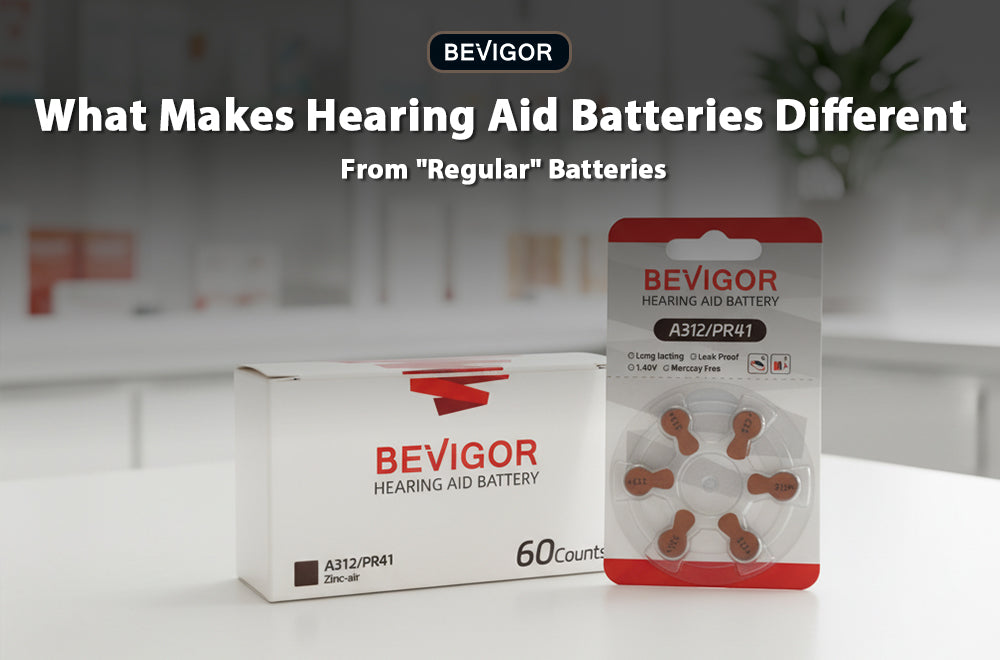
Most disposable hearing aid batteries are zinc-air hearing aid batteries. This technology distinguishes them from the alkaline or lithium-ion batteries you might use in a TV remote or a digital camera. That matters because zinc-air batteries are air-activated. They don't fully "wake up" until oxygen enters through tiny holes. That's why there's a little color tab (or sticker) on the back: it seals the battery until you're ready.
A simple beginner routine:
- Don't remove the tab until you're ready to use the battery.
- After you remove the tab, it helps to wait briefly before inserting it.
- Starkey (a major hearing aid manufacturer) explains zinc-air activation and the "wait a minute" tip in its article, "Disposable vs. rechargeable hearing aid batteries" (2019).
Why Do Hearing Aid Batteries Use Zinc-Air Technology?
Hearing aid batteries utilize zinc-air technology primarily because it offers the highest energy density of any commercially available battery chemistry, which is essential for the high-power demands of modern miniature medical devices.

Unlike traditional alkaline batteries that contain all their reactive components internally, zinc-air cells use oxygen from the outside atmosphere as one of the primary reactants. This design allows the interior of the battery to be filled almost entirely with zinc, the "fuel," effectively doubling or tripling the capacity of a cell of the same size.
For a device that sits in the ear and requires a constant, high-current draw to process digital signals and facilitate wireless streaming, this efficiency is not just a benefit—it is a requirement.
How do Hearing Aid Batteries Generate Power from the Air?
Hearing aid batteries generate electricity through a chemical reaction where atmospheric oxygen oxidizes the zinc powder contained within the cell. The process begins at the cathode, where oxygen molecules from the air pass through tiny holes in the battery casing and reach a catalyst layer. This reaction releases electrons that flow through the hearing aid's circuit to the anode, which is composed of a zinc-rich gel.
Because oxygen is not stored inside the battery, the space saved allows for significantly more zinc, which translates directly into the long runtimes required by users who wear their devices for 12 to 16 hours a day.
Why Is the Color Tab Essential for Hearing Aid Batteries?
The color tab on hearing aid batteries serves as an airtight seal that prevents the chemical reaction from beginning prematurely. Because the zinc-air chemistry is dependent on the intake of oxygen, the battery would begin to discharge the moment it was manufactured if the air holes were left open. The adhesive tab ensures that the electrolyte remains moist and the zinc remains unoxidized until the moment of use. Once that tab is peeled away, the "activation" process is irreversible; even if you were to replace the sticker, the oxygen already inside the cell would continue the chemical reaction, albeit at a slower rate.
What Is the Benefit of Waiting Before Inserting Hearing Aid Batteries?
Waiting for approximately one to five minutes after removing the tab allows the internal oxygen levels to reach a state of equilibrium, ensuring the battery can provide the high voltage necessary for the hearing aid's startup sequence. When the tab is first removed, the voltage of the cell is often below the threshold required by the digital processor of the hearing aid.
By allowing the air to fully saturate the cathode, the battery's voltage rises from an initial low state to its functional operating level of 1.4 to 1.45 volts. As Starkey (2019) notes, failing to wait can lead to "low battery" warnings or intermittent performance issues immediately after a fresh battery is installed.
How Do Hearing Aid Batteries Differ in Voltage from Alkaline Cells?
Hearing aid batteries typically operate at a nominal voltage of 1.45 volts, which is slightly lower than the 1.5 volts found in standard AA or AAA alkaline batteries but significantly more stable throughout the life of the cell. While an alkaline battery's voltage drops steadily as it is used, a zinc-air cell maintains a "flat" discharge curve. This means the battery provides nearly full power until it is almost completely exhausted, at which point the voltage drops off precipitously.
This stability is vital for the sophisticated microchips in hearing aids, which require a consistent power supply to manage complex sound processing algorithms and noise reduction features without distortion.
Why Is Voltage Stability Critical for Hearing Aid Batteries?
Voltage stability is critical because the digital signal processors (DSPs) in modern hearing aids are highly sensitive to fluctuations in power. If the voltage were to vary significantly, as it does in standard alkaline cells, the hearing aid's ability to maintain clear sound quality and Bluetooth connectivity would be compromised.
A stable 1.45V supply ensures that the device can handle "peak" demands, such as loud sudden noises or wireless streaming, without the system rebooting or the audio becoming "choppy."
What Is the Energy Density of Hearing Aid Batteries?
The energy density of hearing aid batteries is remarkably high, often exceeding 1,000 Watt-hours per liter (Wh/L), which is significantly higher than that of lithium-ion or silver-oxide button cells. This high density is achieved by using the surrounding air as the oxidant, which effectively removes the weight and volume of the cathode material from the battery's internal structure.
In practical terms, this allows a size 10 battery—roughly the size of a pencil eraser—to power a high-performance computer for up to a week. According to technical specifications from Energizer (2023), the volumetric energy density of zinc-air allows for a capacity-to-size ratio that is unmatched in the micro-battery industry.
How Do Digital Features Affect the Drain on Hearing Aid Batteries?
Advanced digital features, particularly Bluetooth Low Energy (BLE) streaming and binaural synchronization, significantly increase the current draw on hearing aid batteries. While a basic analog hearing aid might draw less than 1 milliampere (mA) of current, a modern digital device with active noise cancellation and streaming capabilities can see peaks of 5 mA or more.
This "pulse" demand requires the battery to have low internal resistance to prevent a temporary voltage dip that could shut the device down. Consequently, the chemistry of the zinc-air cell must be optimized to handle these rapid transitions between low-power and high-power states.
Why Are Hearing Aid Batteries Color-Coded by Size?
Hearing aid batteries are color-coded by size to provide a universal, easy-to-identify system that prevents users from purchasing the wrong power source for their specific device. Because the four primary sizes of batteries can look very similar to the naked eye—especially to users with visual impairments—the industry adopted a standardized color scheme: Yellow (Size 10), Brown (Size 312), Orange (Size 13), and Blue (Size 675).
This standardization, regulated by the International Electrotechnical Commission (IEC), ensures that whether you buy your batteries in London, Tokyo, or New York, the color on the package will always match the requirements of your hearing instrument.
What So the Specific Colors of Hearing Aid Batteries Indicate?
Each color represents a specific set of physical dimensions and typical milliampere-hour (mAh) capacities. Here's a quick chart of heading aid battery color codes for you.
|
Color |
Size |
Measuring |
Used for |
|
Yellow |
Size 10 |
5.8mm in diameter and 3.6mm in height |
"Completely-In-Canal" (CIC) devices |
|
Brown |
Size 312 |
7.9mm by 3.6mm |
"Receiver-In-Canal" (RIC) and "In-The-Ear" (ITE) devices |
|
Orange |
Size 13 |
7.9mm by 5.4mm |
Larger "Behind-The-Ear" (BTE) devices for severe hearing loss |
|
Blue |
Size 675 |
11.6mm by 5.4mm |
High - power cochlear implants and super - power BTEs |
How Is the Physical Size of Hearing Aid Batteries Determined?
The physical size of hearing aid batteries is determined by the internal space available within the hearing aid housing and the power requirements of the device's amplifier.
Larger batteries, like the Size 675, contain more zinc and can therefore provide more total energy and a higher current output. Engineers must balance the desire for a small, discreet hearing aid (which requires a Size 10 or 312) with the need for a battery life that lasts at least several days. As hearing aid components have become more efficient, we have seen a shift toward the Size 312 as the industry standard for most mid-range devices.
Why Is Industry-Wide Standardization Important for Hearing Aid Batteries?
Standardization is important because it ensures patient safety and device compatibility across different manufacturers. Without the IEC and ANSI (American National Standards Institute) standards, a consumer might find themselves with a battery that is slightly too thick for their battery door, leading to mechanical failure of the hearing aid.
Furthermore, the standardization of the "air hole" configuration and the chemistry's discharge profile allows hearing aid manufacturers to calibrate their "low battery" warning tones with precision, knowing exactly how a standard zinc-air cell will behave as it nears exhaustion.
Understanding the chemistry of your device is only the first step toward better hearing health. To explore more about power optimization and the latest in battery innovation, continue your journey with the experts at Bevigor.






Aktie:
Which Batteries Keep Blink Cameras Recording Reliably In Sub-Zero Weather?
How to Change a Hearing Aid Battery (Step-by-Step)