

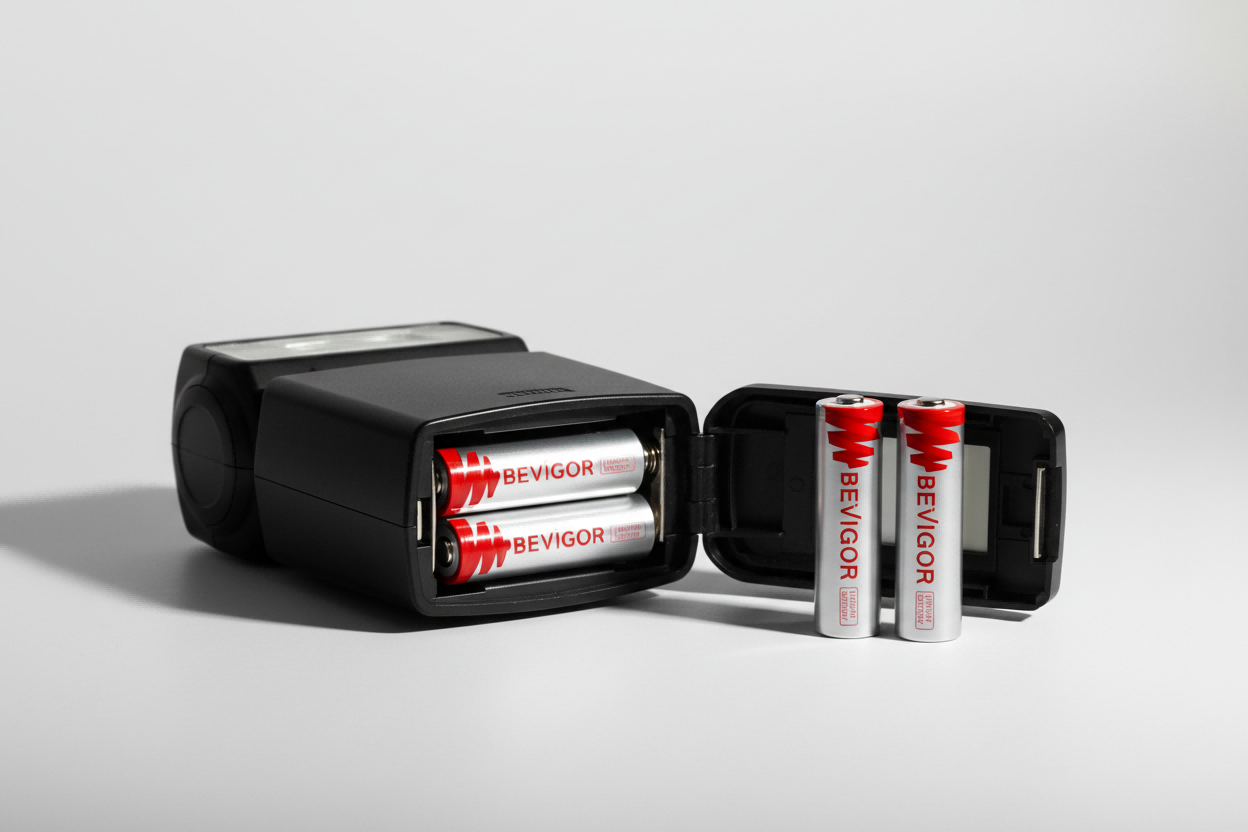
You slide the battery door shut, and it almost closes. The cell looks like a normal AA, the label says "AA," but the battery tray won’t accept it—or it fits so tightly you’re afraid you’ll rip the spring contact right out of the device.
That frustration usually comes down to one thing: a size name like "AA" describes a standard form factor, not a promise that every AA-shaped product is identical in every single millimeter. When your battery compartment is designed with minimal clearance, "close enough" becomes "won’t fit."

People think of battery sizes as hard numbers. In practice, real-world fit is more like a chain of small tolerances. When you are designing a product, it is easy to look at standard dimensions on a datasheet and assume your job is done. But out in the market, manufacturing variations collide. This is the engineering concept known as tolerance stack-up: small manufacturing differences and design choices that add up to a real-world fit problem. Individually, each variation is minor and entirely legal under industry standards. Together, they create a jam.
The Illusion of "Standard" Sizes
When people talk about AA or AAA batteries, they usually mean the physical size first. There are nominal baseline references for these common sizes. For instance, nominal numbers specify an AA battery by a specific diameter and length, and an AAA battery by another set of baseline dimensions.
Those nominal numbers are why these sizes are considered "standard." You can find these reference dimensions in standard guides, such as the battery size catalog. But if you are troubleshooting a battery door that won’t fit, the nominal figures are not the most useful numbers to look at. The more useful numbers are the allowed min–max limits—the effective tolerance window—used in the international electrical standards.
The standardized min–max limits allow for measurable variance. The official parameters are outlined in the IEC 60086 specifications, which designate a strict range for battery diameters and lengths.
That is why a product can be legitimately labeled "AA" yet still feel entirely different in a very tight compartment. The standards are not a single exact millimeter number; they are a set of dimensional limits.
The Ingredients of a Tolerance Stack-Up
A tolerance stack-up occurs when the maximum allowable limits of multiple components coincide. If your battery bay is built right up against the edge of standard limits, small construction differences decide whether the door closes. In a tight tray, several factors act as ingredients for a physical conflict:
● Varying Outer Wraps and Jackets: To package batteries safely, some products use thicker outer wraps or sleeves. On paper, the cell is still a legal "AA," but the increased friction from a slightly thicker jacket is enough to stop insertion in a tight tray.
● Terminal Geometry and Button Style: Standards define a form factor, but the market includes batteries with extra features that alter the outer dimensions. Advanced cells, such as rechargeable lithium-ion designs with internal circuitry to reduce voltage, often place components near the positive terminal. This changes how much of the "button" protrudes and how the top is constructed. Even a fraction of a millimeter matters when a battery door closes.
● Plastic Molding Variations: The battery itself is only half of the equation. The plastic rails and walls of the device's tray have their own manufacturing variations. Plastic flash—a tiny ridge left over from the molding process inside the tray—can alter the compartment's internal clearance.
● Spring Stiffness and Travel: Battery contacts are springy by design, but they rely on mechanical travel. The tray's spring has to compress enough to accommodate the cell. Over time, a spring might stiffen, or it might have been designed with very little travel to begin with, bottoming out before the battery is fully seated.
Individually, a battery being a hair longer, a wrapper being a hair thicker, or a plastic rail having a slight variation in molding is perfectly acceptable. But when you stack a maximum-limit battery into a minimum-limit tray, the system fails.
The Danger for Custom Compartments and Device Makers
For anyone designing a custom battery compartment, copy-pasting a single nominal length number from a chart is a recipe for failure. If you want any compliant battery on the market to fit comfortably, you cannot treat the battery bay like a perfect cylinder in a perfect tube.
A device tray must be treated like an active mechanical system. Designers have to account for several moving variables simultaneously:
● Nominal Cell Dimensions vs. Real Limits: Trays must accommodate the full min-max range allowed by international standards, not just the baseline average.
● Terminal Geometry: The design must account for how the positive button lands on the contacts and how pronounced the button top is across different brands.
● Insertion Angle: Many devices do not allow batteries to slide in perfectly straight. If a user has to angle the battery in, a tight clearance will cause the cell to wedge tightly against the sides before it even touches the contacts.
● Spring Travel and Contact Style: Trays that use very flat contacts instead of coiled springs are highly sensitive to terminal shapes. If a tray uses springs, there must be enough axial travel to compress smoothly without forcing the user to slam the door shut.
As a rule of thumb for device makers and DIY builders, you must deliberately build in extra radial clearance and axial spring travel beyond the nominal dimensions. For a detailed comparison of standard size limits and capacity trade-offs, reviewing a comparison like the Lithium AA vs Lithium AAA Battery guide helps explain why certain layout geometries are selected for high-drain electronics.
Managing Tight Squeezes Safely
When a consumer or designer is stuck with a tight battery tray squeeze, the instinct is often to force the fit. However, the goal should always be to fix the underlying cause rather than forcing the components together.
Aggressive force can permanently damage a device. If you pry or bend contact springs aggressively, you can weaken the contact pressure, break weld points, or ruin the door alignment, so it no longer closes even with standard cells.
Furthermore, unsafe DIY fixes introduce serious risks. You should never sand a battery's metal can or wrapper due to the risk of short-circuiting, nor should you crush, dent, or force the door shut with tools. If a tray is truly undersized due to tolerance stack-up, the safest approach is to stop fighting the stubborn battery and swap it for a high-quality alternative that more closely matches the nominal dimensions.
For standard replacements, you can find dependable AA Batteries or AAA Batteries that maintain uniform dimensions, or transition to a dedicated Rechargeable AA & AAA batteries system designed to balance safety, performance, and standard form-factor geometry.







Share:
How to Read Your Battery's Name Like a Blueprint
The CR123A vs. 16340 Voltage Trap: Protecting Your Electronics