


Can I Use Alkaline Batteries in My Blink Camera?
No—Blink says not to use alkaline batteries in its battery-powered cameras. Although alkaline AA cells may physically fit the battery compartment, Blink says supported battery-powered models are designed for AA 1.5-volt lithium non-rechargeable batteries. An alkaline cell fitting inside the camera does not make it a compatible substitute.
This distinction matters because “AA” describes a physical size, not a complete battery specification. Chemistry, voltage behavior, and whether a battery is rechargeable are separate characteristics. Before replacing any batteries, check the exact Blink model and follow the power instructions for that device.
What Batteries Does Blink Usually Recommend?
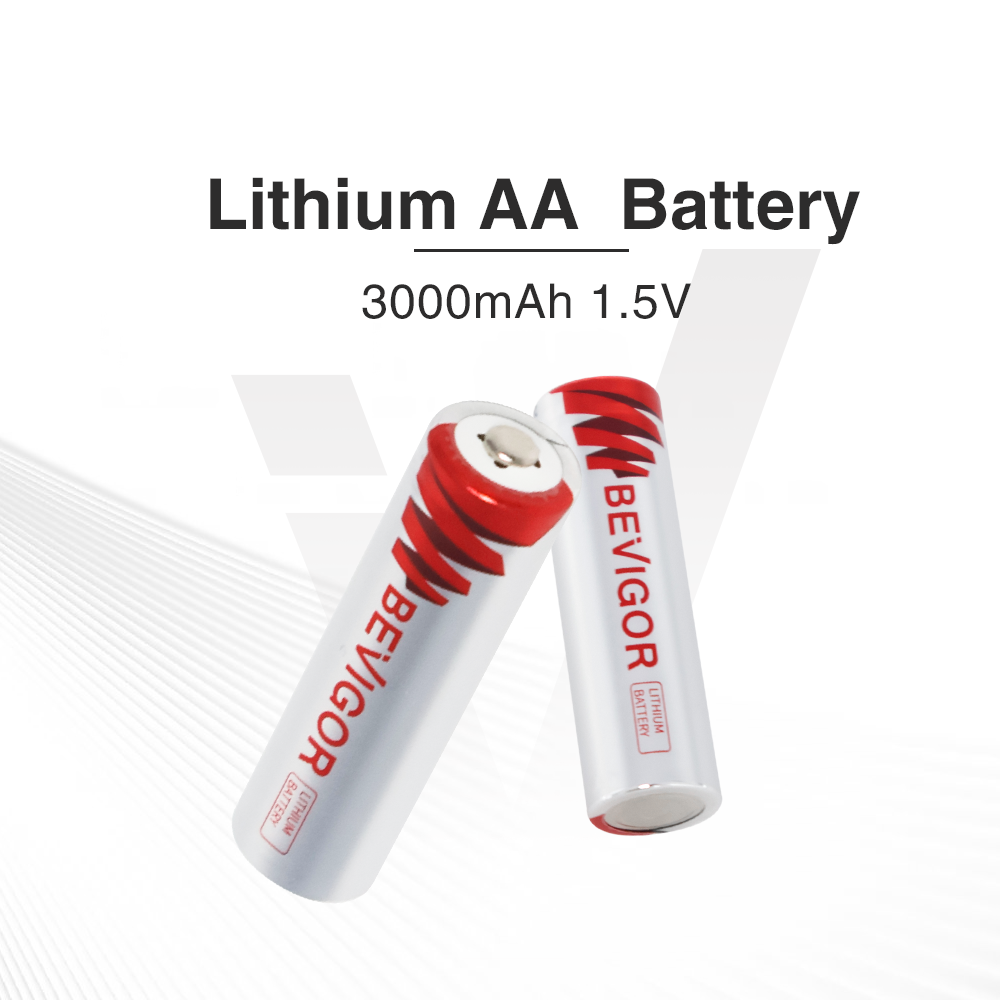
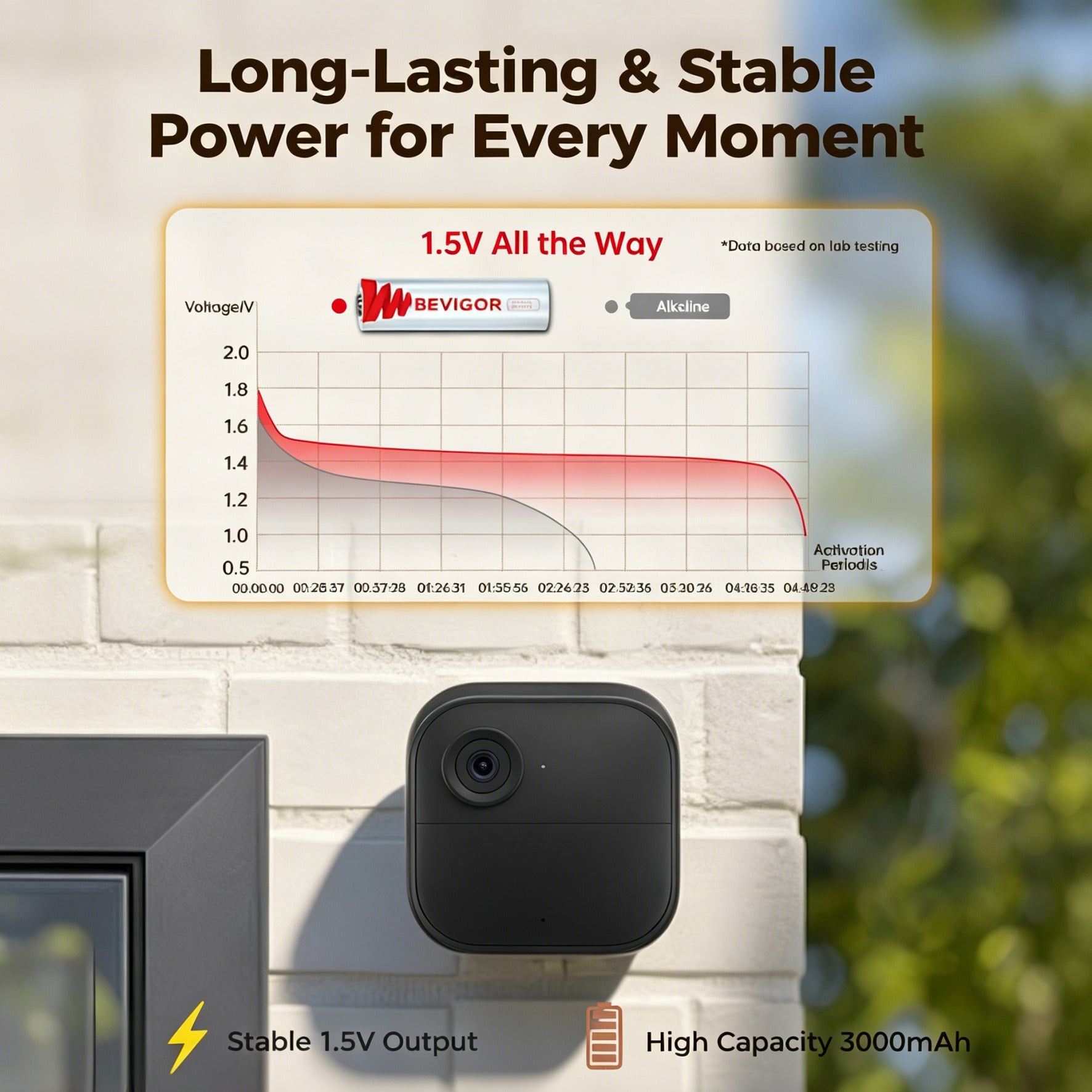
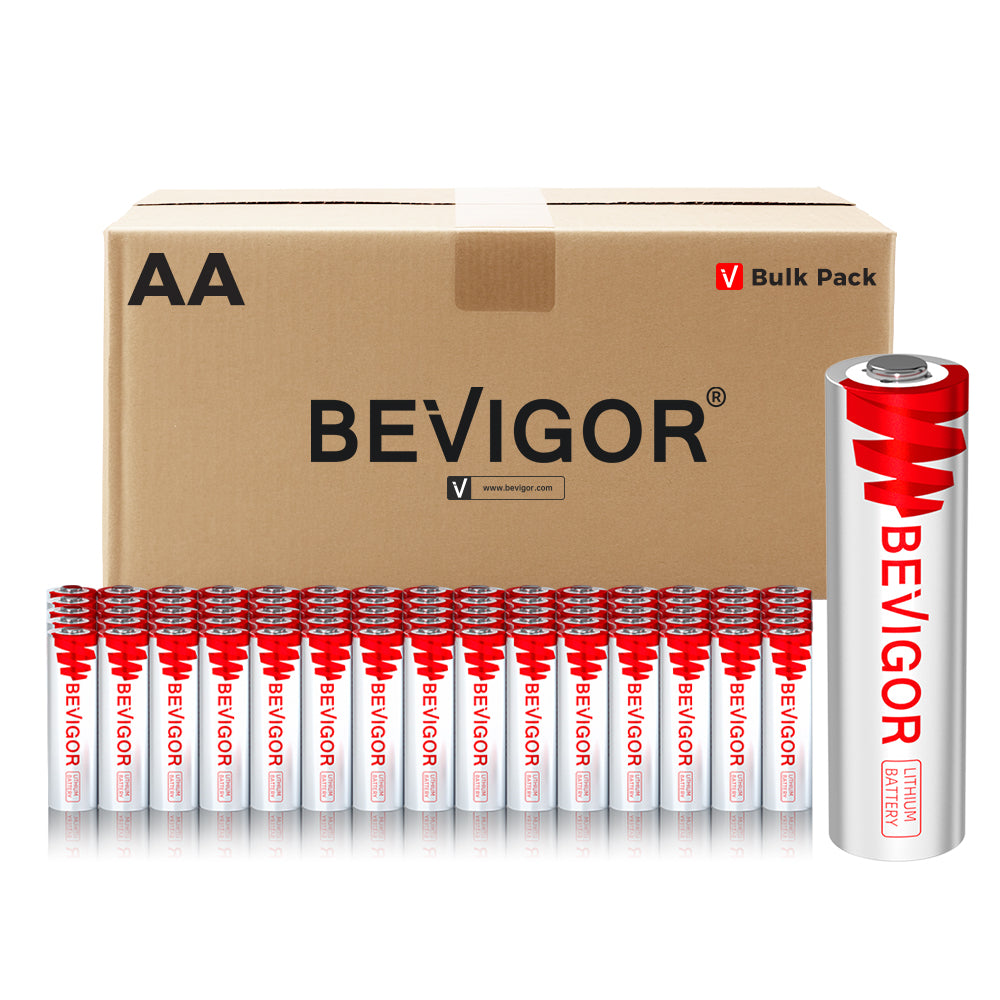
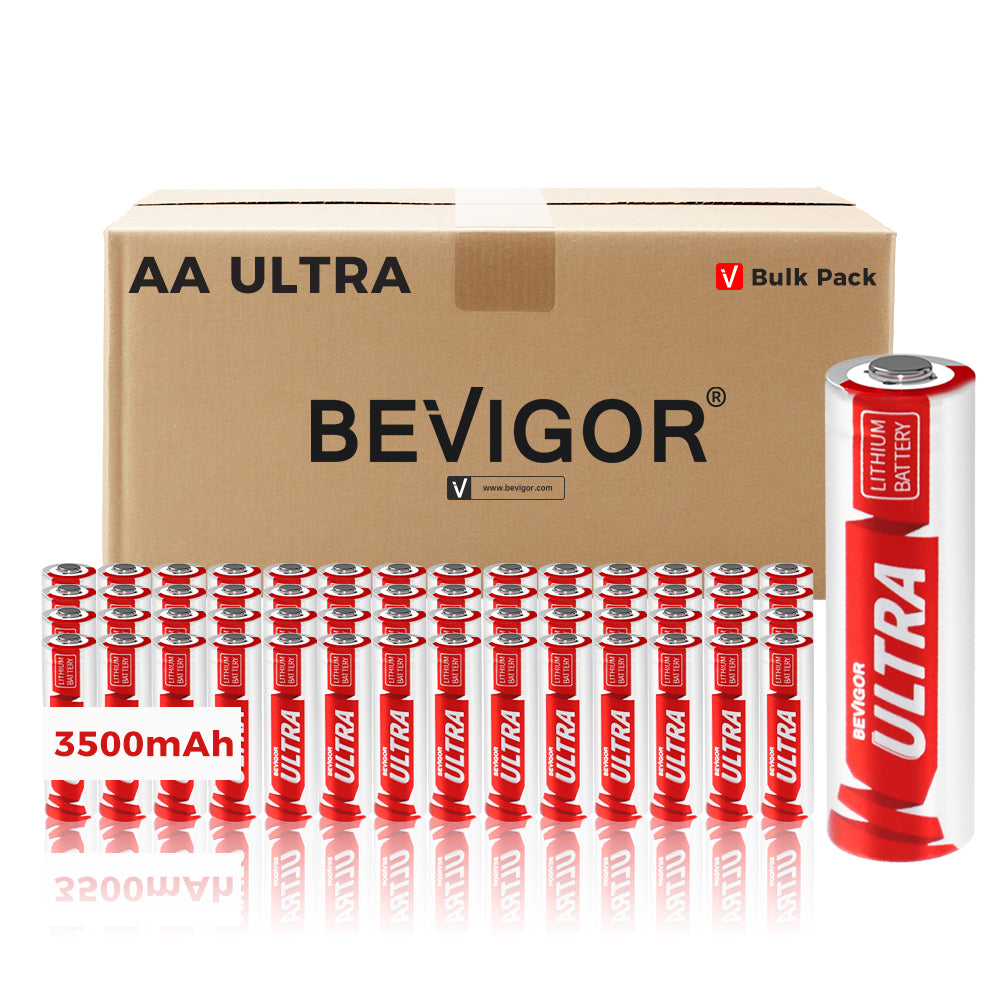
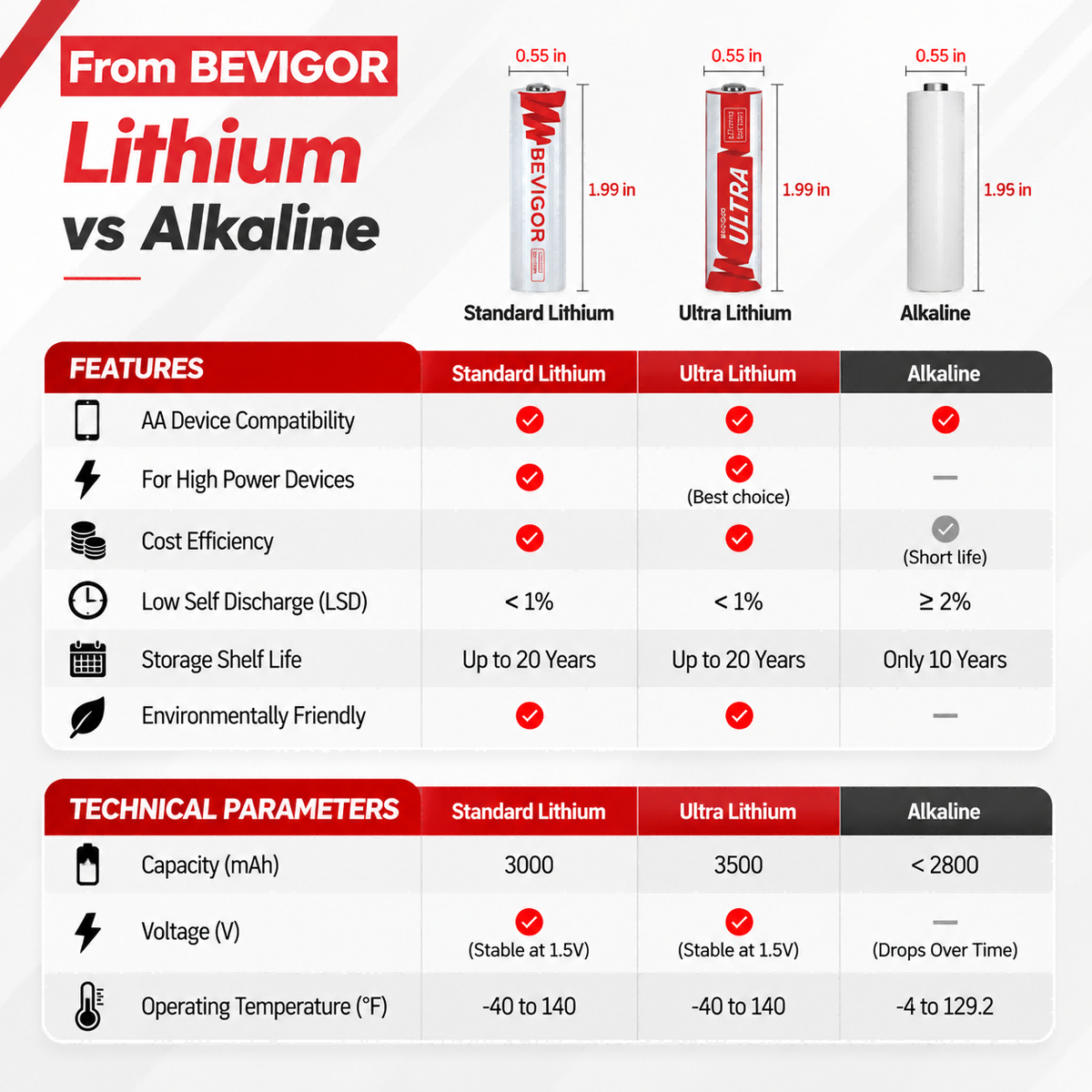
BEVIGOR’s 3000mAh AA lithium batteries and Ultra 3500mAh AA lithium batteries are both AA 1.5V non-rechargeable lithium batteries. They match the basic battery specification published for applicable battery-powered Blink cameras and can be used in models that call for this specification. Confirm the requirements for your exact model before purchasing, and replace the complete battery set with one matching type.
Will Regular AA Batteries Work in a Blink Camera?
“Regular AA batteries” usually means alkaline batteries, but the phrase is not technically precise. Some AA batteries are alkaline, some are primary lithium, and others are rechargeable NiMH or lithium-ion products. These chemistries can share an AA shape while behaving differently in a device.
Even if a camera powers on with an alkaline AA battery installed, that does not establish compatibility. Blink instructs owners not to use alkaline batteries in applicable cameras. Do not choose a battery merely because it fits; use the chemistry, voltage, and rechargeability specified for the exact model.
| Battery type | Typical label | Blink guidance |
|---|---|---|
| Primary lithium AA | AA, 1.5V, lithium, non-rechargeable | The specified type for supported battery-powered models |
| Alkaline AA | AA, 1.5V, alkaline | Do not use in applicable Blink cameras |
| NiMH rechargeable AA | AA, commonly 1.2V, rechargeable | Do not use in applicable Blink cameras |
| Rechargeable lithium AA | AA, rechargeable; output design varies | Do not use; size or a 1.5V label does not establish compatibility |
Blink states this restriction directly in its USB power instructions, which say not to use lithium-ion, alkaline, or rechargeable batteries in applicable Blink cameras.
Why Does Blink Specify Non-Rechargeable Lithium AA Batteries?
A battery-powered security camera spends much of its time in a low-power state, then performs activities such as motion detection, video recording, Wi-Fi communication, and Live View. Battery performance can therefore depend on settings, signal quality, temperature, activity, and the battery’s discharge behavior.
Blink identifies several factors that can shorten service life, including frequent motion clips, extended Live View use, weak Wi-Fi or Sync Module signals, and extreme temperatures. The company describes battery life as up to two years under default settings for eligible models—not as a guarantee for every camera or installation.
That is why this article does not assign a fixed lifespan to alkaline or lithium batteries. A claim such as “alkaline lasts two weeks” or “lithium always lasts two years” ignores the camera model, settings, environment, network conditions, and usage.
Can You Use Rechargeable Batteries in Blink Cameras?
Blink specifies non-rechargeable lithium AA batteries for its supported battery-powered cameras. Do not treat a rechargeable battery as compatible simply because it is AA size or labeled 1.5V. Rechargeable products can use different chemistries and voltage-control designs, and Blink’s official instructions—not a generic voltage match—should control the decision.
Never attempt to recharge a primary lithium battery. “Lithium” does not automatically mean rechargeable: the AA lithium batteries specified by Blink are primary, single-use cells.
Check the Exact Blink Model Before Replacing Batteries
Not every Blink device uses the same power source. Blink Mini models use wired power, while supported battery-powered models use AA lithium non-rechargeable batteries. Even among battery-powered products, battery count and optional power accessories can vary.
For example, Blink lists two AA 1.5V lithium non-rechargeable batteries as the main power source for Outdoor 4. Its optional Battery Extension Pack adds another pair. Do not turn that optional four-battery configuration into a rule for every Blink camera.
- Find the model name in the Blink app, packaging, or device documentation.
- Read the power specifications for that exact model on Blink Support.
- Match the size, chemistry, voltage, and non-rechargeable designation.
- Replace the complete set with fresh, matching batteries and follow the polarity markings.
- Do not mix old and new cells or different battery chemistries.
If you need model-specific access instructions, Blink provides an official battery-cover and replacement guide. Our separate Blink Video Doorbell battery guide discusses Doorbell-specific questions without treating every Blink product as identical.
What If You Already Installed Alkaline Batteries?
If the camera is operating with alkaline batteries installed, follow Blink’s instructions for the model to remove the complete alkaline set and replace it with the specified AA 1.5V lithium non-rechargeable type. Do not mix alkaline and lithium batteries in the same device.
If the camera is offline or shows a low-battery alert, first confirm that the battery set is fresh, correctly oriented, and the specified type. Then check network connectivity because an offline status is not always a battery problem. Stop using any battery that is damaged, swollen, leaking, unusually hot, or corroded, and follow the battery manufacturer’s safety and disposal directions.
How to Choose a Replacement AA Battery
Start with the device requirement, not a marketing claim. For the Blink models covered by the official guidance cited above, look for all of the following on the battery or product specification:
- AA size
- 1.5-volt nominal rating
- Primary lithium-metal chemistry
- Clearly marked non-rechargeable
The two BEVIGOR options linked above meet the same basic size, voltage, chemistry, and non-rechargeable requirements. The 3000mAh and 3500mAh designations describe their stated capacities; capacity is not a substitute for checking the required battery type. Confirm the current product specifications and the instructions for your exact Blink model before buying.
If you need installation and troubleshooting steps after choosing the correct battery type, see our Blink camera battery replacement guide. This page remains focused on the narrower compatibility question: whether alkaline or other “regular” AA batteries should be used.
Frequently Asked Questions
Can I use alkaline batteries in my Blink camera?
No. Blink says not to use alkaline batteries in applicable cameras. The company specifies AA 1.5V lithium non-rechargeable batteries for its supported battery-powered models. Alkaline AA cells may fit physically, but they are not a compatible substitute.
Can I use regular AA batteries in a Blink camera?
Do not rely on the words “regular AA.” Confirm the chemistry and voltage. Blink specifies AA 1.5V lithium non-rechargeable batteries for its battery-powered cameras, rather than generic alkaline or rechargeable AA cells.
What happens if I use alkaline instead of lithium batteries?
Performance may differ from the supported battery configuration, and battery status or service life may not meet expectations. Replace them with the battery type specified for your model rather than waiting for a security camera to become unreliable.
Can I use rechargeable AA batteries?
Blink’s published requirement is for non-rechargeable lithium AA batteries. Do not assume a rechargeable AA product is supported because its size or labeled voltage appears similar.
How many AA batteries does a Blink camera use?
It depends on the model and accessory configuration. For example, Outdoor 4 uses two AA lithium non-rechargeable batteries as its main power source, while its optional Battery Extension Pack increases the total to four. Check the documentation for your exact camera.
How long should Blink camera batteries last?
Blink describes battery life of up to two years for eligible models under default settings. Actual service life varies with settings, activity, Live View use, signal strength, temperature, and other conditions.
Bottom Line
Alkaline AA batteries may fit some Blink cameras, but Blink says not to use them in applicable models. Use the exact power specification for your camera; for supported battery-powered models, that generally means AA 1.5V lithium non-rechargeable batteries. Avoid rechargeable substitutions, do not mix battery types, and treat “up to two years” as a conditional device-maker estimate rather than a promise.







Share:
CR2025 vs CR2032: Differences, Interchangeability & Best Coin Battery Guide
What Are the Best AAA Batteries in 2026?