
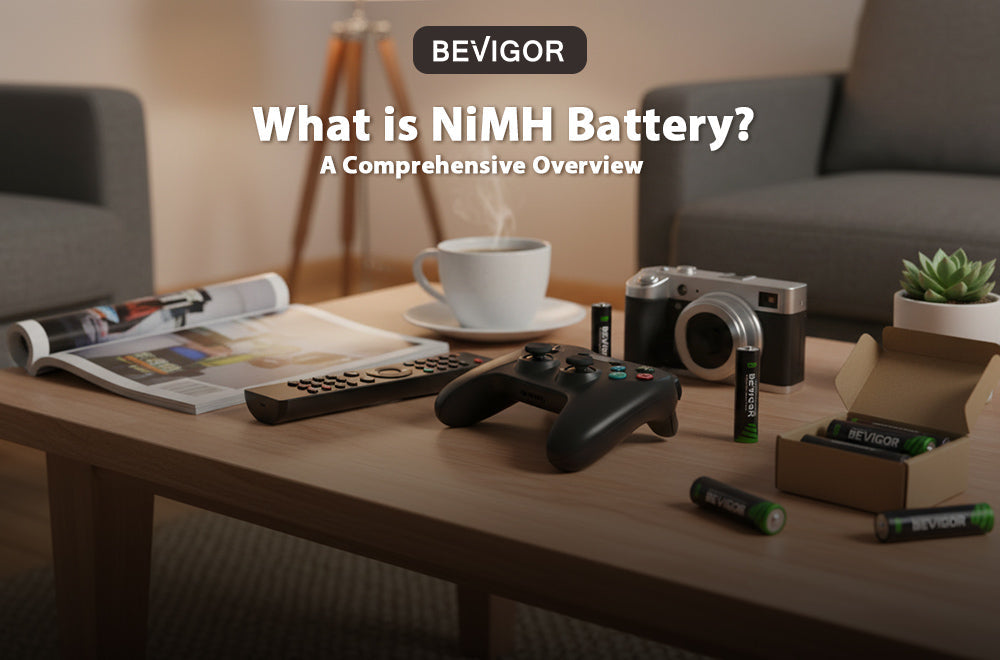
Nickel-Metallhydrid-Akkus (NiMH) gehören zu den am weitesten verbreiteten Arten von wiederaufladbaren Batterien und versorgen alles von Haushaltsgeräten bis hin zu Hybridfahrzeugen mit Strom. Aber was genau ist eine NiMH-Batterie, und warum ist sie in verschiedenen Branchen so beliebt? Dieser Leitfaden erklärt die Grundlagen von NiMH-Akkus, ihre Vorteile und ihre Anwendungen, damit Sie verstehen, warum sie eine gute Wahl für viele Energiespeicheranforderungen sind.
Was ist eine NiMH-Batterie?
Ein Nickel-Metallhydrid (NiMH)-Akku ist ein wiederaufladbarer Akkutyp, der eine Nickeloxidhydroxid (NiOOH)-Kathode und eine Metallhydrid-Anode verwendet, um Energie zu speichern und abzugeben. Er ist eine Variante der älteren Nickel-Cadmium (NiCd)-Batterie, bietet aber eine verbesserte Kapazität und Umweltvorteile.
NiMH-Akkus sind bekannt für ihre lange Zyklenlebensdauer (die Fähigkeit, mehrfach geladen und entladen zu werden) und ihr erschwingliches und umweltfreundliches Design. Im Gegensatz zu Lithium-Ionen-Akkus (Li-Ion) eignen sich NiMH-Akkus besonders gut für die Speicherung mittlerer Energiemengen und sind weniger giftig, was ihr Recycling erleichtert.
Wie funktioniert ein NiMH-Akku?
NiMH-Akkus funktionieren nach dem Prinzip reversibler elektrochemischer Reaktionen. Während des Ladevorgangs wird elektrische Energie durch die Umwandlung der chemischen Komponenten der Batterie gespeichert. Wenn die Batterie entladen wird, wird die gespeicherte chemische Energie wieder in elektrische Energie umgewandelt.
Laden
Beim Laden eines NiMH-Akkus fließt Elektrizität durch die Batterie, was eine chemische Reaktion auslöst, die Nickel und Hydrid in einen geladenen Zustand umwandelt.
Entladen
Wenn die Batterie in Gebrauch ist, kehrt sich der Prozess um, und Elektronen fließen von der Anode zur Kathode, wodurch das angeschlossene Gerät mit Strom versorgt wird.
Wichtige Vorteile von NiMH-Akkus
Umweltfreundlich
Einer der herausragenden Vorteile von NiMH-Akkus ist ihre Umweltfreundlichkeit. Im Gegensatz zu einigen anderen Batterietypen (wie Lithium-Ionen-Akkus) enthalten NiMH-Akkus weniger giftige Materialien, wodurch sie leichter recycelt und entsorgt werden können, ohne die Umwelt zu schädigen.
Erschwinglichkeit
NiMH-Akkus sind im Vergleich zu Li-Ionen-Akkus tendenziell günstiger in der Anschaffung. Dies macht sie zu einer ausgezeichneten Wahl für Verbraucher oder Unternehmen, die nach preisgünstigen Energiespeicheroptionen suchen.
Lange Zyklenlebensdauer
NiMH-Akkus können Hunderte Male wiederaufgeladen werden, ohne dass die Leistung erheblich nachlässt. Ihre Langlebigkeit macht sie für Geräte geeignet, die häufig aufgeladen werden müssen.
Stabile Leistung unter extremen Bedingungen
Im Gegensatz zu Li-Ionen-Akkus, die empfindlich auf extreme Temperaturen reagieren können, bieten NiMH-Akkus eine stabile Leistung über einen weiten Temperaturbereich, wodurch sie sowohl in heißen als auch in kalten Umgebungen zuverlässig sind.
Kein Memory-Effekt
Im Gegensatz zu älteren Nickel-Cadmium (NiCd)-Batterien leiden NiMH-Akkus nicht unter dem Memory-Effekt. Das bedeutet, dass sie ihre maximale Energiekapazität nicht verlieren, wenn sie vor dem Wiederaufladen teilweise entladen werden.
Anwendungen von NiMH-Akkus
NiMH-Akkus werden in verschiedenen Unterhaltungselektronikgeräten, industriellen Anwendungen und Elektrofahrzeugen eingesetzt. Hier sind einige gängige Bereiche, in denen NiMH-Akkus herausragen:
Unterhaltungselektronik
- Kameras: NiMH AA- und AAA-Batterien werden aufgrund ihrer langen Zyklenlebensdauer und Kosteneffizienz häufig in Digitalkameras verwendet.
- Fernbedienungen: NiMH-Akkus werden häufig in TV-Fernbedienungen, Gaming-Controllern und Spielzeugen verwendet.
Hybrid- und Elektrofahrzeuge
Elektroautos: Einige Hybridfahrzeuge verwenden immer noch NiMH-Akkupacks aufgrund ihrer Zuverlässigkeit und Umweltfreundlichkeit, insbesondere in Modellen, bei denen die Kosten ein entscheidender Faktor sind.
Elektrowerkzeuge
NiMH-Akkus sind eine beliebte Wahl für kabellose Elektrowerkzeuge wie Bohrmaschinen, Sägen und Staubsauger, da sie längere Laufzeiten und eine höhere Haltbarkeit im Vergleich zu Einwegbatterien bieten.
Systeme für erneuerbare Energien
NiMH-Akkus können zur Energiespeicherung in Solar- oder Windenergieanlagen eingesetzt werden und bieten eine zuverlässige Notstromlösung.
Medizinische Geräte
NiMH-Akkus werden in medizinischen Geräten wie Hörgeräten eingesetzt, da sie zuverlässig sind und eine lange Batterielebensdauer haben.
NiMH vs. andere wiederaufladbare Batterien
NiMH vs. Li-Ionen-Batterien
- Energiedichte: Li-Ionen-Akkus haben eine höhere Energiedichte, was bedeutet, dass sie mehr Energie in einem kleineren, leichteren Paket speichern können. NiMH-Akkus sind jedoch erschwinglicher und umweltfreundlicher.
- Umweltauswirkungen: NiMH-Akkus sind weniger giftig und leichter zu recyceln als Li-Ionen-Akkus, die aufgrund der Verwendung von Lithium und Kobalt eine spezielle Handhabung erfordern.
- Kosten: NiMH-Akkus sind in der Regel in der Anschaffung günstiger, während Li-Ionen-Akkus höhere Anschaffungskosten haben, aber in bestimmten Anwendungen mit hohem Energiebedarf eine längere Lebensdauer und bessere Leistung bieten können.
NiMH vs. NiCd-Batterien
- Memory-Effekt: Im Gegensatz zu NiCd-Akkus leiden NiMH-Akkus nicht unter dem Memory-Effekt, was flexiblere und bequemere Ladegewohnheiten ermöglicht.
- Umweltfreundlich: NiMH-Akkus sind umweltfreundlicher als NiCd-Akkus, die giftiges Cadmium enthalten und spezielle Entsorgungsmethoden erfordern.
Best Practices für die Verwendung von NiMH-Akkus
Um das Beste aus NiMH-Akkus herauszuholen, sollten Sie folgende Best Practices beachten:
Tiefentladung vermeiden
Versuchen Sie, Ihre NiMH-Akkus nicht vollständig zu entladen. Laden Sie sie auf, wenn sie zu 30%-80% voll sind, um ihre Lebensdauer zu erhalten.
Smart Charger verwenden
Ein Smart Charger kann die Spannung und Temperatur jeder Zelle überwachen, um ein Überladen zu verhindern, das die Batterie sonst beschädigen könnte. Entdecken Sie die wiederaufladbaren Batterieladegeräte von Bevigor.
Bei Teilladung lagern
Bewahren Sie NiMH-Akkus bei Teilladung (etwa 40%-50%) auf, um Kapazitätsverluste während längerer Nichtbenutzung zu vermeiden.
Temperaturmanagement
NiMH-Akkus sind relativ tolerant gegenüber extremen Temperaturen, aber es ist immer noch am besten, sie an einem kühlen, trockenen Ort, fern von direkter Sonneneinstrahlung oder Wärmequellen zu lagern, um ihre Lebensdauer zu verlängern.
Die Zukunft von NiMH-Akkus
Während Lithium-Ionen-Akkus (Li-Ion) derzeit den Markt für Hochleistungsenergiespeicher dominieren, behaupten sich NiMH-Akkus weiterhin in Anwendungen, die Erschwinglichkeit, Zuverlässigkeit und Umweltfreundlichkeit priorisieren. Da die globale Energienachfrage steigt, wird erwartet, dass NiMH-Akkus weiterhin eine Schlüsselrolle bei der Energiespeicherung spielen werden, insbesondere in Branchen wie Elektrofahrzeugen, erneuerbaren Energien und Unterhaltungselektronik.
Forschung und Entwicklung sind im Gange, um die Energiedichte und Zyklenlebensdauer von NiMH-Akkus weiter zu verbessern, was sie in den kommenden Jahren zu einer noch wettbewerbsfähigeren Option macht. Dies stellt sicher, dass NiMH eine zuverlässige, kostengünstige und nachhaltige Batterietechnologie für eine Vielzahl von Anwendungen bleiben wird.
Fazit: Warum NiMH-Akkus wählen?
NiMH-Akkus sind eine solide Wahl für alle, die eine kostengünstige, langlebige und umweltfreundliche Energiespeicherlösung suchen. Egal, ob Sie alltägliche Elektronik, Hybridfahrzeuge oder Systeme für erneuerbare Energien mit Strom versorgen, NiMH-Akkus bieten zuverlässige Leistung und reduzieren gleichzeitig die Umweltbelastung. Indem Sie die Best Practices für das Laden, Lagern und Recyceln befolgen, können Sie ihre Vorteile maximieren und sicherstellen, dass Ihre Geräte effizient und nachhaltig funktionieren.
Wenn Sie bereit sind, wiederaufladbare NiMH-Akkus zu entdecken, sollten Sie die hochwertigen Optionen von Bevigor für den persönlichen und industriellen Gebrauch in Betracht ziehen.
- Für Endkunden (Einzelverbraucher): Schauen Sie sich unsere wiederaufladbaren Batterien, wiederaufladbaren Batterieladegeräte und Wiederaufladbare & Ladegeräte-Bundles an.
- Für B-End-Kunden (Mengen-/Großhandel): Besuchen Sie unsere Großhandelsseite.
- Haben Sie Fragen? Kontaktieren Sie uns noch heute für weitere Informationen, wie die NiMH-Technologie Ihre Geräte mit Strom versorgen und zu einer nachhaltigeren Zukunft beitragen kann.






Aktie:
Der ultimative Ratgeber für Hörgerätebatterien: Die richtige Größe für Ihr Gerät wählen
NiMH vs. Li-Ion: Ein umfassender Leitfaden zur Auswahl des besten Akkus