


Das Fliegen mit Batterien ist heute üblich. Geräte wie Kameras, Smart Tracker, Taschenlampen und drahtlose Geräte sind alle auf Lithiumzellen angewiesen. Doch viele Reisende fragen sich immer noch: darf man Lithiumbatterien mit ins Flugzeug nehmen, und noch wichtiger, was passiert, wenn Lithiumbatterien im aufgegebenen Gepäck sind?
Das Verständnis der Sicherheitsvorschriften der Fluggesellschaften hilft, Verspätungen, Beschlagnahmungen oder potenzielle Sicherheitsrisiken bei der Kontrolle von Lithiumbatterien im Flugverkehr zu vermeiden.
Darf man Lithiumbatterien mit ins Flugzeug nehmen?
Die kurze Antwort ist ja – aber mit Einschränkungen.
Die meisten Fluggesellschaften und Luftfahrtbehörden erlauben Lithiumbatterien auf Flügen nur im Handgepäck und nicht im aufgegebenen Gepäck.
Warum sind Lithiumbatterien im Handgepäck, aber nicht im aufgegebenen Gepäck erlaubt?
Fluggesellschaften beschränken Lithiumbatterien im aufgegebenen Gepäck aufgrund der Brandsicherheit.
Wenn eine Lithiumbatterie im Frachtraum überhitzt oder einen Kurzschluss hat, kann es für die Besatzung schwierig sein, das Feuer schnell zu erkennen oder zu löschen. Im Gegensatz dazu können die Flugbegleiter sofort reagieren, wenn sich Batterien im Handgepäck in der Kabine befinden.
Deshalb betonen die Vorschriften die Sicherheit von Lithiumbatterien und Flügen.
Warum dürfen Lithiumbatterien nicht ins aufgegebene Gepäck?
Viele Reisende fragen: Warum dürfen Lithiumbatterien nicht ins aufgegebene Gepäck?
Das Hauptproblem ist das thermische Durchgehen.
Warum fangen Lithiumbatterien in Flugzeugen Feuer?
Lithiumzellen enthalten eine energiereiche Chemie. Bei Beschädigung, Quetschung oder Kurzschluss können sie sich schnell überhitzen und entzünden.
Mehrere Faktoren erhöhen das Risiko:
-
Druckänderungen während des Fluges
-
Beschädigte Batterieklemmen
-
Lose Batterien, die Metallobjekte berühren
-
Schlechte Lagerung ohne Lithiumbatteriebeutel oder Schutzhülle
Da Frachträume viele dicht gepackte Gegenstände enthalten, könnte ein einziger Fehler sich schnell ausbreiten. Dieses Risiko erklärt die strengen Regeln für Lithiumbatterien im aufgegebenen Gepäck.
Was passiert, wenn man Lithiumbatterien aufgibt?
Wenn die Flughafensicherheit Lithiumbatterien in aufgegebenen Gepäckstücken entdeckt, sind mehrere Ergebnisse möglich.
1. Gepäck kann zur Inspektion geöffnet werden
Die Mitarbeiter der Flughafensicherheit inspizieren oft das Gepäck und entfernen die Batterien.
2. Batterien können beschlagnahmt werden
Lose Batterien – insbesondere Lipo-Batterie-Flugzeugpakete oder Powerbanks – werden oft entfernt.
3. Ihr Gepäck kann sich verspäten
In einigen Fällen wird das Gepäck zurückgehalten, bis der Besitzer die Batterien ins Handgepäck umpacken kann.
Reisende berichten häufig von Situationen wie versehentlich Batterie im aufgegebenen Gepäck gelassen oder versehentlich Powerbank im aufgegebenen Gepäck gelassen, was zu Gepäckkontrollhinweisen führen kann.
Sind gängige Verbraucherbatterien auf Flügen erlaubt?
Verschiedene Batterietypen unterliegen leicht unterschiedlichen Richtlinien.
AA-Lithiumbatterien
Viele Reisende fragen: darf man AA-Batterien mit ins Flugzeug nehmen oder sind Double A-Batterien im aufgegebenen Gepäck erlaubt?
Im Allgemeinen:
-
AA-Lithiumbatterien sollten im Handgepäck mitgeführt werden
-
Ersatzbatterien sollten nicht im aufgegebenen Gepäck platziert werden
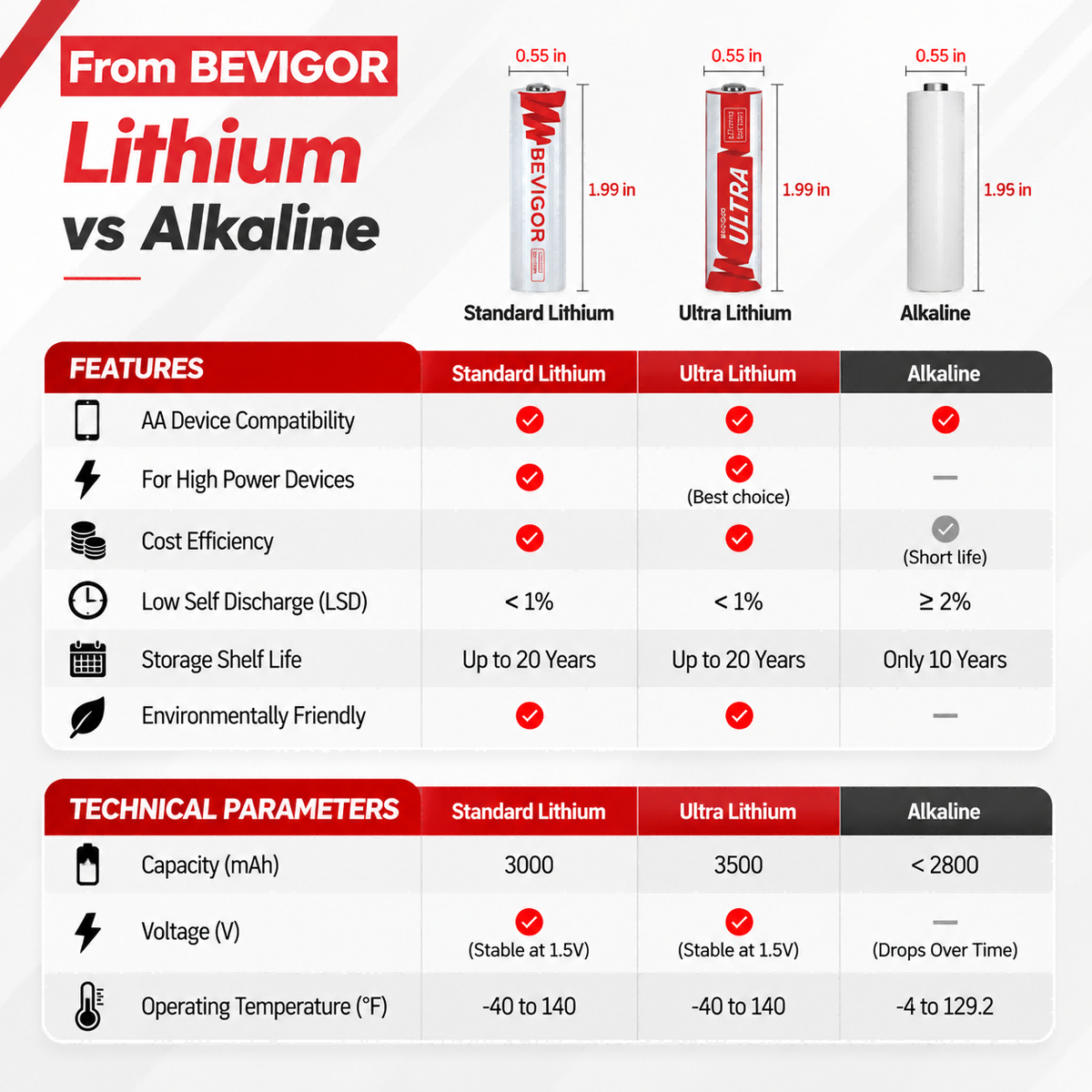
Hochwertige Optionen wie Bevigor AA Lithiumbatterien werden aufgrund ihrer langen Haltbarkeit und stabilen Leistung häufig in Kameras, Smart-Home-Geräten und Outdoor-Elektronik eingesetzt.
Knopfzellenbatterien (CR2032, CR2025, CR2450, CR2016)
Knopfzellen versorgen kleine Elektronikgeräte wie:
-
Uhren
-
Schlüsselanhänger
-
Smart Tracker
-
Medizinische Geräte
Reisende fragen manchmal, ob Airtags Lithiumbatterien sind – die Antwort ist ja. Geräte wie Tracker verwenden typischerweise CR2032-Knopfzellen.
Produkte wie CR2032-Batterietester helfen sicherzustellen, dass die Batterie vor der Reise noch Strom hat.
Für Ersatz oder zuverlässige Knopfzellen verwenden viele Reisende Bevigor-Lithiumbatterien, die für lange Lagerzeiten und stabile Leistung ausgelegt sind.
Kamerabatterien (CR123A und CR2)
Fotoausrüstung verwendet oft Lithiumzellen wie die Modelle CR123A und CR2-Batterie.
Auf Reisen:
-
Ersatzbatterien im Handgepäck aufbewahren
-
Eine CR123A-Batteriehülle verwenden, um Kontakt mit den Anschlüssen zu vermeiden
-
Lose Batterien nicht zusammen mit Metallgegenständen lagern
Diese Schritte reduzieren das Kurzschlussrisiko beim Fliegen mit Lithiumbatterien.
Dürfen AAA-Batterien ins aufgegebene Gepäck?
Eine häufige Frage ist: Dürfen AAA-Batterien ins aufgegebene Gepäck?
Wenn die Batterien in einem Gerät installiert sind, sind sie normalerweise erlaubt. Ersatz-Lithiumbatterien – einschließlich Lithium-AA-Batterien – sollten jedoch immer im Handgepäck transportiert werden, wann immer dies möglich ist.
Dies hilft, Sicherheitsrisiken im Zusammenhang mit Batterien im aufgegebenen Gepäck zu vermeiden.
So verpacken Sie Lithiumbatterien sicher für Flüge
Um sicher mit Batterien zu reisen:
-
Ersatzbatterien im Handgepäck aufbewahren
-
Schützende Batteriegehäuse oder Lithiumbatterietaschen verwenden
-
Batteriepole mit Klebeband abdecken, wenn lose
-
Batterien nicht mit Schlüsseln oder Münzen mischen
-
Hochwertige Batterien wie Bevigor Lithium AA Batterien lagern, die über lange Lagerzeiten eine stabile Leistung beibehalten
Diese Schritte reduzieren die Risiken beim Transport von Lithiumbatterien in Flugzeugen erheblich.
Was passiert mit Lithiumbatterien im Flugzeug?
Unter normalen Bedingungen passiert nichts Ungewöhnliches.
Moderne Flugzeugkabinen sind sichere Umgebungen für Lithiumbatterien in Flugzeugen, und Millionen von Passagieren reisen täglich mit batteriebetriebenen Elektronikgeräten.
Probleme treten nur auf, wenn Batterien beschädigt, kurzgeschlossen oder unsachgemäß verpackt werden – insbesondere wenn sie in Lithiumbatterien im aufgegebenen Gepäck aufbewahrt werden, wo die Überwachung schwierig ist.
Fazit: Sicher fliegen mit Lithiumbatterien
Lithiumbatterien versorgen viele Alltagsgeräte, von Smart Trackern bis zu Kameras und Taschenlampen. Obwohl die Vorschriften für Lithiumbatterien im Flugverkehr streng erscheinen mögen, dienen sie dazu, seltene, aber schwerwiegende Sicherheitsvorfälle zu verhindern.
Die wichtigste Regel ist einfach: Ersatz-Lithiumbatterien im Handgepäck aufbewahren und ordnungsgemäß lagern.
Ob Sie mit Lithium-AA-Batterien, Knopfzellen oder Kamerabatterien reisen, die Einhaltung der Richtlinien der Fluggesellschaft gewährleistet eine reibungslose und sichere Reise. Zuverlässige Optionen wie Bevigor-Lithiumbatterien bieten eine lange Haltbarkeit und stabile Leistung, was sie zu einer praktischen Wahl für Reisende macht, die auf batteriebetriebene Geräte angewiesen sind.











Aktie:
Kann man Batterien mit ins Flugzeug nehmen? TSA-Vorschriften und Reisetipps 2026
Wie lange halten Batterien in einer Wildkamera?