

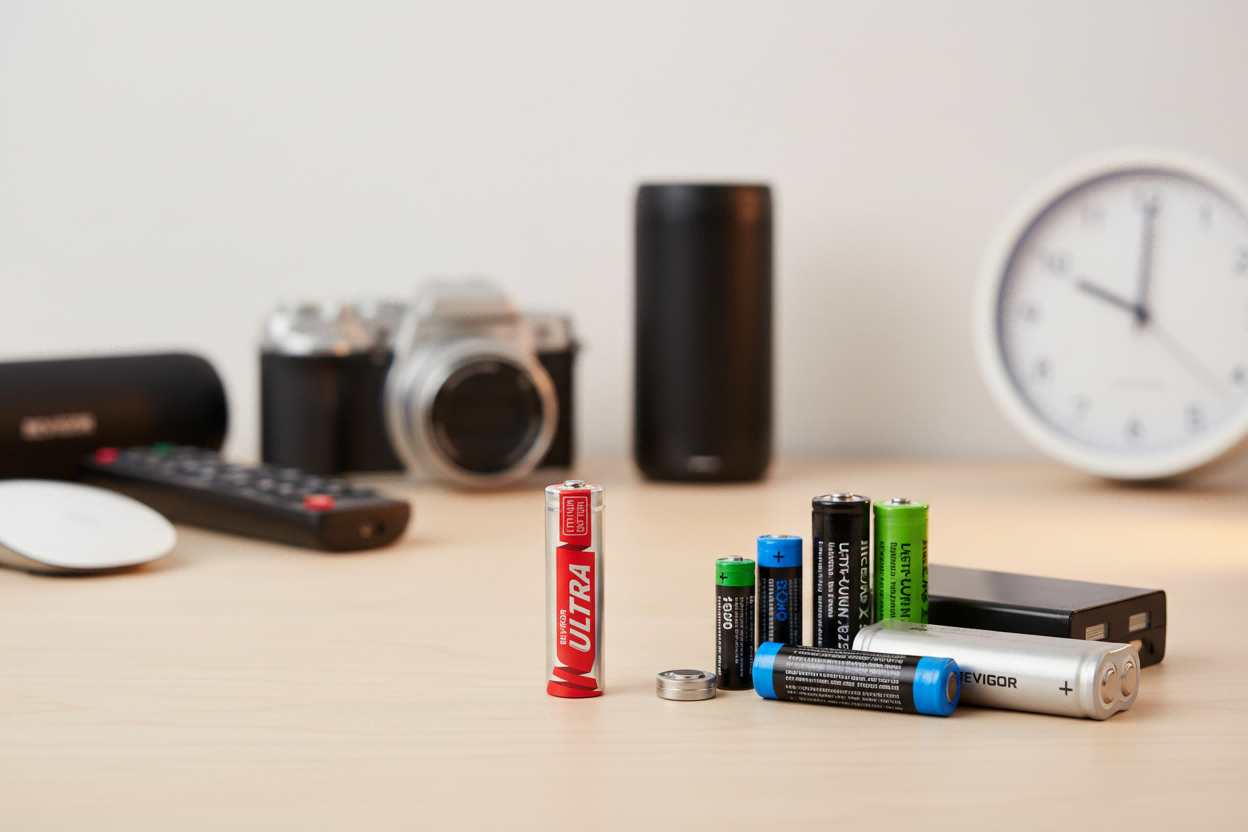

In everyday home use, "lithium" can mean two very different things:
- Lithium metal batteries (usually primary / non‑rechargeable): common in AA/AAA "lithium" disposables, coin cells, and specialty sizes.
- Lithium‑ion batteries (usually rechargeable): common in removable cylindrical cells (like 18650-style) and rechargeable packs.
This guide is designed for home-use removable batteries: the ones you can take in and out of devices, rather than built‑in phone batteries or car batteries.
Quick decision guide: lithium metal vs lithium‑ion batteries
Use this first table when you just want the right choice for your device.
|
If you need… |
Choose lithium metal (primary) |
Choose lithium‑ion (rechargeable) |
|
A battery that can sit for years and still work |
✅ Best fit |
⚠️ Not ideal for "store and forget" |
|
Better performance in cold mornings, high elevation, winter storage |
✅ Often best |
⚠️ Works, but runtime drops in cold and charging gets tricky |
|
A battery for emergency kits, smoke alarms, backup flashlights |
✅ Often best |
⚠️ Works if you maintain/charge it regularly |
|
High-drain, frequent use (daily flashlight, devices you recharge weekly) |
⚠️ Can work but gets expensive |
✅ Often best |
|
Simple, no-charger-needed reliability |
✅ Yes |
❌ Needs the right charger |
|
Lower waste over time (recharge and reuse) |
❌ Single-use |
✅ Rechargeable |
Key Takeaway: If your priority is readiness (emergency kits, backup lights, cold hikes), lithium metal primaries are hard to beat. If your priority is repeat use and cost per cycle, lithium‑ion usually wins.
Essential Differences Between Lithium Metal Batteries And Lithium‑Ion Batteries
Let's compare the two in a way that maps to real home use (AA/AAA/coin cells, flashlights, cameras), not EVs or built‑in phone batteries.
First: What Each Name Means (And How To Write It Correctly)
These names get mixed up constantly, so here's the "clean" version you can use in product copy, support docs, or blog posts:
- Lithium metal battery: a battery that uses metallic lithium (often primary/non‑rechargeable in consumer formats).
- Lithium‑ion battery (or Li‑ion): a rechargeable battery that moves lithium ions between materials (most commonly through intercalation), rather than using metallic lithium as the working anode in everyday designs.
When you write:
- Use hyphenation consistently: "lithium‑ion" (not "lithium ion").
- Use "lithium metal" (two words) to make it clear you're not talking about Li‑ion.
- Avoid the phrase "lithium battery" unless you immediately clarify which type.
A clear definition of lithium metal primary batteries is available in this overview of lithium metal batteries.
Technology: Primary VS Rechargeable (The Real Dividing Line)
In consumer gear, the simplest split is:
- Lithium metal batteries are usually primary: use them once, then recycle/dispose properly.
- Lithium‑ion batteries are rechargeable: use/charge/use for many cycles.
That difference shapes everything else: cost over time, convenience, and how you plan for emergencies.
Materials: What's Inside
You don't need a chemistry degree, but one idea helps:
- In lithium‑ion, lithium is stored in materials. The University of Washington's Clean Energy Institute explains how lithium ions move through the battery and how intercalation works in its lithium‑ion battery overview.
- In lithium metal primary, metallic lithium is part of the design, which can support long shelf life and strong performance in tough conditions.
Voltage: Why "Same Size" Doesn't Mean "Interchangeable"
Voltage is what protects your device.
- Many disposable lithium AAs are made to be drop-in replacements for alkaline AAs (so the device still "sees" the voltage range it expects).
- A typical lithium‑ion cell is around 3.6V nominal, which is far higher than what devices designed for AA/AAA usually expect. UW's CEI notes this per-cell voltage level in its Li‑ion overview.
Practical rule: only use Li‑ion cells in devices explicitly designed for them, and only with the right charger.
Energy Density: What It Means Without The Marketing
Energy density is basically "how much energy you get for the weight/size."
- Disposable lithium metal cells are often chosen when you want a lot of stored energy and long shelf life.
- Rechargeable lithium‑ion is often chosen when you want high energy plus the ability to recharge, which can be a better long-term deal in daily-use devices.
If you see "mAh" on a package, remember: mAh is only meaningful when you also know the voltage. That's why watt-hours (Wh) is a cleaner comparison.
Pro Tip: Watt‑hours (Wh) describe total energy: voltage × amp-hours. It's the best way to compare two batteries that have different voltages.
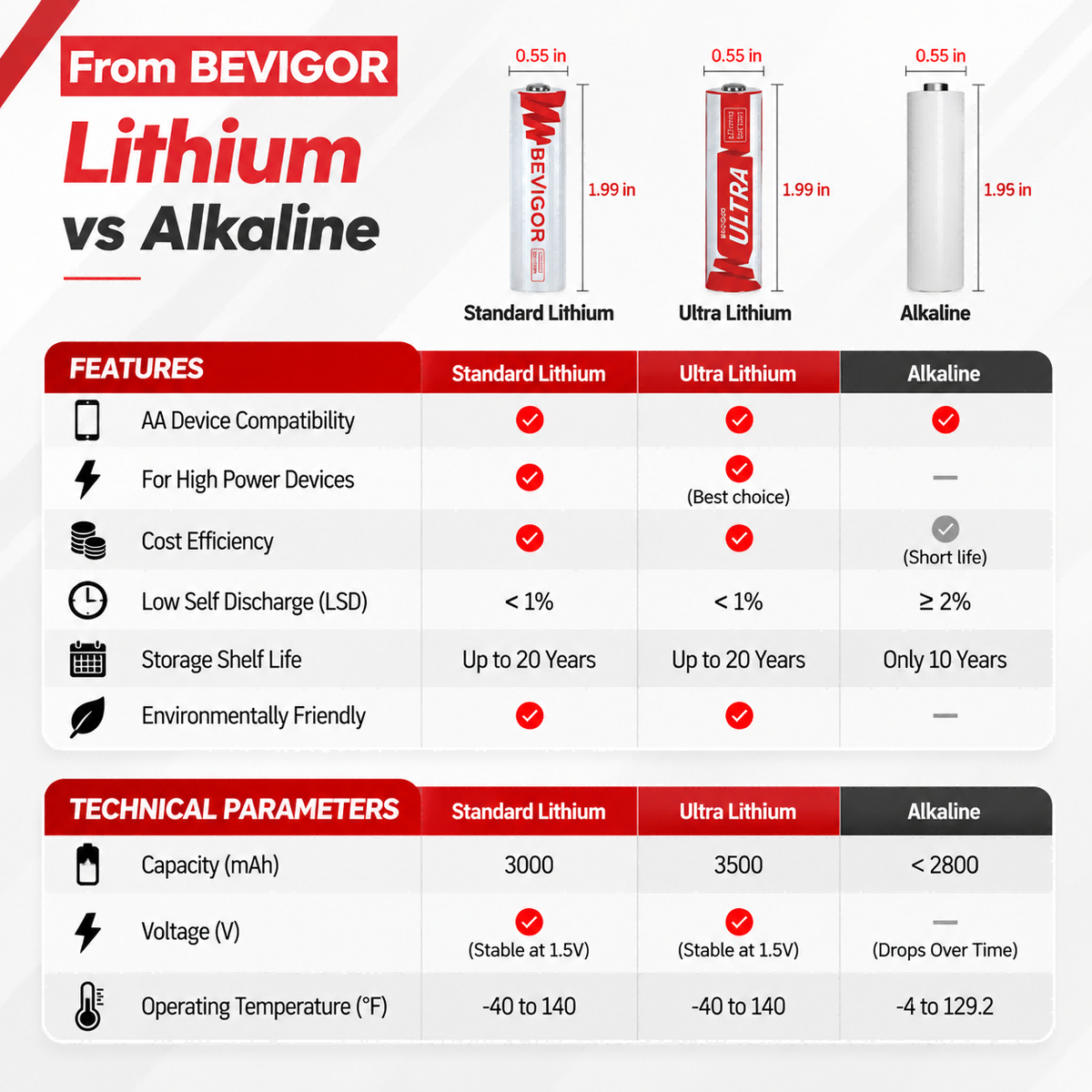
Shelf Life And Self‑Discharge: The "Will It Work When I Need It?" Test
Two terms matter here:
- Self‑discharge: the battery slowly loses charge while it sits unused.
- Shelf life: how long it can sit unused and still retain useful capacity.
As a consumer, here's what that means:
- If you're stocking a drawer for "just in case," shelf life matters more than price.
- If you're cycling batteries weekly, shelf life matters less than rechargeability and consistency.
Cold-Weather Performance: Why Outdoor Use Changes The Decision
Cold reduces battery performance because chemistry slows down and voltage drops under load.
REI's outdoor-focused guide is one of the most useful "real user" sources: How to Choose Batteries | REI Expert Advice notes that single‑use lithium batteries perform very well in extreme temperatures, including cold.
That doesn't mean lithium‑ion can't be used outdoors. It means you should plan for:
- shorter runtime in cold
- needing to keep spares warm (inside a pocket) if you're pushing conditions
- not being able to safely recharge in cold environments
Pros and Cons (Honest Tradeoffs)
Here's the balanced view for home-use removable batteries.
Lithium metal (primary) pros
- Great for long storage and readiness
- Strong cold-weather performance
- Simple: no charger ecosystem
Lithium metal (primary) cons
- Single-use waste and ongoing purchase cost
- Not designed to be recharged
Lithium‑ion (rechargeable) pros
- Reuse reduces cost per cycle for frequent-use devices
- Often strong sustained output (when the device and cell are designed for it)
Lithium‑ion (rechargeable) cons
- Needs the right charger and safety habits
- Runtime can drop noticeably in cold
- Storage requires a little maintenance
Never try to "make it fit" by using a higher-voltage rechargeable cell in a device designed for AA/AAA primaries. If the device doesn't explicitly support that chemistry/voltage, treat it as incompatible. If you are not sure which lithium battery type fits you best, feel free to contact Bevigor support for more details!






Aktie:
Why You Should Put Lithium Metal Batteries in Your Emergency Kit
Why You Should Put Lithium Metal Batteries in Your Emergency Kit