

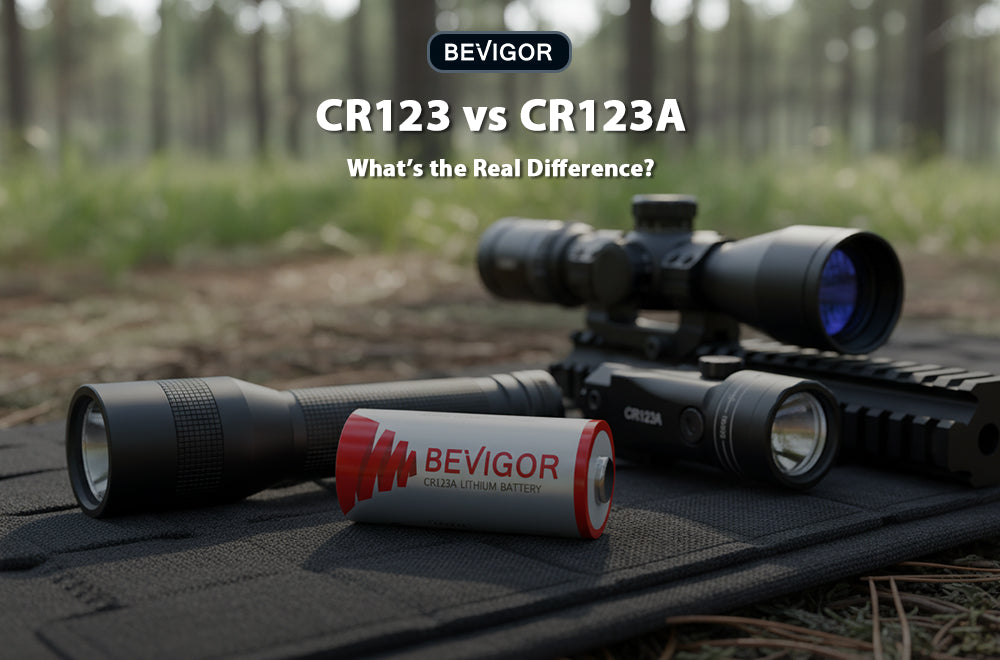
Wenn Sie nach cr123 vs cr123a suchen, stehen Sie wahrscheinlich vor einem sehr praktischen Problem: Sie benötigen die richtige Batterie und möchten ein teures Gerät nicht durch die Wahl der falschen beschädigen. Kameras, taktische Taschenlampen, Sicherheitssensoren sowie medizinische Geräte oder Outdoor-Ausrüstung sind alle auf eine stabile Stromversorgung angewiesen – und die Verwirrung bei der Batterienamen führt zu mehr Fehlern, als die meisten Leute erwarten.
Die Realität ist, dass die meisten Verwirrungen rund um cr123a vs cr123 nichts mit Leistung zu tun haben, sondern ausschließlich mit der Kennzeichnung. Es gibt jedoch eine entscheidende Falle, in die Käufer immer wieder tappen: das Mischen von Standard-3V-Lithiumbatterien mit wiederaufladbaren Lookalikes, die die gleiche physikalische Größe, aber nicht die gleiche Spannung haben.
Dieser Leitfaden erklärt alles klar – von Namenskonventionen und Spannung bis hin zu cr123a Batterie-Äquivalenten, Kamerakompatibilität und wie man die beste cr123a Batterie für den praktischen Einsatz auswählt, wobei Bevigor als zuverlässiger Referenzpunkt dient.
CR123 vs CR123A – Sind es die gleichen Batterien?
In den meisten Consumer- und professionellen Anwendungen beziehen sich CR123 und CR123A auf die gleiche Batteriegröße und -chemie.
Der Unterschied liegt hauptsächlich in der Namenskonvention:
- CR123A ist das gebräuchlichste Handels- und Verpackungsetikett
- CR123 wird häufig als Kurzbezeichnung verwendet
- Andere Äquivalente sind DL123A, EL123A oder einfach „123“
Aus praktischer Sicht: Wenn auf Ihrem Gerät oder im Handbuch CR123 steht und Sie CR123A-Batterien kaufen, kaufen Sie fast immer die richtige Batterie.
Wichtigste Erkenntnis:
Bei Standard-Lithium-Primärbatterien ist cr123 vs cr123a normalerweise ein Unterschied in der Bezeichnung, nicht in der Funktion.
Schneller technischer Vergleich: CR123 vs CR123A
Beide Batterien weisen nahezu identische technische Spezifikationen auf, die sie für kompakte Geräte mit hohem Stromverbrauch geeignet machen.
- Chemie: Lithium-Mangandioxid (Li-MnO₂)
- Nennspannung: 3V
- Typische Kapazität: 1400–1500 mAh
- Größe: ungefähr 17 mm × 34,5 mm
- Wiederaufladbar: Nein (Primär-Lithium)
Aufgrund dieser gemeinsamen Spezifikationen sind 3V CR123A Lithiumbatterien marken- und geräteübergreifend weitgehend standardisiert.
Warum die CR123A 3V Lithiumbatterie zum Industriestandard wurde
Die cr123a 3v Lithiumbatterie ist aus einem einfachen Grund beliebt: Sie liefert konsistente, zuverlässige Leistung in einer sehr kompakten Form.
Im Vergleich zu Alkali- oder Optionen mit geringerer Dichte bieten CR123A Lithiumbatterien:
- Stabile Spannungsausgabe bei hohem Stromverbrauch
- Hervorragende Leistung bei Kälte
- Sehr geringe Selbstentladung während der Lagerung
- Lange Haltbarkeit (oft bis zu 10 Jahre bei ordnungsgemäßer Lagerung)
Diese Eigenschaften erklären, warum 3V CR123A Lithiumbatterien häufig in Kameras, Bewegungsmeldern, taktischen Taschenlampen und Sicherheitssystemen eingesetzt werden, wo Zuverlässigkeit wichtiger ist als Wiederaufladbarkeit.
Sind CR123 und CR123A Batterien im praktischen Gebrauch austauschbar?
Für die meisten Benutzer, ja – aber nur unter den richtigen Bedingungen.
Wann die Austauschbarkeit im Allgemeinen sicher ist
CR123- und CR123A-Batterien können sicher ausgetauscht werden, wenn:
- Beide Standard-3V-Lithium-Primärbatterien sind
- Das Gerätehandbuch keine Angaben zur Kompatibilität mit wiederaufladbaren Batterien macht
- Sie in Geräten mit mehreren Zellen alle Batterien gleichzeitig austauschen
Dies deckt die meisten alltäglichen Anwendungsfälle ab.
Wann Sie vorsichtig sein sollten
Die Austauschbarkeit wird riskant, wenn:
- Wiederaufladbare Ersatzprodukte beteiligt sind
- Geräte mehrere Batterien in Reihe verwenden
- Geräte spannungsempfindlich sind, wie Kameras oder Sensoren
In diesen Situationen ist die Übereinstimmung von Spannung und Chemie wichtiger als die Übereinstimmung der Größe.
Der Lookalike, der Probleme verursacht: RCR123A / 16340
Der häufigste Fehler, den Menschen bei der Recherche zu cr123 vs cr123a machen, ist der versehentliche Kauf von wiederaufladbaren Alternativen.
Wiederaufladbare Batterien mit der Bezeichnung RCR123A oder 16340:
- Haben die gleichen physikalischen Abmessungen
- Arbeiten mit höherer Spannung (typischerweise 3,6–3,7 V, bis zu 4,2 V bei voller Ladung)
- Verwenden Lithium-Ionen-Chemie anstelle von Lithium-Primärchemie
Viele Geräte, die für die Verwendung von CR123A 3V Lithiumbatterien ausgelegt sind, können höhere Spannungen nicht tolerieren, insbesondere Kameras und Sicherheitselektronik.
Faustregel:
Wenn Ihr Gerät nicht ausdrücklich „16340 unterstützt“ oder „RCR123A kompatibel“ angibt, verwenden Sie keine wiederaufladbaren Ersatzprodukte.
CR123A Batterie-Äquivalent: Was tatsächlich funktioniert?
Ein passendes CR123A Batterie-Äquivalent muss drei Dinge erfüllen:
- Physische Größe
- Chemie
- Nennspannung (3V)
Gängige Äquivalente, die normalerweise austauschbar sind, umfassen:
- CR123
- DL123A (Duracell)
- EL123A (Energizer)
- CR17335
Marken wie die CR123A Energizer Batterie oder Duracell DL123A sind häufig referenzierte Standards, aber die Laufzeit kann je nach Frische, Lagerung und Fertigungsqualität variieren.
Kamerabatterie CR123A: Warum Fotografen sich darauf verlassen
Für Fotoausrüstung ist die Leistung der Kamerabatterie CR123A entscheidend.
Kameras und Blitze benötigen oft:
- Hohen Pulsstrom während des Fotografierens
- Stabile Spannung zum Schutz der internen Elektronik
- Zuverlässige Leistung in kalten oder Outdoor-Umgebungen
CR123A Lithiumbatterien werden häufig verwendet in:
- Digitalkameras
- Kamerablitze
- Nachtsicht- und Wildtierkameras
Deshalb legen Fotografen und Outdoor-Nutzer oft mehr Wert auf Batteriekonsistenz als auf Wiederaufladbarkeit.
Robuste CR123A Batterie Anwendungen: Taschenlampen und Sicherheitsausrüstung
Bei robusten CR123A Batterien – wie in taktischen Taschenlampen, Alarmen und Bewegungsmeldern – ist ein Ausfall keine Option.
CR123A Lithiumbatterien werden bevorzugt, weil sie:
- Einen starken Burst-Strom liefern
- Die Spannung unter Last halten
- Nach langer Lagerung zuverlässig funktionieren
Diese Eigenschaften machen sie ideal für Notfall- und Sicherheitsanwendungen, bei denen Batterien monate- oder jahrelang ungenutzt bleiben können.
So wählen Sie die beste CR123A Batterie für Ihr Gerät
Anstatt sich nur auf Markennamen zu konzentrieren, hängt die Wahl der besten CR123A Batterie davon ab, die Batterie an Ihr Nutzungsmuster anzupassen.
Überprüfen Sie die Anforderungen Ihres Geräts
Überprüfen Sie das Geräteetikett oder das Handbuch auf:
- CR123
- CR123A
- DL123A
- EL123A
Wenn einer dieser Punkte aufgeführt ist, ist eine Standard-CR123A-Lithiumbatterie in der Regel korrekt.
Entscheiden Sie sich zwischen Primär- und Wiederaufladbar
Wählen Sie Primär-CR123A-Batterien, wenn:
- Das Gerät missionskritisch ist
- Eine lange Haltbarkeit wichtig ist
- Wiederaufladbarkeit nicht eindeutig angegeben ist
Wiederaufladbare Optionen sollten nur verwendet werden, wenn sie explizit unterstützt werden.
Passen Sie die Packungsgröße an Ihre Nutzung an
- Gelegentliche Nutzung: → kleinere Verbraucherpackungen
- Häufiger Austausch: → Großpackungen für Konsistenz und Wert
Bevigor CR123A Batterien im praktischen Einsatz
Bevigor konzentriert sich auf praktische Lithium-Stromversorgung, die für reale Geräte entwickelt wurde – nicht nur für Laborspezifikationen.
Bevigor CR123A Batterien sind darauf ausgelegt, Folgendes zu bieten:
- Echten 3V Lithium-Primärstrom
- Stabile Leistung für Kameras und Sensoren
- Langfristige Lagerungszuverlässigkeit
Referenz für Verbraucherprodukte:
https://bevigor.com/products/bevigor-cr123a-lithium-batteries-1500mah
Referenz für Großhandel & Bulk:
https://bevigor.com/products/bevigor-1500mah-cr123a-lithium-battery-3-volt-bulk-pack
Zusammenfassung im Featured Snippet: CR123 vs CR123A
-
Sind CR123 und CR123A dasselbe?
In der Regel ja. CR123A ist die vollständige Bezeichnung; CR123 ist eine Abkürzung. -
Kann CR123 durch CR123A ersetzt werden?
Ja, wenn es sich bei beiden um Standard-3V-Lithium-Primärbatterien handelt. -
Was sollte ohne Überprüfung nicht ausgetauscht werden?
Wiederaufladbare RCR123A- oder 16340-Batterien.
Endgültiges Fazit: CR123 vs CR123A
Für die meisten Benutzer geht es bei cr123 vs cr123a nicht um Leistungsunterschiede – es geht darum, Namenskonventionen zu verstehen und Spannungsinkompatibilitäten zu vermeiden.
Wenn Ihr Gerät CR123 oder CR123A benötigt:
- Wählen Sie eine Standard-3V-CR123A-Lithiumbatterie
- Vermeiden Sie wiederaufladbare Ersatzprodukte, es sei denn, sie werden ausdrücklich unterstützt
- Priorisieren Sie Konsistenz, insbesondere in Kameras und Sicherheitsausrüstung
Wenn Sie sich bei der Kompatibilität unsicher sind, steht Ihnen der Bevigor-Support hier zur Verfügung:
https://bevigor.com/pages/contact-us
Häufig gestellte Fragen (FAQ): CR123 vs CR123A Batterien
Sind CR123 und CR123A Batterien gleich?
In den meisten Situationen, ja. CR123 und CR123A Batterien sind funktional gleich, wenn es sich um Standard- 3V Lithium-Primärbatterien handelt. Der Unterschied liegt hauptsächlich in den Namenskonventionen: CR123A ist die vollständige Handelsbezeichnung, während CR123 oft als Kurzform verwendet wird. Solange Größe, Spannung und Chemie übereinstimmen, sind sie typischerweise austauschbar.
Kann ich eine CR123 Batterie durch eine CR123A ersetzen?
Ja. Wenn Ihr Gerät CR123 oder CR123A angibt, können Sie die eine normalerweise ohne Probleme durch die andere ersetzen, vorausgesetzt, beide sind 3V Lithium-Primärbatterien. Probleme treten nur auf, wenn wiederaufladbare Ersatzprodukte in Geräten verwendet werden, die diese nicht explizit unterstützen.
Was ist ein CR123A Batterie-Äquivalent?
Ein passendes cr123a Batterie-Äquivalent muss die gleiche physische Größe, Chemie und Nennspannung aufweisen. Gängige Äquivalente sind CR123, DL123A, EL123A und CR17335. Diese Äquivalente werden markenübergreifend weit verbreitet eingesetzt, obwohl die tatsächliche Laufzeit je nach Batteriequalität, Frische und Lagerbedingungen variieren kann.
Hat eine CR123A Batterie 3V oder 3.7V?
Eine Standard- cr123a 3V Lithiumbatterie hat eine Nennspannung von 3,0 Volt. Verwechslungen entstehen oft durch wiederaufladbare Lookalikes wie RCR123A oder 16340 Batterien, die typischerweise mit 3,6–3,7 V arbeiten und bei voller Ladung eine höhere Spannung erreichen können. Diese wiederaufladbaren Versionen sind keine direkten Ersatzprodukte, es sei denn, das Gerät unterstützt sie explizit.
Kann ich eine 16340 (RCR123A) anstelle einer CR123A verwenden?
Nur wenn Ihr Gerätehandbuch eindeutig angibt, dass es 16340- oder RCR123A-Batterien unterstützt. Da eine 16340-Batterie mit einer höheren Spannung als Standard- 3V CR123A Lithiumbatterien arbeitet, kann die Verwendung in nicht unterstützten Geräten zu Fehlfunktionen oder dauerhaften Schäden führen – insbesondere bei Kameras und Sicherheitsausrüstung.
Welche Geräte verwenden typischerweise CR123A Batterien?
CR123A Batterien werden häufig in Digitalkameras, Kamerablitzen, taktischen Taschenlampen, Sicherheitssensoren, Alarmsystemen und bestimmten medizinischen oder elektronischen Outdoor-Geräten verwendet, bei denen eine stabile Spannung und zuverlässige Leistung unerlässlich sind.
Sind CR123A Batterien gut für Kameras?
Ja. Das Format der Kamerabatterie CR123A ist beliebt, weil es eine stabile Spannung, einen starken Pulsstrom und eine zuverlässige Leistung in kalten oder Outdoor-Umgebungen liefert. Dies macht CR123A-Batterien gut geeignet für die Fotografie, Wildtierkameras und überwachungsbezogene Kamerasysteme.
Sind CR123A Batterien wiederaufladbar?
Nein. Standard-CR123A-Batterien sind nicht wiederaufladbare Lithium-Primärbatterien. Der Versuch, sie aufzuladen, kann gefährlich sein. Wiederaufladbare Alternativen existieren, sind aber anders gekennzeichnet (z. B. RCR123A oder 16340) und dürfen nur in Geräten verwendet werden, die für eine höhere Spannungseingabe ausgelegt sind.
Wie lange halten CR123A Batterien bei Lagerung?
CR123A Lithiumbatterien sind bekannt für geringe Selbstentladung und lange Haltbarkeit. Bei Lagerung an einem kühlen, trockenen Ort können sie viele Jahre lang nutzbare Energie behalten. Überprüfen Sie immer das auf der Verpackung aufgedruckte Verfallsdatum für die beste Leistung.
Kann ich alte und neue CR123A Batterien im selben Gerät mischen?
Es wird nicht empfohlen. Das Mischen alter und neuer Batterien – oder Batterien verschiedener Marken – in einem Gerät, das mehrere Zellen verwendet, kann zu ungleichmäßiger Entladung, reduzierter Laufzeit und inkonsistenter Leistung führen.
Welche CR123A Batterie ist die beste Wahl?
Die beste CR123A Batterie ist eine, die die Spannungsanforderungen Ihres Geräts erfüllt, eine konsistente Leistung bietet und von einem zuverlässigen Hersteller stammt. Für Kameras, Sicherheitssysteme und Langzeitlagerungsanwendungen ist eine hochwertige 3V Lithium-Primär CR123A Batterie in der Regel die sicherste und zuverlässigste Wahl.






Aktie:
Lithium AA vs. Lithium AAA Batterien: Worin besteht der tatsächliche Unterschied?
CR2016-Batterie vs. CR2032: Was ist der tatsächliche Unterschied?