

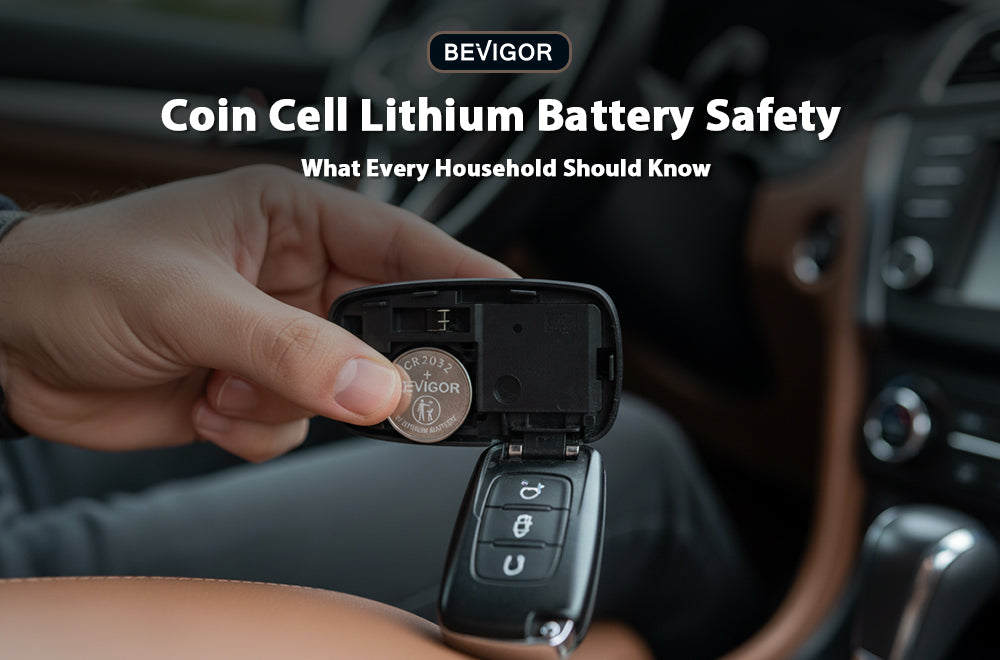
Coin and button batteries are small, shiny, and easy for kids to swallow. That's not just a choking risk. A lithium coin battery can cause serious internal burns quickly.
The safety guidance below is based on reputable US sources:
- National Capital Poison Center: Poison.org's button battery ingestion guideline (2025)
- American Academy of Pediatrics: AAP guide to button and lithium coin batteries (2024)
- U.S. Consumer Product Safety Commission: CPSC update on Reese's Law and button battery standards (2023)
- Children's Hospital of Philadelphia: CHOP's lithium "button" battery safety guidance
Everyone at Bevigor has a printed version of a lithium battery safety guideline at home. In my case, my guideline leaflet helped my wife keep batteries safely from my daughter (and my dog too). I suggest you do so as well.
Why Is A Swallowed Lithium Battery So Dangerous?
A swallowed lithium battery is extremely dangerous because it generates a live electrical current against the moist tissues of the digestive tract, leading to rapid and devastating chemical burns.

What Happens When A Lithium Battery Is Swallowed?
When a lithium battery is swallowed, saliva acts as a conductive fluid that completes an electrical circuit between the positive and negative poles of the cell. This localized electrical current triggers a rapid chemical reaction that produces hydroxide, a highly alkaline substance comparable to oven cleaner, directly against the internal tissue.
How Quickly Can A Lithium Battery Cause Internal Burns?
A lithium battery can cause devastating internal burns and begin burning a physical hole through the esophagus in as little as two hours. The high voltage of these specific coin cells, combined with their larger 20-millimeter diameter that perfectly wedges into a small child’s throat, accelerates the severe tissue damage immensely.
Why Does A Lithium Battery Burn Tissue Differently?
A lithium battery burns tissue differently than a standard metal object because it carries an active electrical charge that aggressively alters the chemical makeup of its surroundings. A swallowed coin might cause choking or mild discomfort, but an active electrical cell physically destroys the cellular structure of the throat or stomach wall through a corrosive, irreversible chemical process.
How Can We Prevent A Lithium Battery Accident at Home?
We can prevent a lithium battery accident at home by treating these tiny power sources with the exact same caution and locked storage as dangerous prescription medications. Start with a simple idea: treat coin batteries like medication.
Where Should You Store A Spare Lithium Battery?
You should store a spare lithium battery high up in a locked cabinet completely out of sight from curious toddlers and household pets. Store spare batteries high, locked, and out of sight. Don't keep them in a junk drawer. Don't leave them loose in a bag. And don't set "dead" coin batteries on a counter. Even used batteries can still cause injury.
What Devices Commonly Hide A Lithium Battery?
Everyday household items like key fobs, remote controls, bathroom scales, thermometers, flameless candles, light-up greeting cards, and certain toys commonly hide a lithium battery. Next, check the devices that get left out. If you can choose between two versions of a product, prefer the one with a battery compartment that needs a tool (like a screw) to open.
How Can You Secure A Lithium Battery Compartment?
You can secure a lithium battery compartment by actively verifying that the screw is tightened or the latch is fully engaged every single time you handle the device. Finally, build one habit: after every battery change, make sure the compartment closes fully. A battery door that "kind of" closes is the kind that pops open later.
Why Is A Used Lithium Battery Still A Threat?
A used lithium battery is still a major threat because it retains enough residual electrical charge to severely burn internal human tissue, even if it no longer has enough power to run a bathroom scale. Because they remain incredibly dangerous, you must wrap them tightly in electrical or clear packing tape and immediately dispose of them in a secure outdoor trash bin.
What Must You Do If A Child Swallows A Lithium Battery?
If a child swallows a lithium battery, you must immediately treat the situation as a life-threatening medical emergency and rush them to the nearest hospital emergency room. This is an emergency. Don't wait for symptoms.
Why Is A Swallowed Lithium Battery An Immediate Emergency?
A swallowed lithium battery is an immediate emergency because irreversible, fatal internal bleeding can occur rapidly if the alkaline burns reach the major blood vessels located near the esophagus. ⚠️ Warning: Button/coin battery ingestion can be life-threatening even if a child seems okay. Fast action matters.
How Should You Contact Poison Control About A Lithium Battery?
You should contact Poison Control about a lithium battery by calling their 24/7 hotline at 1-800-222-1222 while you are already on your way to the emergency department. Go to an emergency department right away and tell them it could be a lithium coin battery. Call Poison Control at 1-800-222-1222 and follow Poison.org's guideline linked above.
When Is Honey Recommended for A Lithium Battery Ingestion?
Honey is recommended for a lithium battery ingestion only for children 12 months and older, given in small doses every 10 minutes while en route to the hospital, to help coat the battery and slow the chemical burn. Poison Control guidance may include giving honey for children 12 months and older in specific situations. Don't delay the ER visit, and don't give honey to infants under 12 months.
What About A Lithium Battery Stuck in Noses Or Ears?
A lithium battery stuck in noses or ears requires immediate, urgent medical intervention by an emergency room physician or an ear, nose, and throat (ENT) specialist. It's also urgent. Don't try to "wait it out." Follow Poison.org's guidelines and get medical care quickly.
Why Is A Lithium Battery in The Nose Urgent?
A lithium battery in the nose is urgent because the natural moisture found in the nasal cavity will activate the battery's electrical current, just like saliva does in the throat. This leads to the exact same destructive production of hydroxide, threatening the delicate cartilage of the nasal septum.
How Fast Does A Lithium Battery Cause Damage Here?
A lithium battery causes severe tissue damage in these small cavities within hours, potentially destroying the nasal septum or the delicate eardrum, leading to permanent structural damage or lifelong hearing loss. The incredibly thin tissues in the nose and ear are exceptionally vulnerable to rapid chemical burns.
Why Shouldn't You Try to Remove The Lithium Battery Yourself?
You shouldn't try to remove the lithium battery yourself because using tweezers or probes at home can easily push the slippery cell deeper into the ear canal or airway, complicating the medical extraction. Only trained medical professionals equipped with specialized pediatric instruments should attempt the removal to prevent permanent, catastrophic injury.
With the safety basics in mind, the next step is clearing up a common shopping misunderstanding: "lithium" can refer to very different battery chemistries. To discover exactly which high-performance energy solutions are right for your household, and to explore products built with industry-leading reliability, visit the Bevigor catalog today.






Aktie:
Batteries for Hearing Aids: Safety and Storage Guide
CR2032 or CR2025: How Lithium Battery Codes Work