

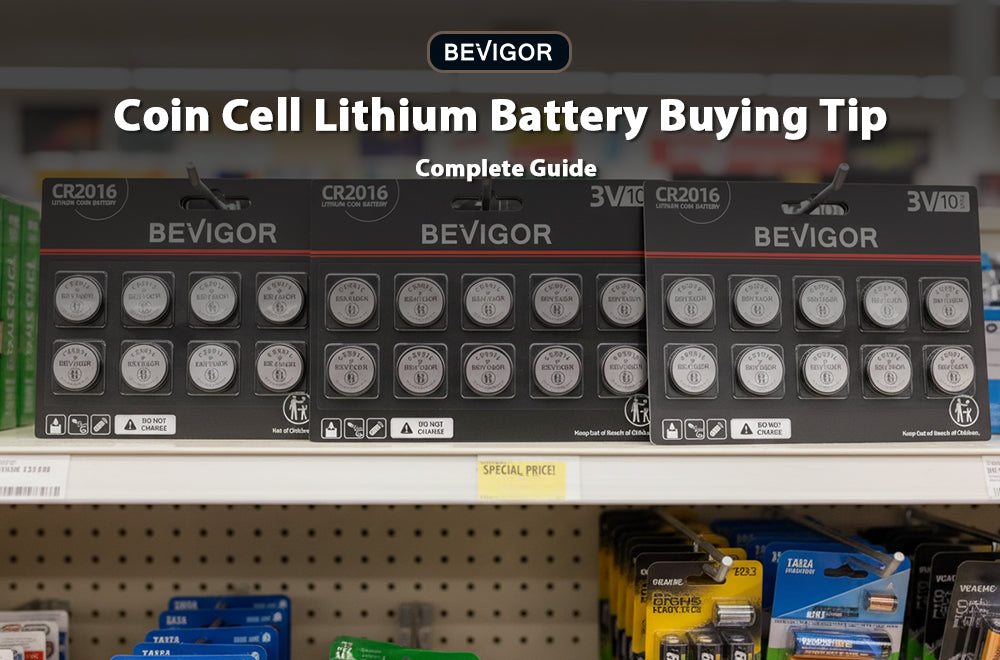
If you've ever replaced a coin cell and your device worked for a day, then started acting weird, contact pressure is a top suspect. When a battery is too thin, the device may reboot when you press a button, lose connection when you pick it up, or show "low battery" even with a fresh cell.
A lot of people assume a new battery is always a good battery. Not necessarily. Primary lithium batteries are known for long shelf life, but that doesn't mean every battery sitting in a drawer is "fresh." If a pack was opened years ago, stored in a hot garage, or carried loose in a bag, performance can suffer.
Practical rules:
- If you're troubleshooting a device, test with a battery from sealed packaging.
- Store spares indoors in a stable, dry place.
- If you buy a multipack, date the package with a marker so you know how old it is.
After coin cells, the next most common "small but powerful" lithium batteries are the 3V cylinders—similar voltage, very different shapes and use cases.
Why Does Thickness Matter for A Coin Cell Lithium Battery?
Thickness matters for a Coin Cell Lithium Battery because electronic devices rely exclusively on precise mechanical spring tension to keep the electrical contacts firmly pressed against the metal casing. Without the correct physical height, the circuit cannot maintain the continuous loop required to power the internal microchips reliably.

How Does A Coin Cell Lithium Battery Maintain Connection?
A Coin Cell Lithium Battery maintains a connection purely through physical pressure applied by the metal prongs inside the device's battery compartment. Unlike standard cylindrical cells that wedge tightly between heavy springs, these miniature power sources sit in shallow trays where even a fraction of a millimeter of missing height destroys the necessary friction.
What Happens When A Coin Cell Lithium Battery Is Too Thin?
When a Coin Cell Lithium Battery is too thin, the device may reboot when you press a button, lose connection when you pick it up, or break the circuit entirely. This intermittent connection mimics a dead battery, leading many frustrated users to throw away perfectly good power cells simply because they purchased the wrong dimensional profile.
Why Will A Fresh Coin Cell Lithium Battery Show Low Power?
A fresh Coin Cell Lithium Battery will show low power if its slim profile prevents it from making a solid, continuous connection with the device's conductive terminals. The internal processor of a key fob or medical device interprets this weak, inconsistent electrical contact as a severe voltage drop, triggering the automated low-power warning lights despite the cell being fully charged.
How Does Shelf Life Affect A Coin Cell Lithium Battery?
Shelf life affects a Coin Cell Lithium Battery by gradually depleting its internal energy reserves over time, even when it is completely disconnected from any electronic device. While primary lithium chemistries are highly stable, they are not immune to the slow march of chemical degradation.
Why Isn't A New Coin Cell Lithium Battery Always Fresh?
A new Coin Cell Lithium Battery isn't always fresh because poor environmental conditions during long-term storage can silently drain its chemical capacity before it is ever sold. If a pack was opened years ago, stored in a hot garage, or left on a dashboard, the internal chemistry has already begun to break down, significantly lowering the available energy.
How Long Can A Coin Cell Lithium Battery Last in Storage?
A Coin Cell Lithium Battery can last up to ten years in storage, provided it is kept in a strictly climate-controlled environment that prevents thermal chemical degradation. According to battery engineering standards, this impressive decade-long shelf life is only achievable if the cell remains perfectly sealed and insulated from aggressive temperature swings.
What Causes A Coin Cell Lithium Battery to Self-Discharge?
A Coin Cell Lithium Battery self-discharges due to natural, continuous internal chemical reactions that slowly consume the active lithium material, a process accelerated by high temperatures. Even sitting untouched in a drawer, the battery loses approximately one to two percent of its total capacity every single year.
Why Is Sealed Packaging Crucial for A Coin Cell Lithium Battery?
Sealed packaging is crucial for a Coin Cell Lithium Battery because it isolates the highly sensitive metal cell from humidity, dirt, and accidental electrical shorts that instantly ruin its performance. Manufacturers design these rigid blister packs specifically to suspend the battery safely until the exact moment of insertion.
How Do Extreme Environments Damage A Coin Cell Lithium Battery?
Extreme environments damage a Coin Cell Lithium Battery by causing the internal electrical resistance to rise, which severely limits the amount of active power the cell can deliver to your device. High humidity can also introduce microscopic corrosion on the external metal casing, effectively creating an invisible barrier that blocks electricity from flowing into your device's contacts.
Why Should You Test Devices with A Sealed Coin Cell Lithium Battery?
You should test devices with a sealed Coin Cell Lithium Battery because it is the only way to guarantee the power source is operating at full voltage during your troubleshooting process. If you test a malfunctioning device with a battery that has been sitting loosely in a desk, you cannot accurately determine if the hardware is failing or if the battery is just weak.
What Happens If A Coin Cell Lithium Battery Is Carried Loose?
If a Coin Cell Lithium Battery is carried loose in a bag, it can easily rub against keys, coins, or paperclips, creating an instant short circuit that rapidly drains the power. Beyond just killing the battery, this unintended metallic connection can generate intense, localized heat, posing a serious safety and fire hazard inside your purse or backpack.
How Should You Store A Spare Coin Cell Lithium Battery?
You should store a spare Coin Cell Lithium Battery indoors in a stable, dry place away from direct sunlight, extreme heat, or freezing winter drafts. Proper storage is the easiest and most effective way to ensure your emergency backups actually work when your essential electronics suddenly die.
Where Is The Best Place for A Coin Cell Lithium Battery?
The best place for a Coin Cell Lithium Battery is inside a dedicated, climate-controlled cabinet or a locked medicine drawer located in the main living area of your home. You must avoid uninsulated spaces like garages, attics, or unfinished basements, as the daily temperature fluctuations will actively damage the lithium chemistry.
Why Does Heat Ruin A Coin Cell Lithium Battery?
Heat ruins a Coin Cell Lithium Battery by exponentially accelerating its internal chemical self-discharge rate, effectively stealing months or years of viable electrical usage. When temperatures consistently rise above standard room conditions, the kinetic energy inside the cell forces the lithium to degrade at a much faster pace than normal.
How Does Dating The Pack Help A Coin Cell Lithium Battery?
Dating the pack with a marker helps a Coin Cell Lithium Battery by allowing you to easily track its exact age and utilize your oldest stock first before it expires. If you buy a multipack, writing the purchase month on the cardboard backing prevents you from accidentally letting premium batteries sit unused past their recommended decade-long lifespan.
What Are The Next Steps Beyond A Coin Cell Lithium Battery?
The next steps beyond a Coin Cell Lithium Battery involve transitioning to larger 3V cylindrical lithium cells that offer similar voltage but entirely different shapes and capacities. As your devices grow in complexity, so do their energy requirements.
How Do Cylinders Compare to A Coin Cell Lithium Battery?
Cylinders compare to a Coin Cell Lithium Battery by offering significantly more internal physical volume, which directly translates into much higher milliampere-hour (mAh) capacities for demanding devices. While they share the same reliable three-volt lithium chemistry, the cylindrical shape allows engineers to roll the chemical layers, increasing the surface area and power output.
Why Might Devices Need More Than A Coin Cell Lithium Battery?
Devices might need more than a Coin Cell Lithium Battery if they feature high-drain components like intense LED tactical lights, motorized camera parts, or heavy-duty smart home radio transmitters. A flat button cell simply cannot push enough continuous current to support these advanced, power-hungry features without suffering a sudden voltage collapse.
What Are The Common Uses for A 3V Coin Cell Lithium Battery?
The common uses for a 3V Coin Cell Lithium Battery include powering continuous, ultra-low-drain applications like computer motherboards, car key fobs, digital bathroom scales, and medical glucose monitors. These specific electronics require a steady, reliable trickle of voltage over several years, which perfectly aligns with the engineering strengths of a flat lithium cell.
Ensuring your essential electronics have the precise physical fit and chemical stability they demand is the only way to guarantee flawless operation. To upgrade your home with expertly engineered power sources that deliver uncompromising reliability, explore the specialized energy solutions available from Bevigor today.






Aktie:
CR2032 or CR2025: How Lithium Battery Codes Work
Special 3V Cylinder Lithium Batteries: CR2 and CR123A