


Batterien werden oft im Voraus gekauft – sei es für Notfälle, saisonale Nutzung, E-Commerce-Weiterverkauf oder Großhandelsvertrieb. Aber wie lange können sie tatsächlich gelagert werden, bevor sie ihre Wirksamkeit verlieren?
Die Antwort hängt von der Batteriechemie, den Umgebungsbedingungen und den Herstellerstandards ab.
Nicht alle Batterien bauen sich gleich schnell ab. Einige halten nur wenige Jahre im Lager, während andere Jahrzehnte stabil bleiben. Das Verständnis dieser Unterschiede hilft, Abfall zu reduzieren, Leckageschäden zu vermeiden und die langfristige Zuverlässigkeit zu verbessern.
Wie lange halten verschiedene Batterietypen im Lager?
Die Haltbarkeit von Batterien variiert je nach Chemie.
Alkaline-Batterien (5–10 Jahre)
Alkaline-Batterien sind weit verbreitet und kostengünstig. Die meisten bieten eine Haltbarkeit zwischen fünf und zehn Jahren.
Im Laufe der Zeit verlieren Alkaline-Batterien aufgrund allmählicher interner chemischer Reaktionen an Kapazität. Hohe Temperaturen beschleunigen diesen Prozess und können das Risiko von Leckagen erhöhen.
Alkaline-Batterien eignen sich für moderate Rotationszyklen, sind aber möglicherweise nicht ideal für die ultralange Lagerung.
Lithium-Primärbatterien (typischerweise 10–15 Jahre)
Lithium-Primärbatterien übertreffen Alkaline-Batterien in der Lagerstabilität. Ihre Lithium-Metall-Chemie bietet:
-
Geringe Selbstentladung
-
Hohe Auslaufbeständigkeit
-
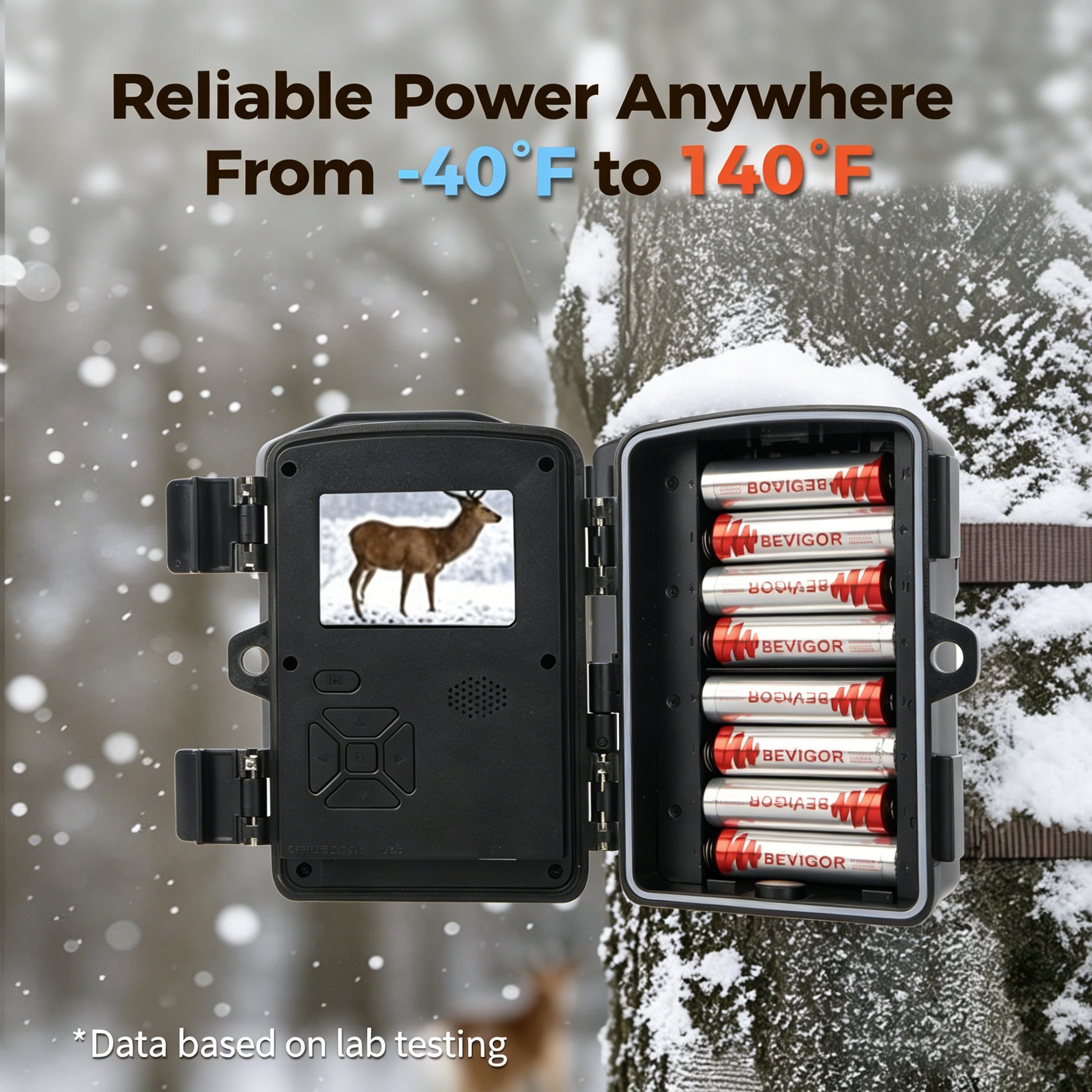
Bessere Leistung bei extremen Temperaturen
-
Längere durchschnittliche Haltbarkeit
Die meisten Lithium-AA-Batterien auf dem Markt sind für etwa 10–15 Jahre ausgelegt.
Dies ist jedoch kein universeller Standard.
Die Haltbarkeit hängt von der Elektrolytformulierung, der Dichtungsintegrität, der Fertigungspräzision und der Qualitätskontrolle ab. Zwei Lithium-AA-Batterien können die gleiche Chemie aufweisen, sich aber erheblich in der zertifizierten Lagerlebensdauer unterscheiden.
Was unterscheidet Bevigor Lithium-AA-Batterien?
Innerhalb der Lithium-Kategorie variieren die Lagerbewertungen je nach Marke und Modell.
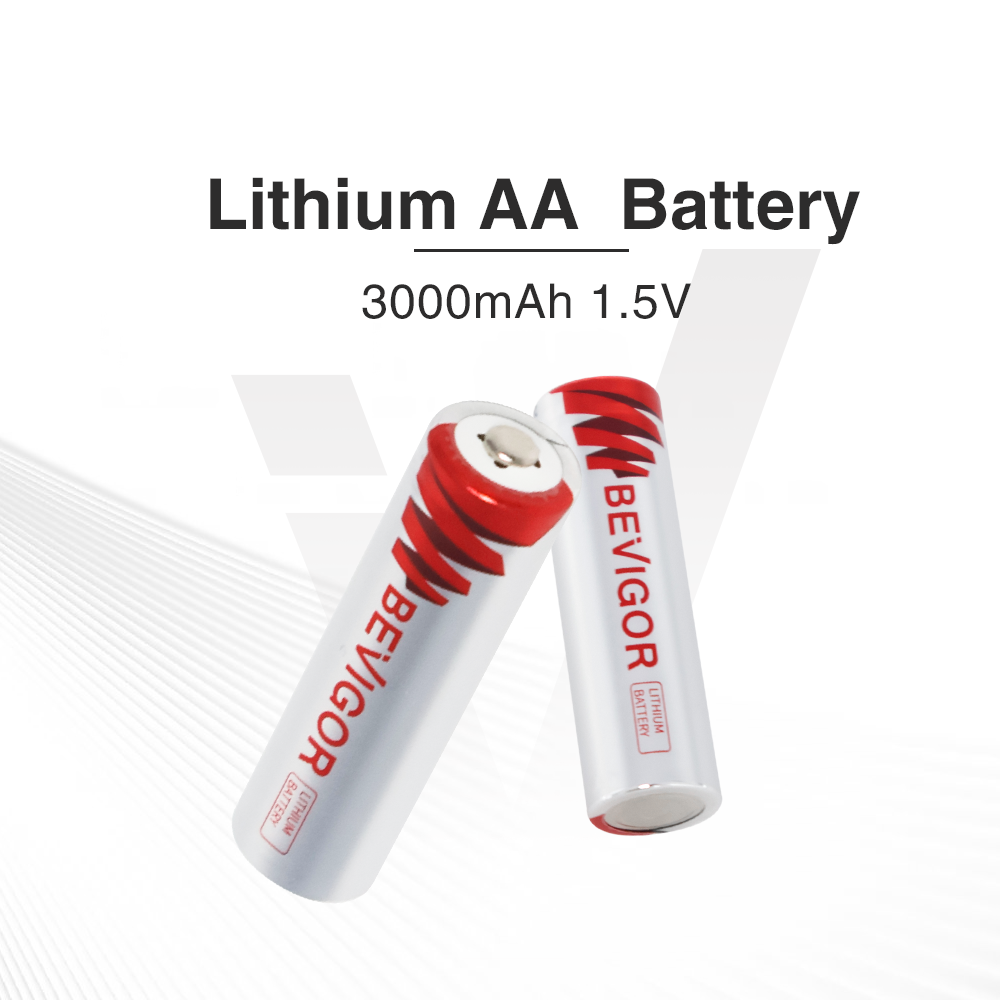
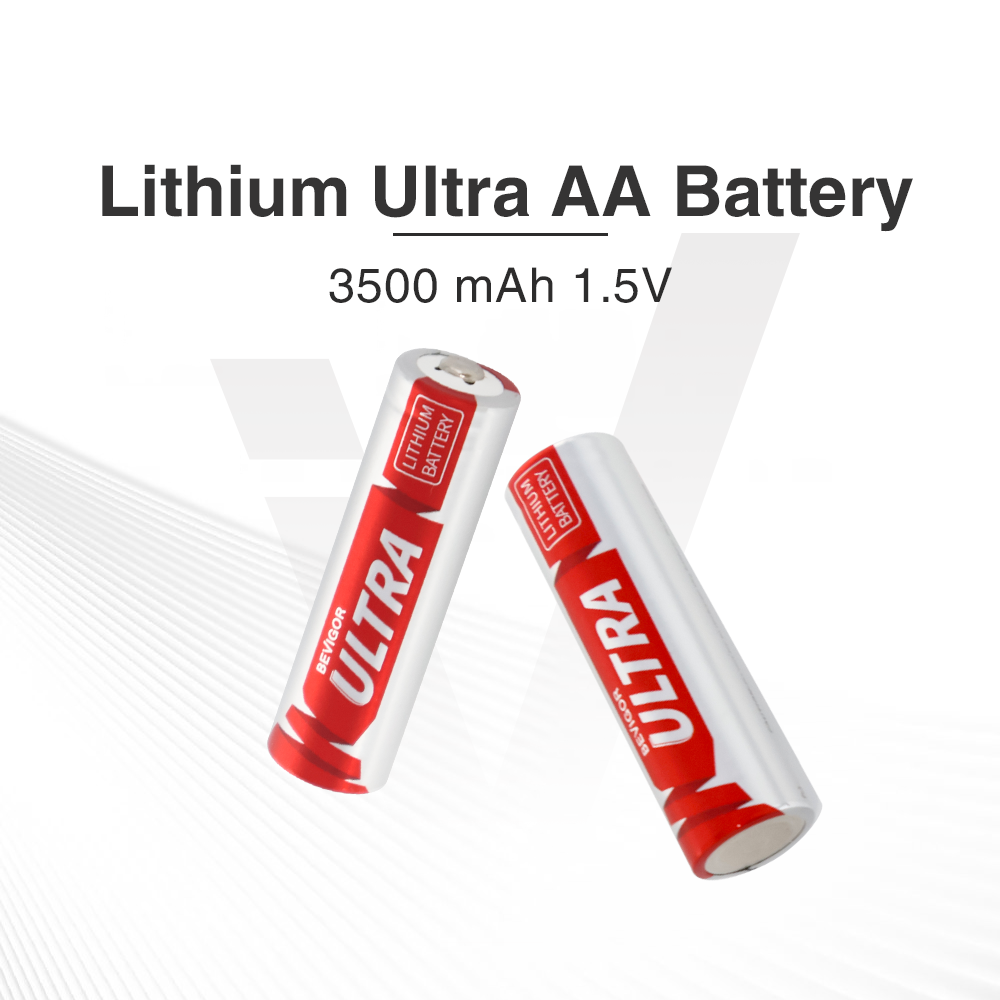
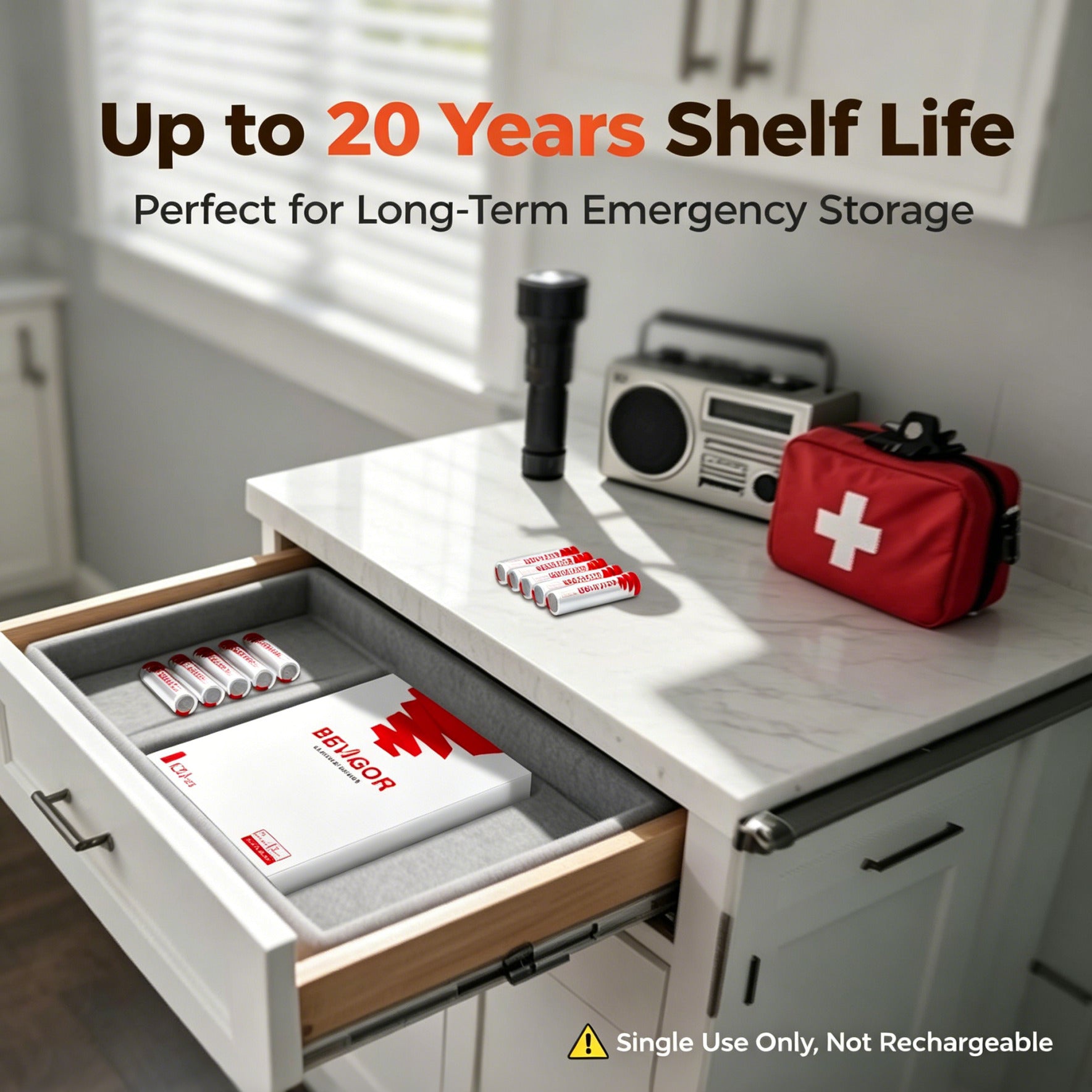
Bevigor Lithium-AA-Batterien und AAA-Batterien sind für eine Haltbarkeit von 20 Jahren unter empfohlenen Lagerbedingungen ausgelegt.
Diese verlängerte Bewertung wird erreicht durch:
-
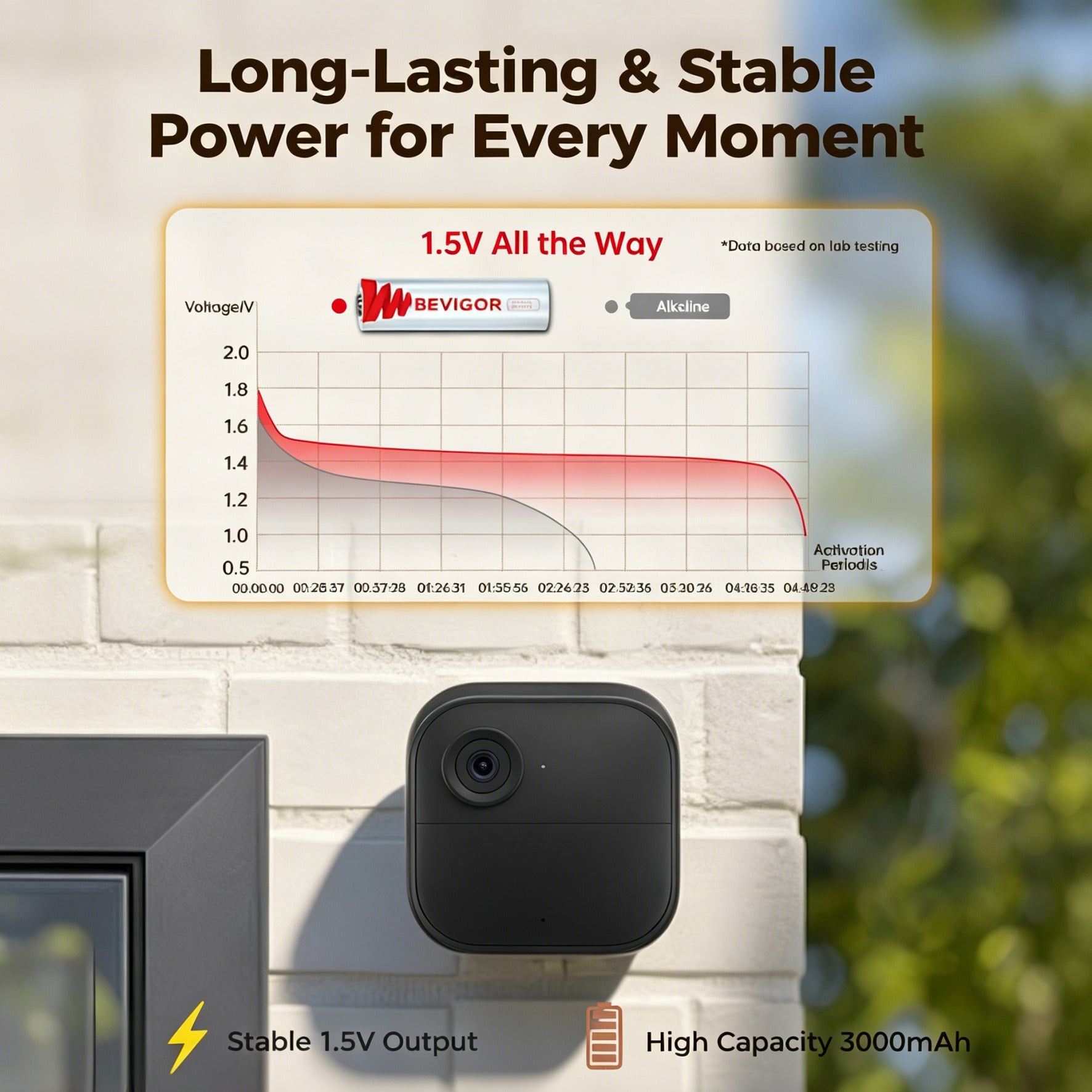
Optimierte Lithium-Metall-Chemie mit extrem geringer Selbstentladung
-
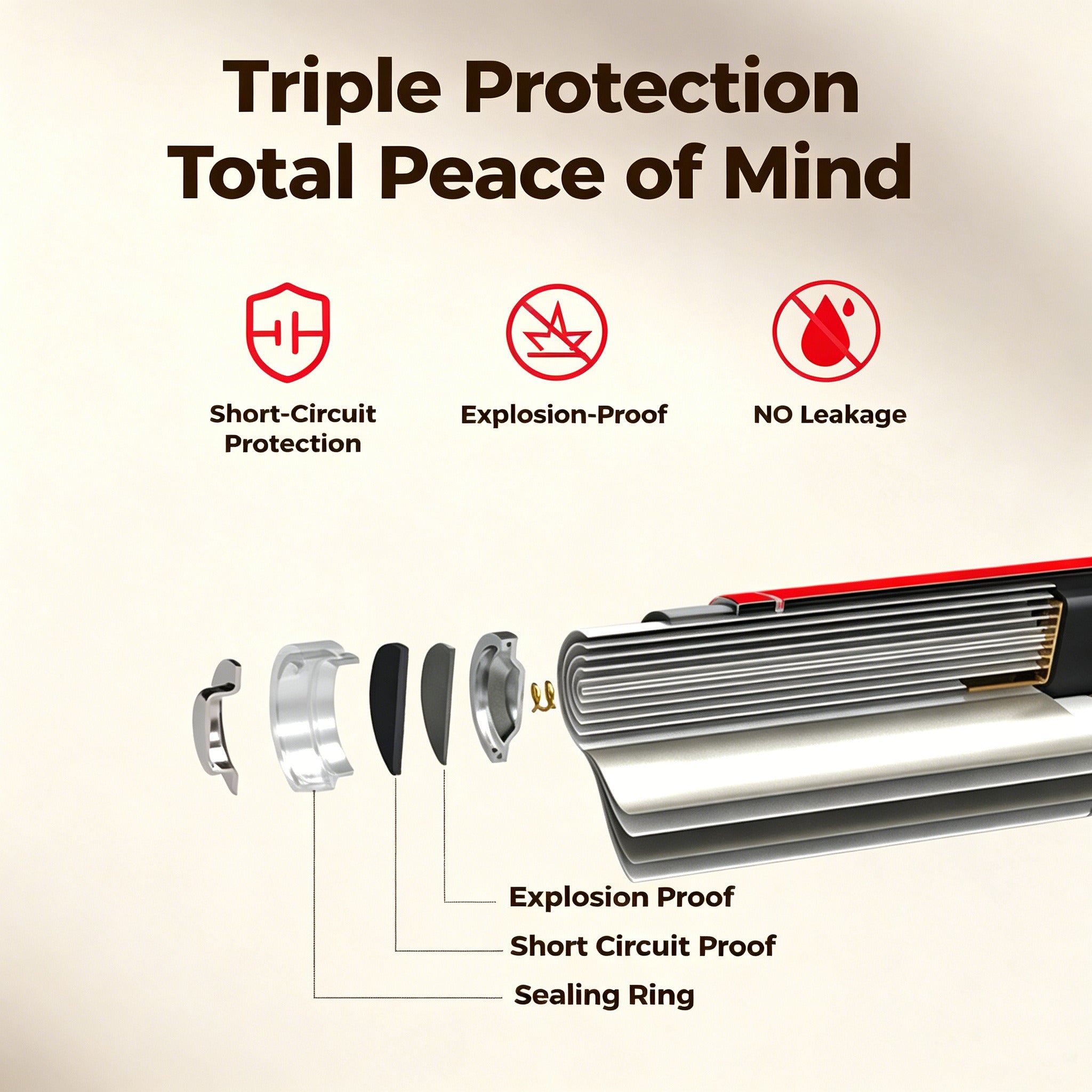
Verstärktes auslaufsicheres Strukturdesign
-
Stabile interne Dichtungstechnologie
-
Strenge Qualitätsprüfung auf Chargenebene
-
Leistungsvalidierung über Temperaturbereiche hinweg
Bevigor AA Lithium-Batterien speziell für eine erweiterte Lagerzuverlässigkeit entwickelt worden.
Produktdetails:
https://bevigor.com/products/bevigor-lithium-aa-batteries-3000mah
https://bevigor.com/products/ultra-new-bevigor-lithium-aa
Wichtige Klarstellung:
-
Bevigor Lithium AA Batterien: 20 Jahre Haltbarkeit
-
Bevigor Lithium AAA Batterien: 20 Jahre Haltbarkeit
-
Bevigor CR2032 Knopfzellen: 10 Jahre Haltbarkeit
-
Andere Lithium-Batterietypen (Industriedurchschnitt): oft 10–15 Jahre
Lithium-Chemie verbessert die Lagerstabilität insgesamt – aber eine 20-Jahres-Einstufung gilt nur für spezifisch entwickelte Modelle.
Haltbarkeit vs. Betriebsdauer
Ein wichtiger Unterschied muss gemacht werden:
-
Haltbarkeit bezieht sich darauf, wie lange eine Batterie ungenutzt ihre Ladung behält.
-
Betriebsdauer bezieht sich darauf, wie lange sie ein Gerät nach der Installation mit Strom versorgt.
Eine Batterie mit einer Haltbarkeit von 20 Jahren versorgt ein Gerät nicht 20 Jahre lang mit Strom. Die Laufzeit hängt vom Gerätebedarf ab.
Zum Beispiel:
-
Eine Fernbedienung kann jahrelang mit einem Batteriesatz betrieben werden.
-
Eine Wildkamera oder taktische Taschenlampe verbraucht schneller Strom.
-
Elektronik mit hohem Stromverbrauch verkürzt die Laufzeit, beeinflusst aber nicht die Lagerstabilität.
Für die Bestandsplanung ist die Haltbarkeit die entscheidende Größe.
Umweltfaktoren, die die Batterielebensdauer beeinflussen
Selbst hochwertige Batterien bauen unter schlechten Lagerbedingungen schneller ab.
Temperatur
Hitze ist der Hauptbeschleuniger des Abbaus.
Empfohlene Lagertemperatur:
15–25°C (59–77°F)
Längere Exposition über 40°C verkürzt die Batterielebensdauer erheblich. Vermeiden Sie Fahrzeuge, Dachböden und Lagerhallen ohne Klimatisierung.
Luftfeuchtigkeit
Hohe Luftfeuchtigkeit beschleunigt Korrosion und internen Abbau.
Ideale Luftfeuchtigkeit: ca. 50% relative Luftfeuchtigkeit.
Physischer Kontakt
Batterien sollten:
-
In der Originalverpackung bleiben
-
Kontakt zwischen Polen und Metall vermeiden
-
Getrennt von leitenden Materialien gelagert werden
Die Einhaltung dieser Praktiken hilft Lithium-AA-Batterien, Alkaline-Batterien und Knopfzellen, ihre volle Nennlebensdauer zu erreichen.
Warum eine längere Haltbarkeit für Unternehmen wichtig ist
Für Einzelhändler und Distributoren reduziert eine längere Haltbarkeit:
-
Verluste durch abgelaufene Bestände
-
Lagerabfälle
-
Rückgaberisiko aufgrund alter Lagerbestände
Mit einer 20-Jahres-Bewertung bieten Bevigor Lithium-AA-Batterien eine längere Planungsflexibilität im Vergleich zu Standard-Lithium-Batterien.
Großhandelsoptionen:
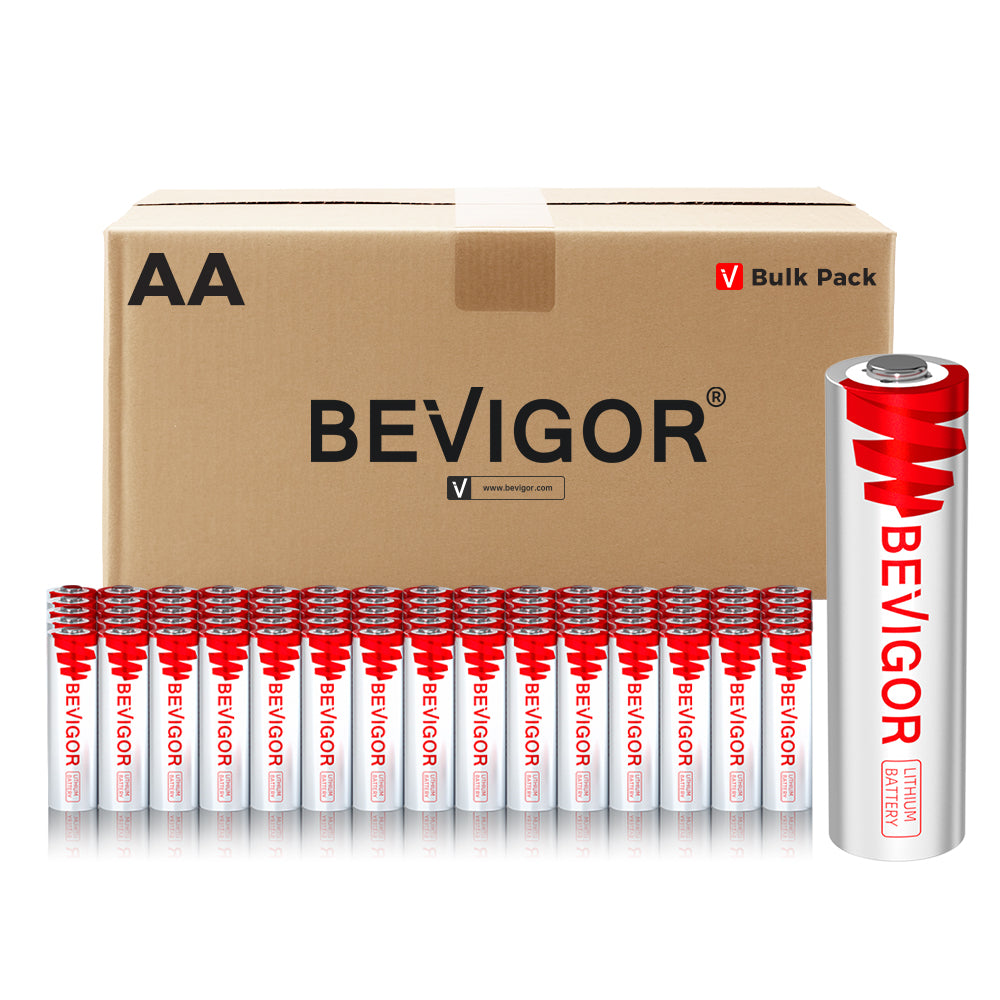
https://bevigor.com/products/aa-lithium-batteries-3000mah-bulk
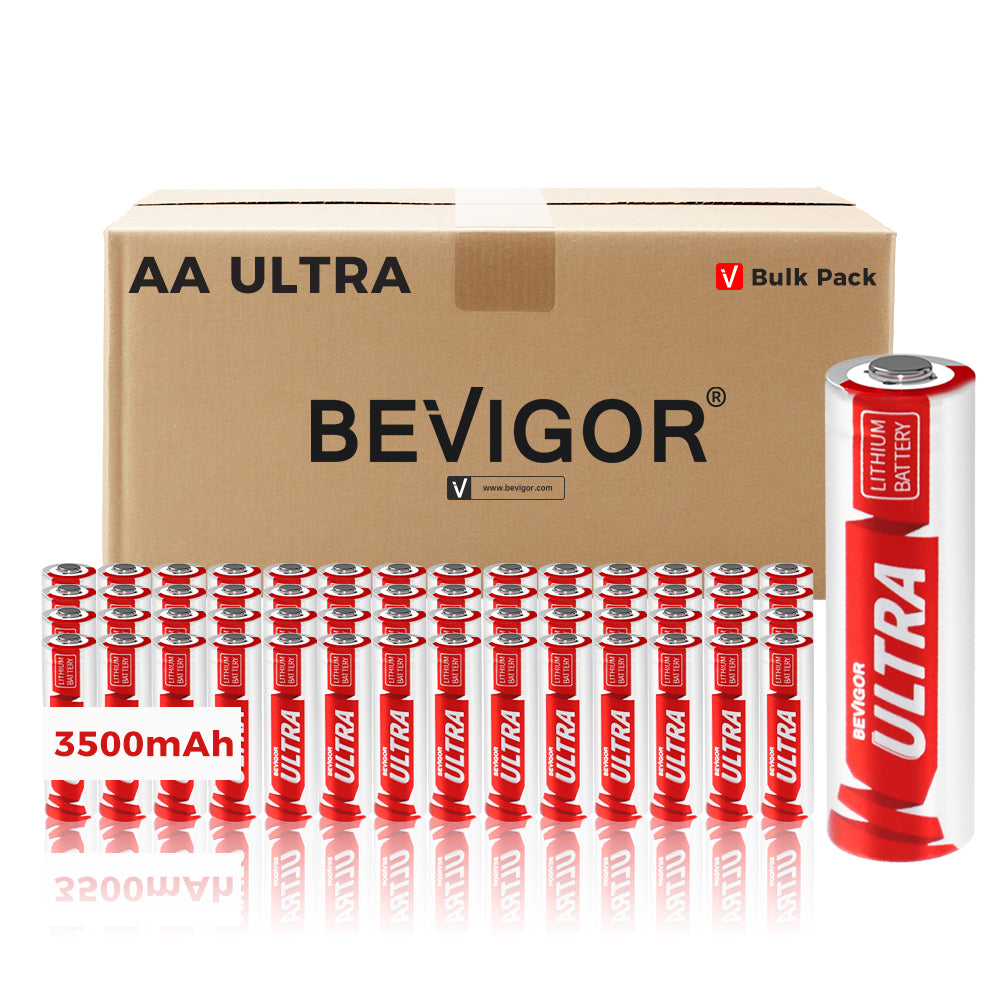
https://bevigor.com/products/bevigor-ultra-3500mah-aa-lithium-batteries-bulk-pack
Großhandelsunterstützung: https://bevigor.com/pages/bulk-wholesale
Eine längere Haltbarkeit unterstützt Notfallausrüstungen, Regierungsaufträge, Lieferketten für die Vorsorge und Exportlogistik.
Wie man Batterien nach langer Lagerung testet
Vor der Inbetriebnahme:
-
Verwenden Sie ein digitales Multimeter
-
AA-Batterien sollten nahe 1,5V anzeigen
-
Ersetzen Sie sie, wenn die Spannung deutlich abfällt
Überprüfen Sie auch auf Schwellungen, Korrosion oder Leckagen.
Lithium-Batterien sind im Allgemeinen widerstandsfähiger gegen Auslaufen als Alkaline-Alternativen, was das Risiko von Geräteschäden während der Langzeitlagerung reduziert.
Wie man Lithium-Batterien sicher entsorgt
Die ordnungsgemäße Entsorgung ist unerlässlich.
Wie man Lithium-Batterien sicher entsorgt:
-
Beachten Sie die lokalen Recyclingvorschriften
-
Nicht im Hausmüll entsorgen, wo dies verboten ist
-
Kleben Sie die Batteriepole vor dem Recycling ab
-
Verwenden Sie zertifizierte Batterierecyclingzentren
Die sichere Entsorgung verhindert Brandgefahren und Umweltschäden.
Abschließender Vergleich
Typische Lagerbereiche:
-
Alkaline-Batterien: 5–10 Jahre
-
Die meisten Lithium-Primärbatterien: 10–15 Jahre
-
Knopfzellen: ca. 10 Jahre
-
Bevigor Lithium AA & AAA Batterien: 20 Jahre
Die Batteriezusammensetzung bildet die Grundlage. Die Qualität der Konstruktion bestimmt die endgültige Leistung.
Wenn langfristige Lagerstabilität Priorität hat – sei es für Notstrom, kommerziellen Wiederverkauf oder Großhandelsplanung – wird eine verifizierte längere Haltbarkeit zu einem strategischen Vorteil.
Für Produktberatung:
https://bevigor.com/pages/contact-us



Aktie:
Die beste CR2032 Batterie für Digitaluhren: Der komplette Leitfaden für 2026
Wie Bevigor mit NiMH-Akkus den Klimaschutz unterstützt