

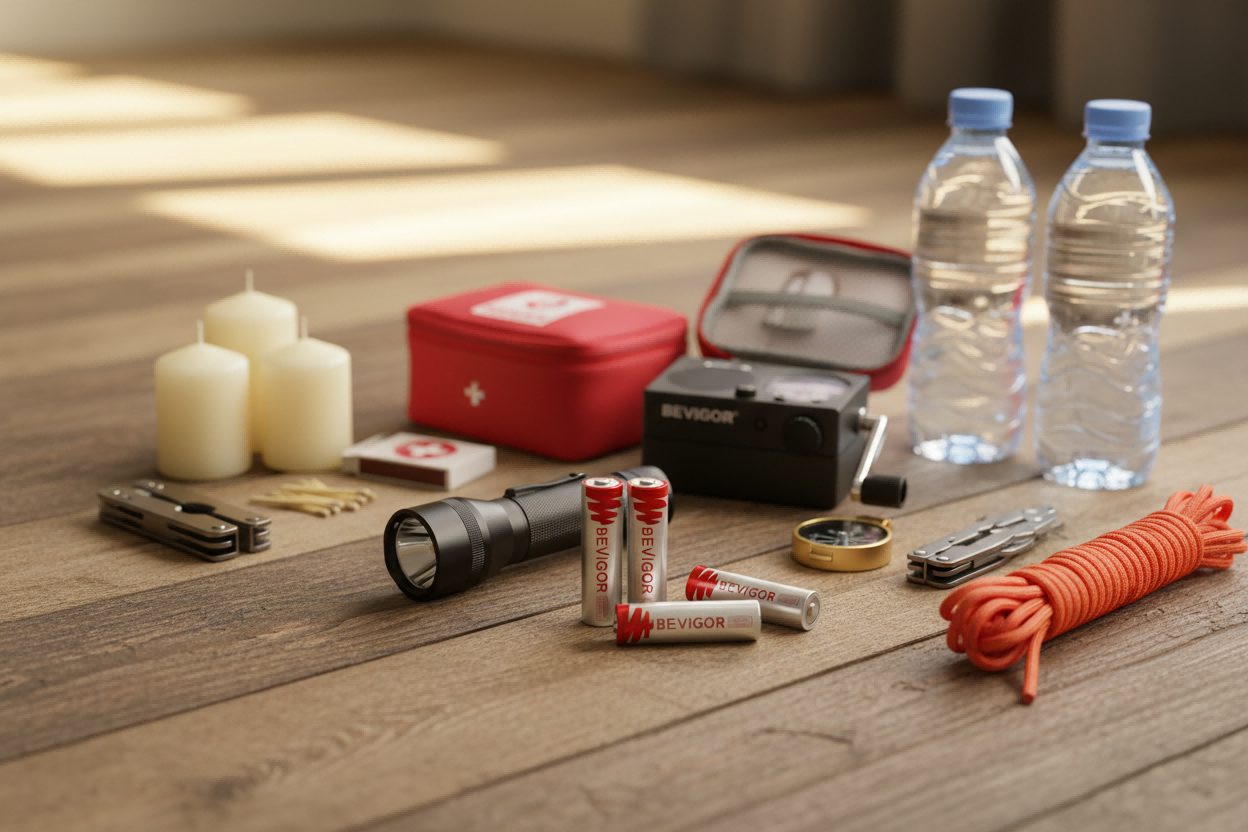

Emergency kits are entirely about baseline reliability, not minor optimizations. When a severe storm hits or the power grid goes down unexpectedly, you do not need a power source that delivers theoretical peak efficiency under perfect conditions. Instead, you need a power source that is guaranteed to turn on after sitting completely neglected in a dark closet for five years. This absolute certainty is exactly why a premium lithium metal battery is the most critical asset you can add to your household disaster preparation supply.
Why Should You Include Lithium Batteries in Your Emergency Kit?
You should include lithium batteries in your emergency kit because they offer an unmatched combination of long-term storage stability and extreme weather resilience that standard alkaline cells cannot replicate. When a crisis unfolds, your life-saving communication and navigation gear must have an uncompromised, immediately active power supply.
How Do Lithium Batteries Ensure Baseline Reliability?
Lithium batteries ensure baseline reliability by utilizing stable internal chemical compounds that resist self-discharge and degradation over decades of complete inactivity. In a true disaster scenario, you are not trying to optimize cost per hour; you are trying to prevent a situation where your backup tools fail when you need them most. Relying on inferior battery chemistries means risking internal corrosion and leakage that can permanently ruin your emergency electronics before you ever press the power switch.
What Disaster Guidance Recommends Packing Spares of Lithium Batteries?
Official disaster guidance from federal emergency management organizations explicitly recommends packing multiple spare cells of lithium batteries alongside your essential electronics to sustain your household for a minimum of several days. Ready.gov's guidance is a strong baseline, and it explicitly includes flashlights, radios, and extra batteries on its full list of survival requirements: "Build a Kit: Full List (Ready.gov)". To protect your family, you must treat the acquisition of rugged lithium batteries as a non-negotiable step in your disaster readiness planning.
How to Build a Battery-First Strategy with a Lithium Metal Battery
Building a battery-first strategy requires you to audit your survival gear thoroughly and stock a dedicated lithium metal battery for every critical slot before an emergency actually strikes. Take the gear you already plan to pack, then add one extra step to ensure your family is never left in the dark during a crisis:
- Write down the exact battery size each item needs.
- Add enough spares to cover at least a few days of continuous use.
- Pick a chemistry based on how long the kit will sit and what extreme conditions it might face.
For many modern households, that logical evaluation points heavily toward primary lithium metal formats.
Why Does a Lithium Metal Battery Excel in Storage Longevity?
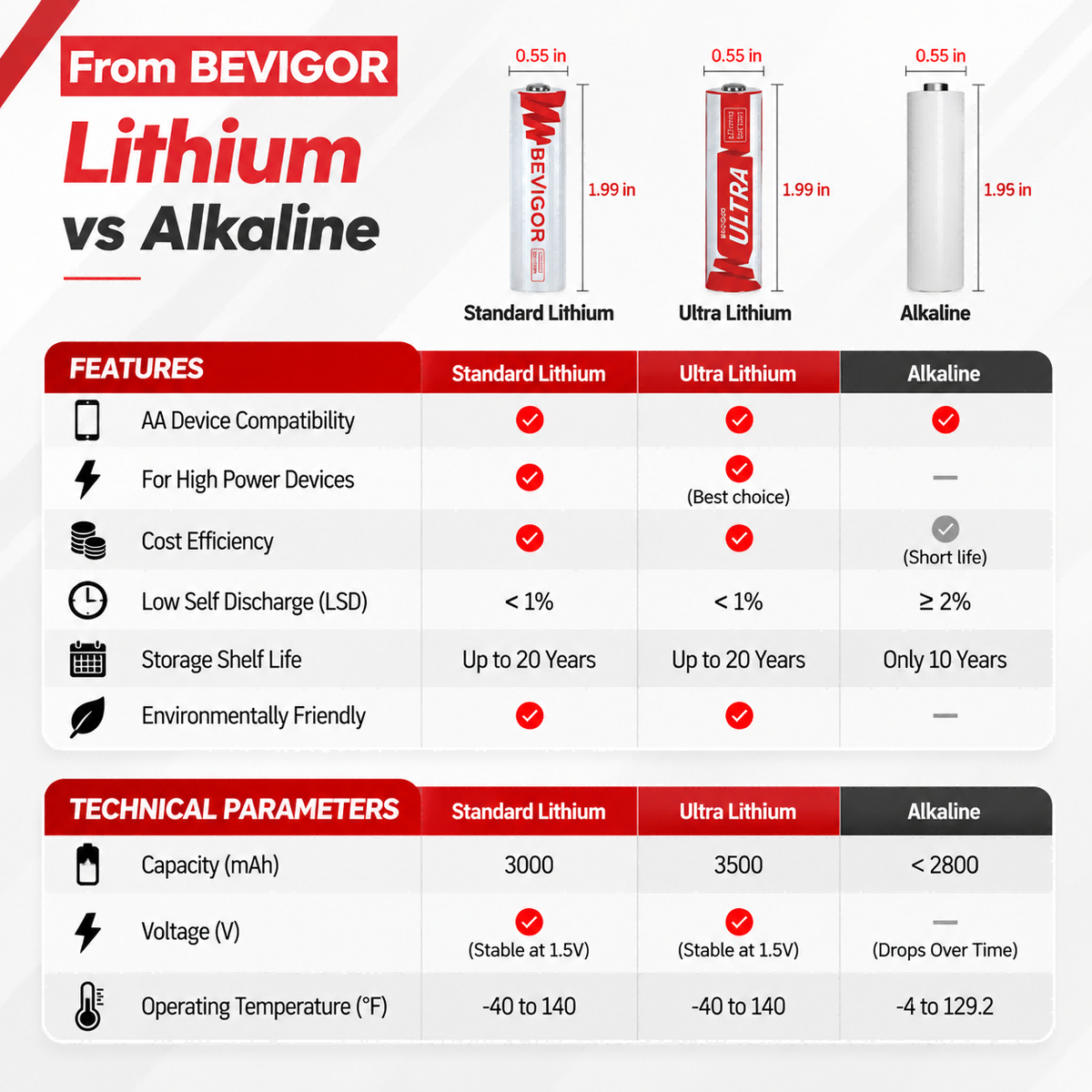
According to a study by Merrill and colleagues, lithium metal batteries offer strong storage longevity because their chemistry results in a very low self-discharge rate, making them well-suited for long-term emergency backup where reliability over many years is important. This long shelf life eliminates the stressful maintenance routine of constantly checking and replacing expired household cells every few months.
What Weather Conditions Make Lithium Batteries the Safest Choice?
Severe winter freezes and extreme summer heatwaves are the exact weather conditions that make lithium batteries the absolute safest choice for your home backup supplies. Standard alkaline batteries rely on a water-based electrolyte that freezes solid in the winter and leaks destructively when exposed to intense summer heat. An advanced lithium metal battery completely bypasses these physical limitations, operating flawlessly in extreme environments ranging from negative forty degrees to a sweltering one hundred and forty degrees Fahrenheit.
How Do Lithium Batteries Deliver Low-Maintenance Readiness?
Lithium batteries deliver low-maintenance readiness by remaining completely sealed and structurally inert throughout their long storage lifespans, eliminating the chore of rotating your emergency gear. You can assemble your disaster duffel bag today, toss in your backup cells, and walk away with absolute confidence that they will be completely fresh and ready to perform a decade later. This hands-off dependability makes them the ultimate choice for busy families who want maximum protection with minimal tracking.
Which Critical Survival Devices Require High-Quality Lithium Batteries?
Critical survival devices like high-output flashlights and emergency radios require high-quality lithium batteries to maintain clear signals and bright beams during extended grid blackouts. Setting up a simple pairing model between your survival hardware and your power sources prevents confusion when the lights go out.
How to Match Emergency Flashlights with Lithium Batteries?
You match emergency flashlights with lithium batteries by checking the exact physical sizing constraints of your illumination gear and packing matching, unpeeled primary cells. Your flashlight or headlamp is your most immediate tool for route-finding or signaling for help in the dark, so you must pack ample spares that match the device exactly. If you are buying lithium AA batteries for kit use, BEVIGOR's compatibility guide is a good internal reference for avoiding the wrong fit: "Can you use lithium AA batteries in anything?".
Why Do Emergency Radios Depend on Premium Lithium Batteries?
Emergency radios depend on premium lithium batteries because receiving real-world weather alerts and broadcast updates demands a steady, uncompromised voltage supply that will not fade over hours of use. When you pack your battery radio, you must pack dedicated spares alongside it to ensure you remain connected to local authorities throughout a prolonged blackout. While gloves, blankets, and warmth items are not battery-related, they remain critical for cold emergencies and should be paired with your electronics to complete a robust, reliable winter survival kit.
Ensuring your household is completely insulated from the unpredictable chaos of a natural disaster requires sourcing the most dependable hardware available. To explore our comprehensive range of high-capacity, temperature-resistant power cells engineered specifically for your most vital backup equipment, discover the full selection of solutions at Bevigor today.






Share:
Differences Between Lithium Metal Batteries and Lithium‑ion Batteries
Differences Between Lithium Metal Batteries and Lithium‑ion Batteries