


Do your outdoor cameras constantly fail in freezing weather? Leaking alkaline cells frequently ruin expensive electronics just when you need them most.
We will compare discharge rates, temperature limits, and how 1.5V Lithium Batteries prevent permanent hardware damage.
The Chemistry Behind 1.5V Lithium Batteries
Many consumers grab whatever pack is cheapest at the hardware store without understanding what powers their electronics. Traditional alkaline chemistry uses zinc and manganese dioxide, relying heavily on a water based liquid electrolyte to facilitate the chemical reaction. This liquid nature makes them highly prone to expanding and leaking corrosive acid as they age. Conversely, the internal structure of 1.5V Lithium Batteries utilizes a completely solid construction.
Experts from MIT note that solid state chemical designs offer significant improvements in energy density and leakage prevention. By removing the liquid electrolyte from the equation, manufacturers eliminate the primary cause of battery acid corrosion. This means your expensive photography flashes and smart door locks stay completely safe from internal destruction, even if you leave the power cells inside the device for several years.
How Do 1.5V Lithium Batteries Compare to Alkaline?
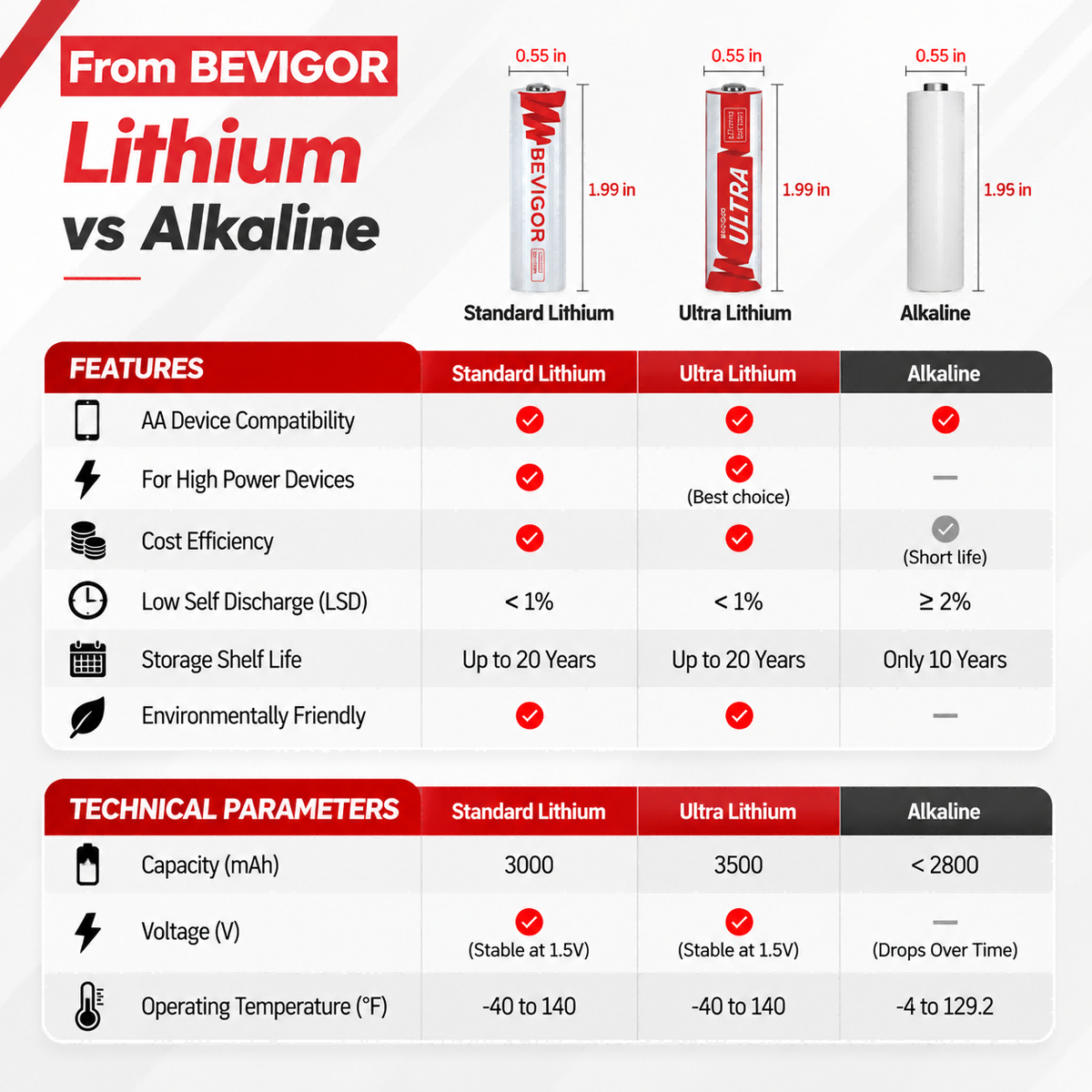
Selecting the appropriate power source depends heavily on what gadget you are trying to operate. While alkaline units work reasonably well for low drain items like basic television remotes, they struggle significantly under heavy electrical loads. By matching the correct chemistry to the device, you maximize both performance and financial value.
|
Feature |
Standard Alkaline |
1.5V Lithium Batteries |
|
Starting Voltage |
1.5 Volts |
1.5 Volts |
|
Weight Profile |
Heavy |
Very light |
|
Extreme Cold |
Fails quickly |
Operates smoothly |
|
Leak Risk |
Moderate to high |
Extremely low |
|
Ideal Application |
Low drain electronics |
High drain electronics |
Here is the deal. If you are powering a heavy duty motorized device or a continuous smart home sensor, the initial higher cost of advanced chemistry usually pays off by requiring far fewer replacements over the year. You can explore different capacity options in the Bevigor catalog to match your specific household and professional electronic needs.
Understanding the Flat Discharge Profile
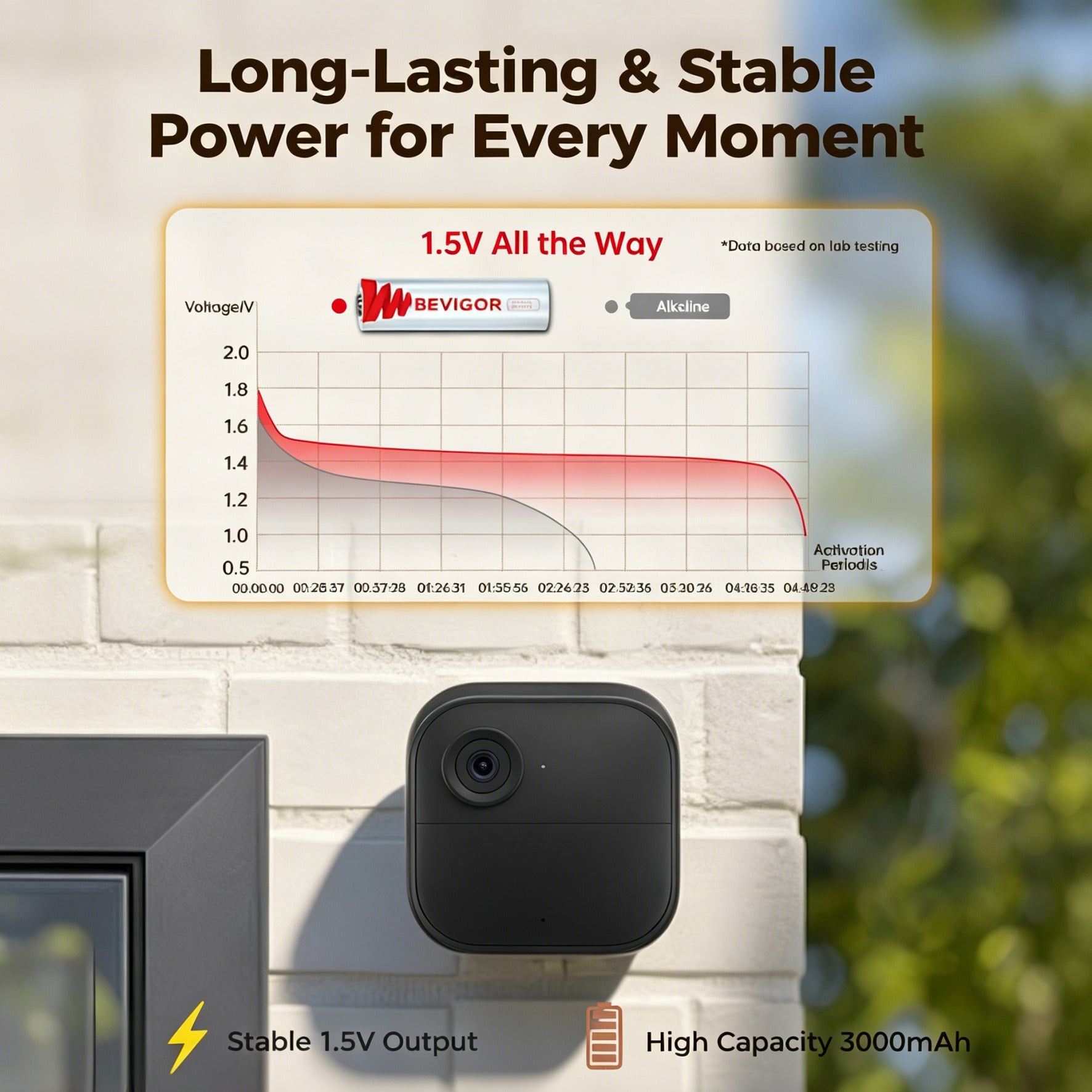
The way energy leaves the physical casing drastically changes how your equipment performs in the real world. Alkaline units have a sloping discharge profile, meaning the voltage drops steadily from the exact moment you turn the power on. Because the voltage drops constantly, your flashlight gets progressively dimmer until it finally dies, and your motorized toys walk slower and slower.
Technical data regarding discharge rates from Battery University illustrates that advanced primary cells maintain a remarkably flat voltage profile. When using 1.5V Lithium Batteries, your digital camera receives full power until the chemical energy is almost entirely depleted. This gives you consistent, bright performance rather than a slow fade. This stable electrical delivery is why medical devices and professional tools rely almost exclusively on flat discharge chemistries.
Cold Weather Performance of 1.5V Lithium Batteries
Winter environments easily destroy the efficiency of standard chemical power sources. When ambient temperatures drop below freezing, the water based electrolyte inside an alkaline casing slows down significantly, causing internal electrical resistance to spike. This sudden resistance is exactly why your trail camera or emergency headlamp might fail completely during a snowstorm, even if the cell is brand new.
Because 1.5V Lithium Batteries do not rely on liquid electrolytes that freeze, they typically handle extreme cold environments dropping to minus 40 degrees Fahrenheit, according to official Bevigor testing data. This incredible temperature resilience makes them the absolute preferred choice for outdoor survival gear, exterior security cameras, and mountaineering equipment that must function flawlessly in subzero conditions.
Are 1.5V Lithium Batteries Worth the Cost?
When you compare the upfront price tags on the store shelf, the advanced chemistry costs noticeably more than basic zinc options. However, you must evaluate the total operational lifespan to understand the true value. A single lithium cell often outlasts three or four alkaline replacements in a high drain device like a gaming controller or a digital thermostat. Over the course of two years, the total money spent on replacements is often much lower.
Furthermore, replacing a fifty dollar electronic device because a cheap alkaline cell leaked battery acid ruins any initial savings you thought you achieved. While NiMH rechargeable systems are excellent for daily rotating toys, primary lithium remains unmatched for set and forget reliability. When you need a device to simply work without worrying about maintenance or leakage, the premium price is an investment in hardware safety.
Frequently Asked Questions About 1.5V Lithium Batteries
Can I use these in any device that takes AA or AAA sizes?
Almost all modern electronics accept them perfectly since they provide the exact same starting voltage as traditional cells. However, always check your specific hardware manual to ensure your older vintage electronics are compatible with prolonged continuous voltage.
Do they recharge like NiMH cells?
No, these are primary disposable cells. Attempting to force current back into them using a wall charger creates a massive fire hazard and will rapidly rupture the metal casing.
Why do they feel so much lighter in my hand?
The metallic lithium used inside the casing is an incredibly lightweight element compared to the heavy zinc and manganese paste found in standard units. This weight reduction heavily benefits hikers and photographers who carry multiple spare sets in their backpacks.
How long can I store them in a drawer?
They feature an incredibly low self discharge rate. When stored in a dry environment at standard room temperature, they can hold their chemical energy for up to twenty years, making them perfect for emergency preparedness kits and smoke detectors.
Usage Notes for 1.5V Lithium Batteries
To get the most out of your portable energy solutions while maintaining strict safety standards, keep these operational facts in mind before installation.
- Specification Origins: All stated temperature ranges and shelf life estimates are based on official laboratory testing by Bevigor. Real world performance will always fluctuate based on the specific current draw of your hardware.
- Usage Variables: Continuous active wireless signals in smart home security sensors will deplete chemical power significantly faster than passive electronics like a simple digital wall clock.
- Strict Usage Taboos: Never mix a fresh cell with a depleted one inside the same electronic device. You must also strictly avoid mixing different chemical compositions, such as placing a standard alkaline next to a lithium cell inside the same battery compartment.
- Disposal Instructions: When your primary cells are completely empty, please do not throw them in standard household garbage bins. Utilize official environmental resources like the EPA recycling guide to find an appropriate safe drop off location in your local community.
- Compatibility Validation: For detailed hardware matching and ongoing maintenance advice regarding your specific electronics, visit the Bevigor support portal to ensure you select the perfect energy source.






Share:
Ditch the Battery Swaps: Why Bevigor Lithium AA Batteries are Your Trail Camera's Best Friend
Lithium AA Batteries vs. Alkaline: Which Should You Use?